When is a coupe not a coupe? When it’s a ‘not-quite-coupe’. Okay, that may not be an accepted term, or one that you’ll find in CarGurus listings. But it’s definitely a thing. Let me explain…
First of all, it’s probably worth defining what a coupe is. And that’s harder than you might think. According to the Oxford Dictionary, it’s: “A car with two doors and usually a sloping back.” Wikipedia goes with: “A passenger car with a sloping or truncated rear roofline and typically with two doors.”
You may have your own interpretation but let’s stick with those two for now. With that cleared up, my definition of a ‘not-quite-coupe’ is: “A three-door car that’s a bit sportier and/or more stylish than a hatchback, or which has ‘coupe’ in its name, but isn’t quite a coupe.”
A bit vague? Yes, and that’s the point. This is less a category of car and more a state of mind. A ‘not-quite-coupe’ occupies the territory between head and heart, offering a smidge more emotional appeal than a hatchback. It’s the healthy option on the dessert menu; a bit of a treat but not the full-fat, loaded-with-cream indulgence that is a coupe.

How did the not-quite-coupe come about? Well, the truth is that car brands have always played fast and loose with the coupe label because it’s a financial no-brainer. If you can take an existing model, give it a more shapely rear end (that actually uses less metal) and charge more for it then why wouldn’t you?
But the not-quite-coupe really came into its own in the mid-noughties. This was a time when all sorts of weird and wonderful ideas saw the light of day and diversification didn’t just mean creating a slightly different-sized SUV. It also coincided with a downturn in popularity for conventional three-door hatchbacks, so brands started experimenting with a new format to tempt buyers who might consider a hatchback too humdrum, a coupe too frivolous; a kind of part-hatchback, part-coupe that offered the best of both worlds.
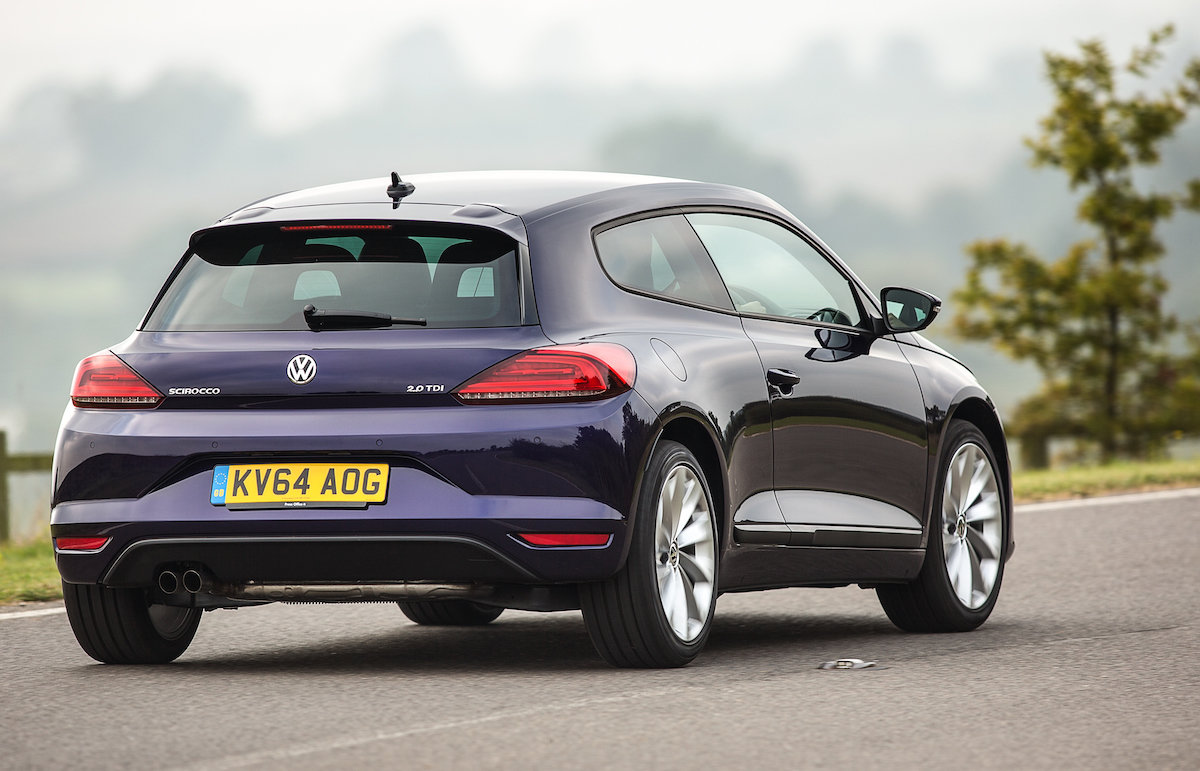
Some of these experiments were more successful than others, and one that hit the mark is the third-generation Volkswagen Scirocco (2008-2017). It had a great start in life since it was based on the Golf GTI Mk5, and it wrapped those mechanical parts in a slinkier, lower three-door body. Good to look at and even better to drive, it was also reasonably affordable and only slightly less practical than a Golf. Coupe purists might have been disappointed that it didn’t have the ‘fastback’ looks of previous Scirocco models, or considered it simply a ‘Golf in drag’, but as far as not-quite-coupes go the Scirocco is the gold standard.
Renault made a decent fist of things with the second-generation Megane Coupe (2008-2016), while the Vauxhall Astra GTC (2011-2018) and Kia ProCeed (2013-2019) were similarly solid attempts that featured a tapered rear end and a squat stance that made them look more purposeful than your average hatchback. Did they have the elegance of a ‘true’ coupe? No. The reality is that without their five-door donors these cars wouldn’t exist, and none move the needle that far in the direction of ‘coupeness’.
Today, without the benefit of novelty or the sense of being part of a trend, they seem more like three-door hatches with a fancy name. Still, they sold reasonably well, and those that remain today are a decent option if you’re looking for something that’s affordable but has a modicum of style.

Not all not-quite-coupes were cut-down five-door models, though. The Alfa Romeo Brera and Volvo C30 were, in fact, shorter, three-door hatchback versions of saloons (the 159 and S40, respectively). Both were far enough removed from their four-door relatives to look and feel a bit more ‘coupe-ish’, helped perhaps by coming from brands with a more premium sheen and some classic coupes in their back catalogue.
Although not in the same league, Hyundai did have some equity in the coupe sector. It produced two of the most attractive, affordable coupe models of the era (imaginatively called Hyundai Coupe) between 1996 and 2009. For the follow-up, however, Hyundai chose to go down the not-quite-coupe route with the Veloster (2012-2014). It blended elements of coupe and hatchback so literally that it had a ‘halfway house’ door arrangement featuring one door on the driver’s side but two on the passenger side. The neither-one-nor-the-other approach didn’t pay off, as that two-year lifespan (in the UK, at least) suggests.
Hyundai made a half-hearted attempt to combine hatchback and coupe when it launched the i20 Coupe in 2015. It was a decent car, but some rear wheelarch creases and a slightly lower roofline couldn’t hide what it really was: a three-door supermini. And by that time the heyday of the not-quite-coupe was over anyway. Demand for three-door cars had been dropping steadily, so manufacturers simply stopped making them. Five doors became the only format for many hatchbacks and brands began turning their attention to SUVs, which were already the default choice for anyone looking for something a bit more aspirational than a run-of-the-mill hatchback.
So that’s where the story of the not-quite-coupe ends, right? Well, yes and no. Hatchback coupes may have disappeared but the pull of ‘coupefication’ (yes, I just made that up) is clearly too strong for car brands to resist. From the early 2010s onwards we’ve seen various four-door models labelled as coupes, with examples such as the BMW 4 Series Gran Coupe and Mercedes-Benz CLA and CLS. And, of course, there’s the rise of the ‘coupe SUV’ – a trend started by the BMW X6 that’s still going strong today. They might look even less like conventional coupes than the not-quite-coupes of the noughties, but they use pretty much the same recipe. It’s just that the base ingredients have changed.