Audi Q7 2026 review | Perhaps the perfect seven-seat luxury SUV
Audi Q7 cars for sale
4.0
Expert review
Pros
Great to drive
Very practical and versatile
Lavishly equipped
Cons
Expensive to buy and run
Touchscreen tech is overcomplicated
Looks will be divisive

The CarGurus verdict
The new Audi Q7 is exactly what buyers will want of a new Q7. It’s spacious, thoughtfully practical, lavishly equipped, classy inside and wonderfully composed on the road. These are the things a big luxury SUV really needs to get right, and the Q7 does so exceptionally well.
Sure, it’s not perfect. The styling is divisive, aspects of the touchscreen are unnecessarily complicated, it’s not cheap to buy and - at least until the PHEV comes along - it’s not cheap to run, either. Otherwise, however, the Q7 is precisely the car that it needs to be.
What is the Audi Q7?
The Audi Q7 has been around since 2006, so it’s quite the fixture in the big, posh, seven-seat SUV world. Over the years it’s become a bit posher and a bit bigger, but it’s remained a hugely popular option for anyone after the luxury SUV lifestyle with the added convenience of seven seats. Rivals include the Volvo XC90, BMW X7, Land Rover Defender and Discovery, Hyundai Santa Fe, Kia Sorento and more, so it’s not without serious competition.
This new, third-generation Audi Q7 sits on Audi's PPC architecture, which is a substantial evolution of the platform beneath the previous Q7, Audi Q5, Bentley Bentayga and more.
To begin with, the only engine is a 3.0-litre V6 turbodiesel with 48-volt mild-hybrid assistance, quattro four-wheel drive and an eight-speed automatic Tiptronic gearbox. Petrol and plug-in hybrid versions follow a wee while later.
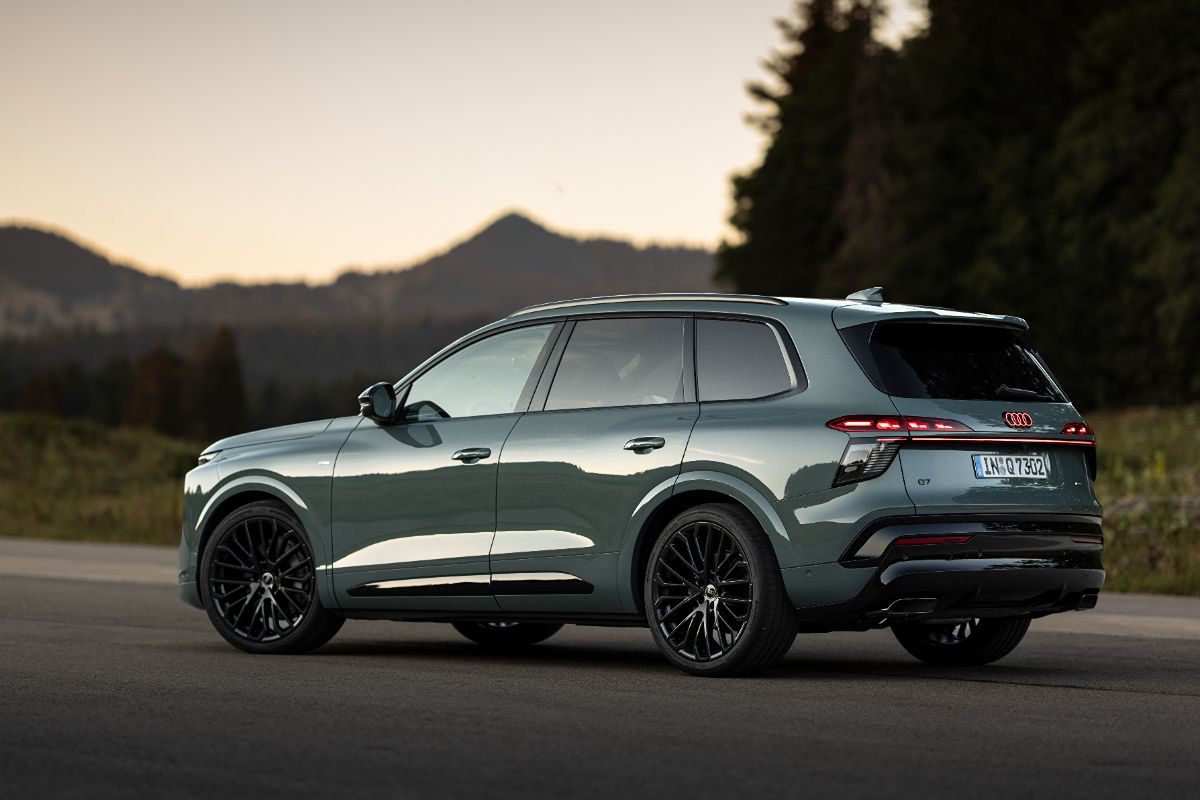
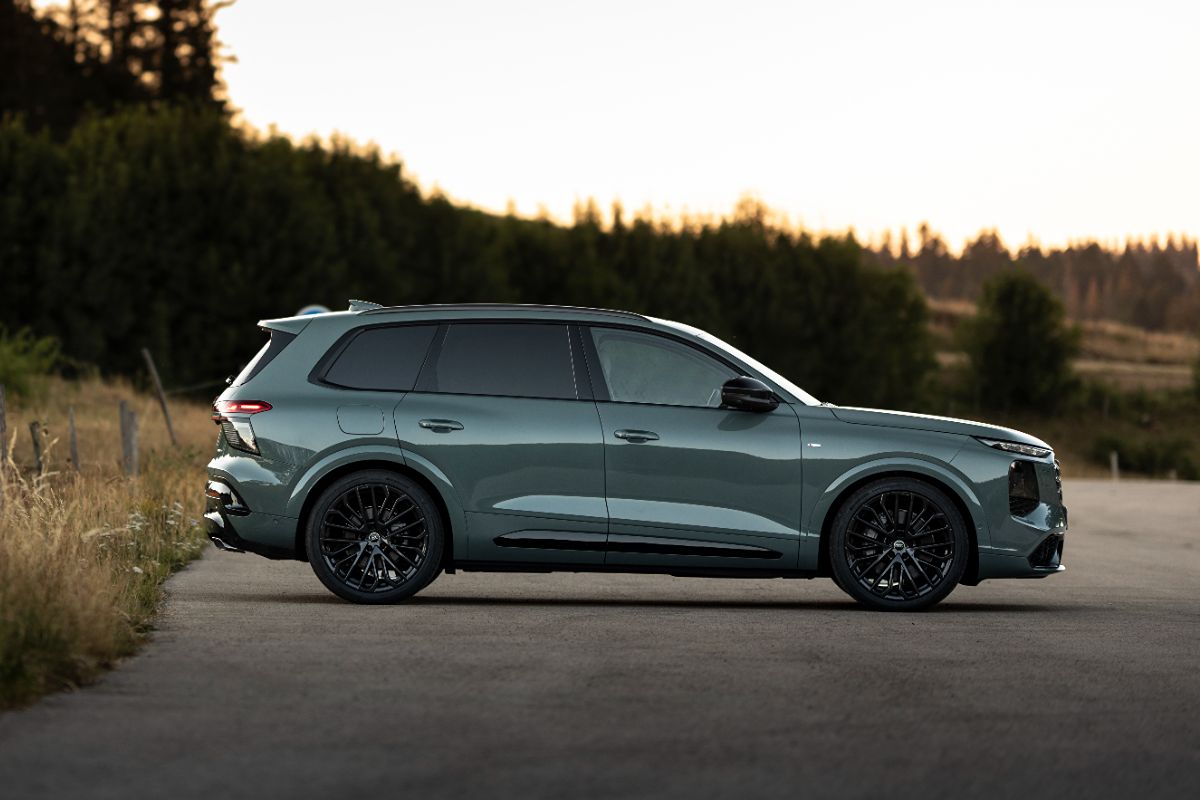
At 5,056mm long, the new Q7 is… well, it’s big. But it’s only grown by a fraction in length over the last version. The bigger difference is in the styling. Audi has made the shape squarer and more upright than before, with a taller bonnet and a more upright bootlid. That’s partly to improve space in the third row, but it’s mostly driven by customer feedback that they wanted something even more SUV-ish. Which is a bit surprising, as the Q7 was very SUV-ish already.
Whether you like the bluff new face is another matter. It’s bold, and it glows in the dark, and some might think it’s a bit vulgar. But given that Europe has accounted for only 18% of the 1.3 million Q7s sold over the past two decades, while the US accounts for half and China around a quarter, it’s understandable that Audi may not have been prioritising European tastes when it designed the new Q7.
How Practical is it?
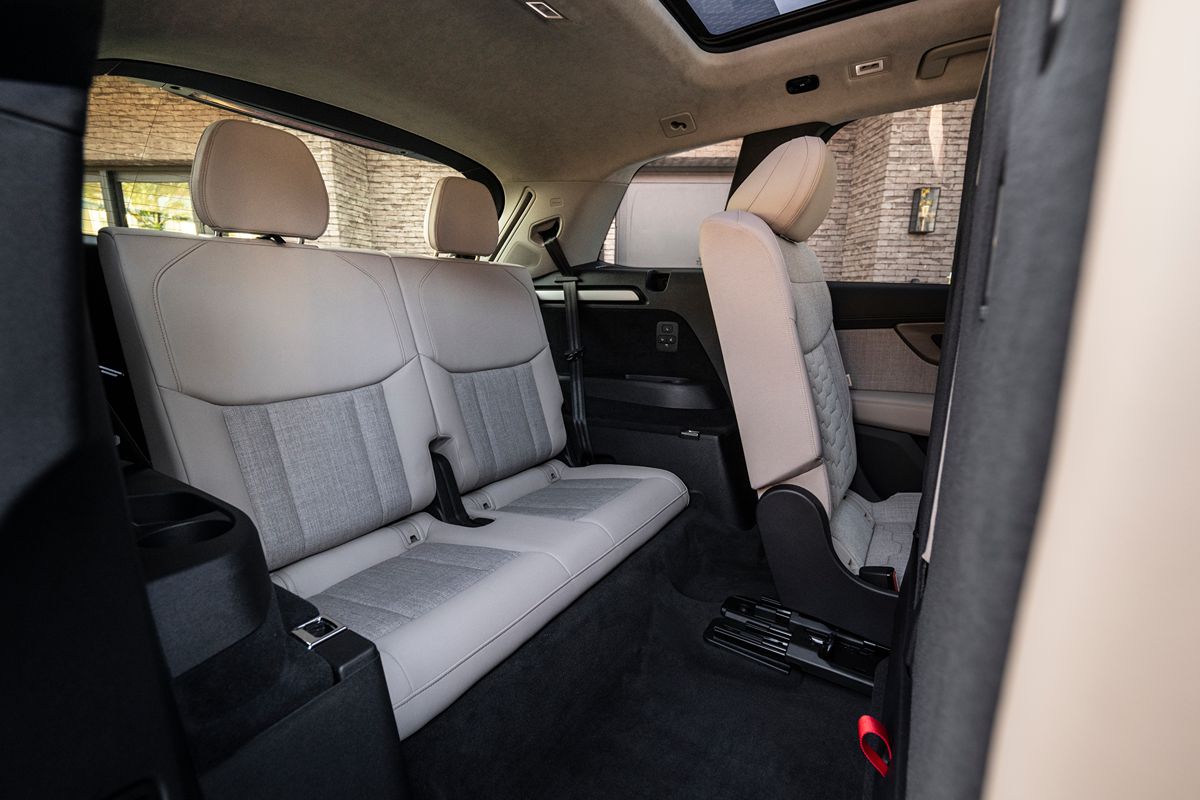
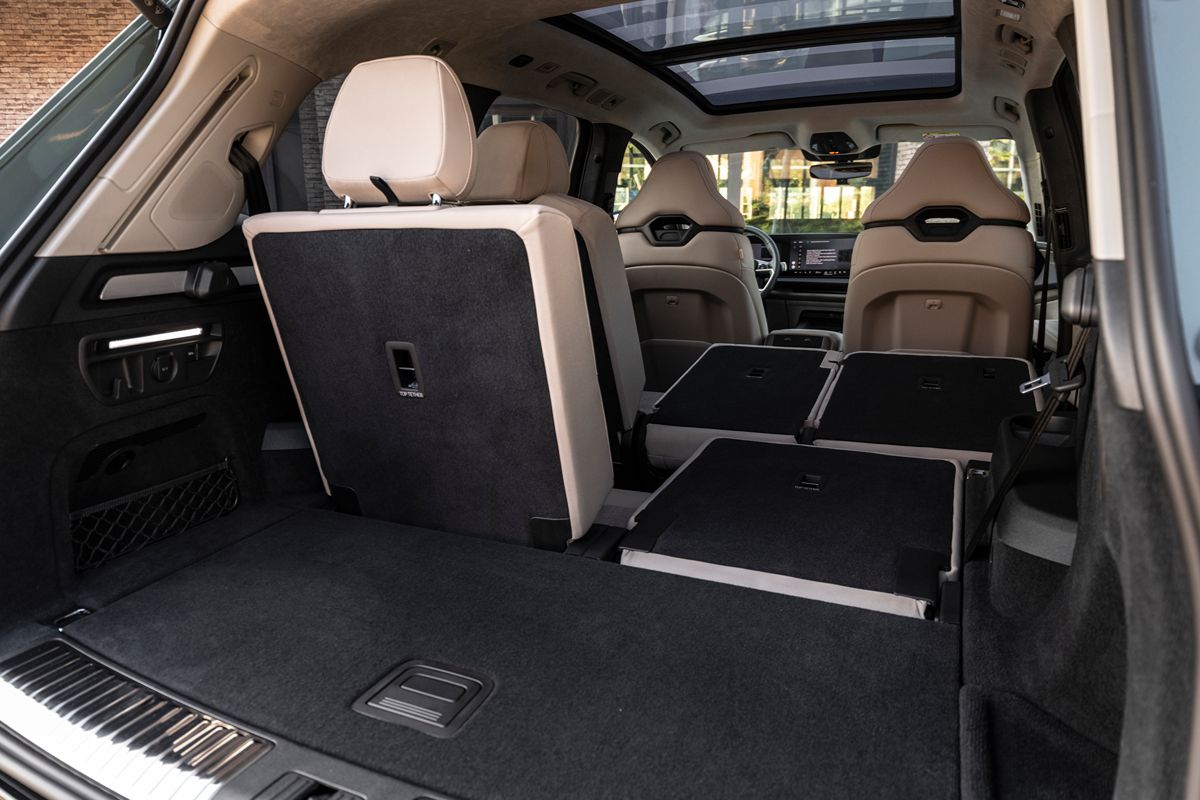
This is where the Q7 properly earns its keep. The middle row of seats is roomy and flexible, and it has the ability to slide, as well as its own set of climate controls and charging ports. Space in the third row has improved enough that an average-sized adult can now sit there in reasonable comfort, although it’s still best for kids as adults will find their knees a bit closer to their shoulders than is ideal for longer trips. Mind you, there are USB-C ports and decent window area in the third row, but no air vents. That feels like a miss in a luxury seven-seater; given the choice, we'd happily swap the standard passenger screen up front for proper ventilation in the cheap seats.
What is a real stroke of genius is that the outer middle-row seats lift and tip forward in a one-handed move, without needing to fold down, so a fixed child seat can stay in place while the seats are moved to give access to the third row. And as any parent knows, removing and re-installing child seats is one of life’s great stresses, so anything that helps to avoid that is a huge boon. There are also six Isofix points, which is surprisingly rare even in seven-seat SUVs, so this does promise to be a brilliant family car for those lucky parents who can afford one.
Boot space is 210 litres with all seven seats up and 722 litres in five-seat mode, plus there’s a very useful underfloor cubby for the load cover, so you don’t have to leave that kicking about in the porch whenever you’ve got all seven seats in use. In other words, this is a genuinely family-minded seven-seater rather than a five-seater with two apology seats in the boot. Audi has given it real thought and – apart from the lack of air vents in the third row –there’s very little to complain about when it comes to family usefulness and versatility.
What's it like to drive?
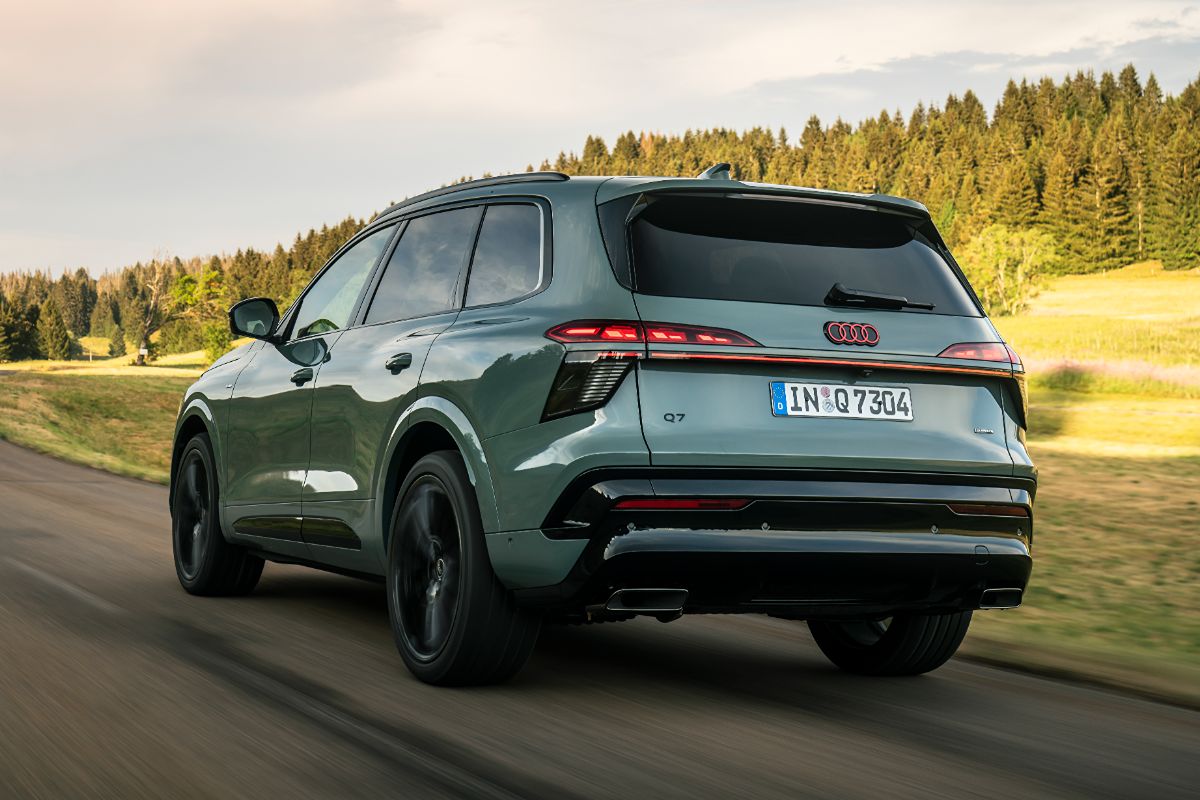
Very Audi, in the best possible sense. The top-spec Audi Q7 V6 TDI Vorsprung that we drove is calm, composed and almost comically unflustered. The 3.0-litre V6 diesel thrums quietly in the background, the 48-volt system unobtrusively takes over with pure electric running for brief periods at low speeds, and the eight-speed torque-converter automatic gearbox slurs shifts smoothly. It’s all very chilled and confident, which is exactly what you want of a big, luxury family SUV.
If you’re really splitting hairs, the Q7 can occasionally hang onto revs for longer than the engine really needs to, even in the gentler drive modes, which makes you aware of the diesel dirge that’s otherwise very easy to ignore. But that’s about the only grumble we can muster.
There’s certainly nothing wrong with the performance. The 3.0-litre V6 turbodiesel delivers 295bhp and 465lb ft of torque to all four wheels via the active quattro system and limited-slip differential, giving the Q7 TDI a 0-62mph time of 6.5 seconds. That feels about right: properly muscular without turning a 2,415kg family SUV into something needlessly frantic. And we do mean muscular; the Q7 can tow up to 3.5 tonnes, which makes it one of the best tow cars you can buy.
Standard four-wheel steering is one of the Q7’s big advantages. It gives the car a 10.95-metre turning circle (which is more like what you’d expect of a small family hatchback) and makes the chunky Q7 surprisingly manageable in car parks.
Adaptive air suspension is standard on every version of the Mk3 Q7 in the UK, too. Even our test car's huge 23-inch wheels didn’t spoil the ride comfort. There’s a little bit of thump and judder over town roads, but it settles well at higher speeds and is a first-class long-distance cruiser.
The steering is a bit numb, but it’s also accurate and gives you plenty of confidence in what the wheels are doing and where the nose is pointing, so you can actually select for Sport mode and enjoy a decent road in the Q7, even if this is always a car that’s happiest making steady and refined progress.
Technology, equipment and infotainment
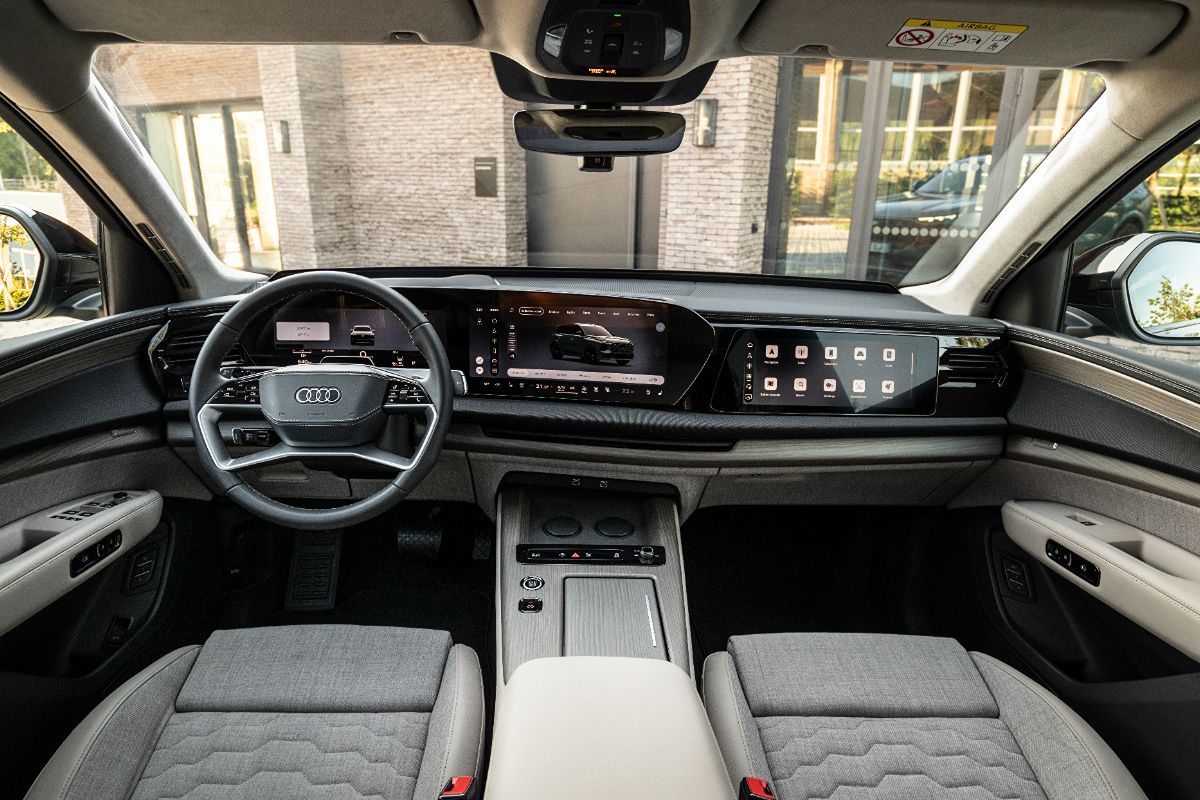
The dashboard is dominated by a curved display containing a slim digital driver's screen and a 14.5-inch central touchscreen, while every Q7 also gets a 12.3-inch passenger display. That's an awful lot of screen. Whether the passenger’s one improves anybody's life is debatable, but at least Audi doesn't make you pay extra for it, while a lot of rivals do. And, of course, you can turn it off if you don’t want it adding to the glare at night.
The main touchscreen interface is slick, and the temperature adjustment is permanently visible but it’s really annoying that the control for the fan direction is also in the touchscreen. There was never anything wrong with a manually-controlled air vent, was there? Still, the AI-enabled voice assistant handles climate requests well, so it’s still easy enough to get the climate set up how you want it.
The rest of the cabin is smart and comfortable, especially with the pale, Scandi-style wood trim. The standard panoramic roof opens and can optionally have configurable opacity and lighting, which looks seriously fancy and will keep the kids entertained for a while, at least. Perceived quality is strong, although the glossy black plastic around the upper dashboard feels a bit cheap compared to the finishes you get from Volvo and BMW.
Equipment is very generous. Leather, heated seats, electrically adjustable seats, matrix LED headlights, adaptive cruise control with semi-autonomous assistance, a powered tailgate, adaptive air suspension, four-wheel steering and 360-degree parking cameras are all standard even on entry-level Audi Q7 S-Line. Best small detail? Two MagSafe charging pads up front, which hold phones securely while charging them. Finally!
Edition 1 adds 22-inch alloy wheels, red brake calipers, ventilated and massaging front seats, and heated seats in the middle- and third rows. Vorsprung goes even further, with huge 23-inch alloys, switchable transparency for the pano roof, head-up display, Bang and Olufsen audio, and even Digital Matrix LED lights that beam animated lights onto the floor when you indicate, as well as showing lane-centring, and illuminating pedestrians.
Audi Q7 running costs
The Q7 TDI starts at a little over £80,000 and stretches to beyond £100,000, so nobody is going to mistake the Q7 for a bargain. Still, a Mercedes-Benz GLE costs much the same, and the BMW X7 even more.
Given the equipment that you get in the Audi Q7, it still works out as a reasonable price for what you’re getting, although you can certainly get a Land Rover Defender or Volvo XC90 for a lot less. Finance and leasing costs will obviously be crucial, but they haven’t been confirmed yet, so we’ll have to wait and see.
You wouldn’t expect a huge, seven-seater non-hybrid SUV (well, not a proper hybrid, anyway) to be particularly cheap to run, so the diesel-powered Q7’s official WLTP fuel economy figure of 36.3mpg will be of little surprise. We’ll see how the plug-in hybrid fares on that score when it arrives: it should do a lot better, on paper at least.
The plug-in hybrid will also be a lot better on Benefit-In-Kind tax for company car drivers, although precisely how much better will depend largely on what its electric-only range turns out to be.
Audi Q7 reliability
The new Audi Q7 is too new to have any owner feedback and reliability data, but Audi as a brand came a middling joint-22nd out of 30 manufacturers (tied with fellow German luxury brand Mercedes) included in the 2026 What Car? Reliability Survey.
Audi offers a standard three-year, 60,000-mile warranty, but you can pay extra to extend it to five years and 90,000 miles. That’s very similar to the sort of warranty cover you get with rivals like BMW, Mercedes and Volvo, but when alternatives like the Kia Sorento and Hyundai Santa Fe have much longer warranties as standard, the traditional three-year warranty does start to look a bit disappointing.
- There’s no pure electric version of the Audi Q7, nor is there any equivalent electric seven-seat SUV in the Audi range. Yet!
- Every Q7 gets a 360-degree parking camera, but go for Vorsprung and you get Park Assist Pro, which can memorise up to five different parking manoeuvres. So that awkward car port or garage that you’ve got to squeeze into? The Q7 has got it sorted, and it’ll always park how you want it to park, and can autonomously drive itself out of the parking spot, too.
- The 3.0-litre V6 turbodiesel has an electrically-powered compressor that spools up to deliver immediate torque, rather than having an initial lag while the exhaust gases build up. You don’t really know that it’s working, just that your Q7 has loads of shove from low down the rev range. It’ll no doubt help if you are towing heavy loads, too, which you may well be doing given the 3.5-tonne towing limit.
- If you want the best value: Go for the entry-level TDI S Line, which already has an unusually generous standard equipment list, so you don’t need to go wild with options.
- If you want the best company car: It’s well worth the wait for the plug-in hybrid (PHEV) that’s due not too long after the car’s initial launch. The diesel Q7 has crippling Benefit in Kind tax rates, but the PHEV will be much more affordable for company car users. We don’t know for sure what the electric range will be on the new Audi Q7 PHEV, which will be crucial to the BiK rates, but given that the Volkswagen Group already has plenty of PHEVs with around 70 miles of electric range, it’d be surprising if the Q7 doesn’t manage something similar.
- If you want the best high-mileage commuter: Well, the 3.0-litre V6 TDI is pretty hard to beat for long-distance efficiency, and it’s super-refined, too. Go for the Edition 1 and you also get ventilated- and massaging seats, which will make the miles sail by even more quickly. The Tech Pack, which adds the 22-speaker Bang and Olufsen sound system and head-up display, could also be worth considering if you want maximum comfort on the road.
- If you want the best family car: The entry-level Q7 S Line TDI makes sense. It really does get most, if not all, of the equipment that you need.


