Cupra Born 2026 review | A sporty alternative to the VW ID.3
Cupra Born cars for sale
4.0
Expert review
Pros
More entertaining to drive than most EVs
Long range with 77kWh battery
Sharp and stylish looks
Cons
Busy ride
Annoying touch-sensitive controls
Not as roomy as a Skoda Enyaq

The CarGurus verdict
The Cupra Born drives as well as it looks, and it's one of the most compelling electric cars there is if you’re after something that’s affordable but fun and stylish. It’s also a practical family hatchback and the purchase and running costs are comparable with its rivals. The 2026 model’s swapping of touch sensitive steering wheel controls for physical buttons is a positive change for ergonomics. It’s a shame that the fiddly touch sensitive climate control sliders remain in place though.
The Born’s biggest problem is the Renault Megane E-Tech, which still has a better user interface and the edge for handling and ride comfort. At the other end of the priority list, for anyone who values space more than handling and style, then the Skoda Enyaq certainly offers more room for a similar amount of money. For all that, the Cupra Born looks really great and drives well, and it’s very easy to see why you might fall for its hi-tech charms despite the plethora of competition.
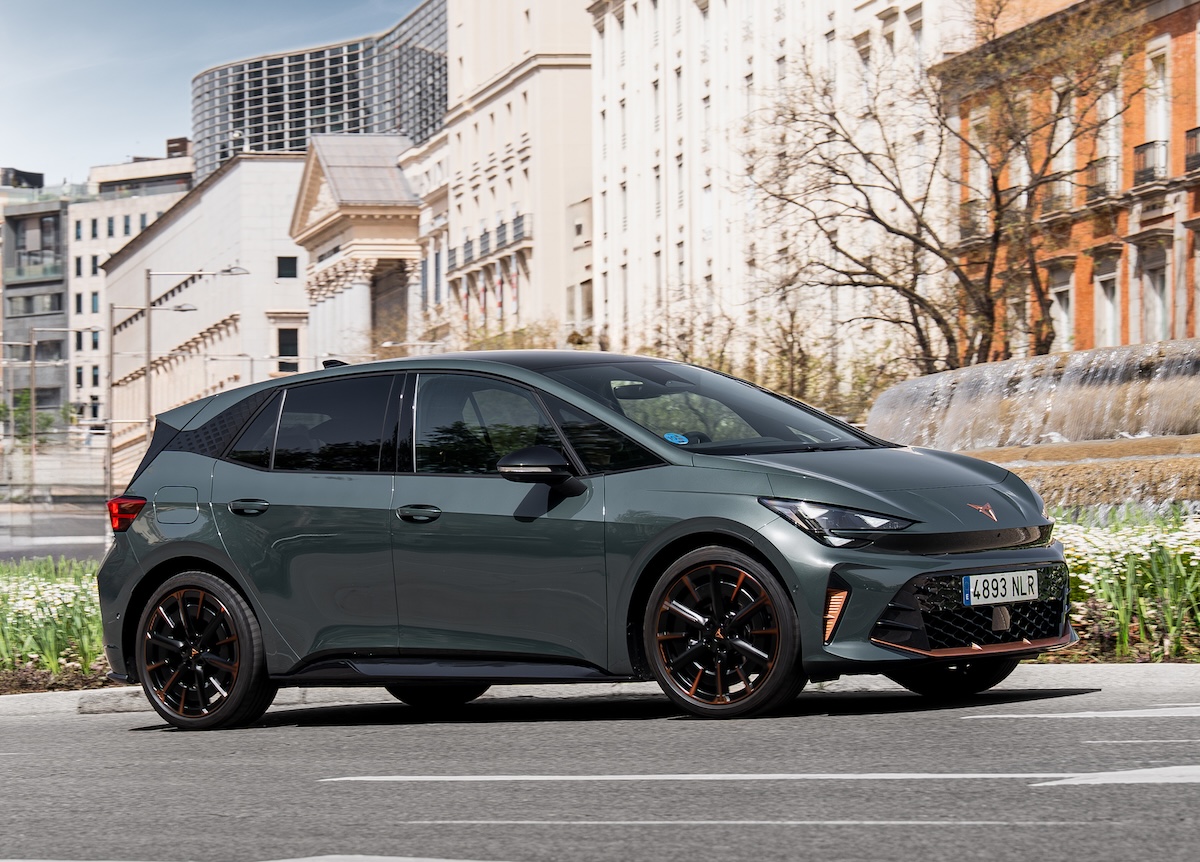
What is the Cupra Born?
The Cupra Born was the first bespoke model from Cupra, the sporty Spanish brand that was spun off from what was Seat’s performance sub-brand. It is another brand from the Volkswagen Group, then, so it’s no surprise that the Cupra Born shares its rear-wheel-drive MEB platform and many parts with the Volkswagen ID.3.
The Born was launched in 2022, and has received a number of updates during the course of its production run. The most significant was in 2026, when its battery line-up was tweaked to give more capacity and range. Specifically, Cupra now offers a choice of 58kWh and 79kWh batteries, which offer official WLTP range figures of 280 to 372 miles respectively.
Power output varies depending on the battery size, although all Borns use just one electric motor that powers the rear wheels. The entry-level 58kWh battery has 168bhp, while the 79kWh battery gets either 228bhp or, when it’s in a VZ model, 322bhp.
The chief selling point for the Cupra is its sporty styling and handling. The aggressive styling and the Cupra brand’s trademark copper-coloured highlights throughout the interior make it feel quite different to the comparatively sedate ID.3, and it's more engaging to drive as well.

How practical is it?
The Cupra Born ticks most of the important boxes when it comes to practicality. There’s more leg- and headroom for front and rear passengers than you’ll find in a Volkswagen Golf, for instance, meaning six-foot passengers should be able to get comfy in four of the five seats. The exception is the middle-rear seat, because it's pretty narrow, and shoulder space is too tight to fit three bodies alongside each other comfortably.
The boot space of 385 litres is sufficient for a double buggy or a medium-sized dog, and the addition of a moveable floor as part of the 2026 updates made the space more usable. In fact, the Cupra and the VW ID.3 are a touch roomier and more practical than the Peugeot e-2008 despite the Peugeot’s pseudo-SUV stance.
The sports seats in the front are also very comfortable and supportive, with plenty of adjustment, and there's a useful range of in-cabin storage as well.

What's it like to drive?
Before the 2026 facelift, Cupra used to offer a Born with a 45kWh battery and a realistic range of 150-200 miles. That was dropped for the facelift, but might be worth considering as an affordable used buy if you think that 0-62mph time of 8.9 seconds will be enough. At the other end of the scale is the most powerful VZ version, which with a 0-62mph figure of 5.6 seconds offers strong off-the-line performance.
The Borns that exist in between these two extremes have more than enough gumption to feel sporty, and so suit its racy character. True, it might ultimately be no quicker than an equivalent VW ID.3, but the Born still feels like the edgier, more involving car.
For that you can thank the way that the Cupra goes around corners. Compared with an ID.3, everything feels tauter and more entertaining, so you really can have fun on a decent road when the mood takes you. We’d stop short of calling it an electric hot hatch, but it’s certainly one of the more entertaining electric family hatchbacks, even if the Renault Megane E-Tech just about pips it on handling.
The payoff is the ride, which feels a little chatty and busy over town roads, although it’s still well controlled enough to not be a deal breaker for most. The optional dynamic chassis control (adaptive dampers) could be a wise move if you spend a lot of time on scruffy urban roads. These are standard on the VZ, helping to offest the stiffer ride from its large 20-inch alloy wheels.

Technology, equipment and infotainment
There’s a very healthy amount of equipment in the Cupra Born. Originally, it was offered in V1, V2, V3 or VZ trims, but in 2026 this was streamlined to Born, Endurance and VZ trims. Still, the basics are largely the same: entry cars get 19-inch alloy wheels (earlier ones got 18s), full LED lights, adaptive cruise control, a rear view camera and a heated steering wheel, while mid-spec ones gain heated front seats, tinted rear windows, 19-inch alloys and a head-up display. Top-spec cars bring 12-way electrically adjustable front seats with a massage function, 20-inch alloys and an upholstery upgrade. As well as much more power and range, the VZ gets styling enhancements, keyless go, a stereo upgrade and wireless phone charging.
All versions have a 12.9-inch touchscreen infotainment system, touch-sensitive controls on the steering wheel and touch-sensitive volume and climate controls beneath the central screen. Apple CarPlay and Android Auto, satnav and more are all included, and the big screen has very good graphics. We do, however, wish it was better to use, because it’s far too easy to accidentally change the volume or temperature. Yet, when you actually want to change the temperature or the audio volume, it’s a little tricky to do so precisely.
Sure, standard voice control helps but still isn’t infallible. Thankfully, the new physical steering wheel buttons (added for the 2026 facelift) make using the media and driver assist features easier, but we still find the Google-based system in the Renault Megane E-Tech to be a far superior offering.

Cupra Born running costs
The Cupra Born is a little pricier than the Volkswagen ID.3 version-for-version, but the healthier standard equipment levels make up for it. Obviously, prices rise as you progress up the range, and do be aware that versions at the very top of the range have prices that are very close to those of larger rivals such as the Kia EV6 or Hyundai Ioniq 5.
If you'd prefer, you can acquire your Born on a subscription plan. This packages the monthly cost of the car, plus all the associated costs including maintenance and insurance, into one flat monthly fee, so electricity will be your only additional cost. Expect this to be pricier than traditional monthly finance because of its bundled nature, but that does get you a good degree of convenience.
Assuming a cost of 28p per kWh for your domestic electricity, a full charge will cost around £17 for the 58kWh Cupra Born, £22 for the 79kWh car. Using off-peak tariffs can help to reduce this by as much as half, rendering the Cupra Born cheaper to fuel than petrol or diesel equivalents. Conversely, if you rely heavily on the UK's public charging network, expect costs to climb much closer to what you'd pay for a petrol or diesel car.

Cupra Born reliability
Cupra's first appearance in the What Car? Reliability Survey in 2023 was a fairly inauspicious one, as the new fledgling brand found itself rooted to the foot of the table. By the time the 2024 instalment arrived, though, the brand certainly seemed to have got its house in order. It had risen up to 17th (out of 31) in the brand rankings, while the Born ranked 9th of 19 models in the electric car class, ahead of the VW ID.3 and Hyundai Ioniq 5, albeit behind the Renault Megane E-Tech and Nissan Leaf.
Initially, the Cupra Born came with the same three-year, 60,000-mile warranty as other VW Group brands, while the lithium-ion battery was covered for 100,000 miles and eight years (the deal being it would be refurbished or replaced if it dropped below 70% of its as-new range potential). Since the Born was released, however, Cupra has enhanced its general vehicle warranty to a more appealing five years and 90,000 miles.
- Charging times in the Cupra Born vary depending on the battery size, and the age of your car. Early on, the 77kWh model had 125kW DC rapid charging, which delivered a 100-mile top-up in around 15 minutes at a 150kW charge point. The other batteries had 100kW DC charging, and could manage a 100-mile top-up in 20 minutes. Later on, DC charging speeds were upgraded to 165kW on the 59kWh car, 175kW on the 77kWh car and 185kW on the 79kWh VZ.
- Don’t be misled by Cupra’s statements on its website regarding 11kW AC home charging. Yes, the car’s capable of it, but in the UK very few homes can support an 11kW charger: that’s more likely to be relevant for offices and industrial sites. On a standard 7kW home charger, you’ll get a full charge in around nine hours for the 58kWh car, or 12 hours for the 77kWh version. The Cupra uses CCS and Type 2 sockets, which are the European standard and will be compatible with the vast majority of public and home chargers in Western Europe.
- Real-world range in the Cupra Born will, as with every electric vehicle, vary depending on the conditions. Cold weather and higher speeds reduce the range of every EV, while warmer temperatures and more moderate speeds will extended it. As a worst-case scenario, in very cold temperatures and on a steady motorway run, expect the earliest 58kWh car to drop to around 150 miles of range, compared to something like 220 to 250 miles per charge in warmer weather.
- If you’re on a budget: Hunt out the 45kWh Cupra Born on the used car market, which will be the cheapest version but will still have a respectable 211-mile official range.
- If you’re doing serious mileage: The 79kWh Cupra Born delivers the best balance of price and range if you’re routinely doing long journeys. Go for a mid-spec model with heated seats and head-up display, as both will be welcome on chilly mornings or a tiring commute. Do be aware that the price of a top-spec, Cupra Born is perilously close to that of the Tesla Model 3, the Polestar 2, the Hyundai Ioniq 5, the Kia EV6 and the Ford Mustang Mach-E, all of which might arguably make better options if you need a long-range family EV.
- If you want the sporty one: The VZ is the most powerful version of the Born and comes with Dynamic Chassis Control adaptive suspension as standard.
- If you want the best family car: if the 58kWh battery's range of around 250-300 miles is enough, save some money and get this rather than the bigger-battery model.