Cupra Raval 2027 review | A brilliant electric hot hatchback


Pros and cons
What we like
Great fun to drive
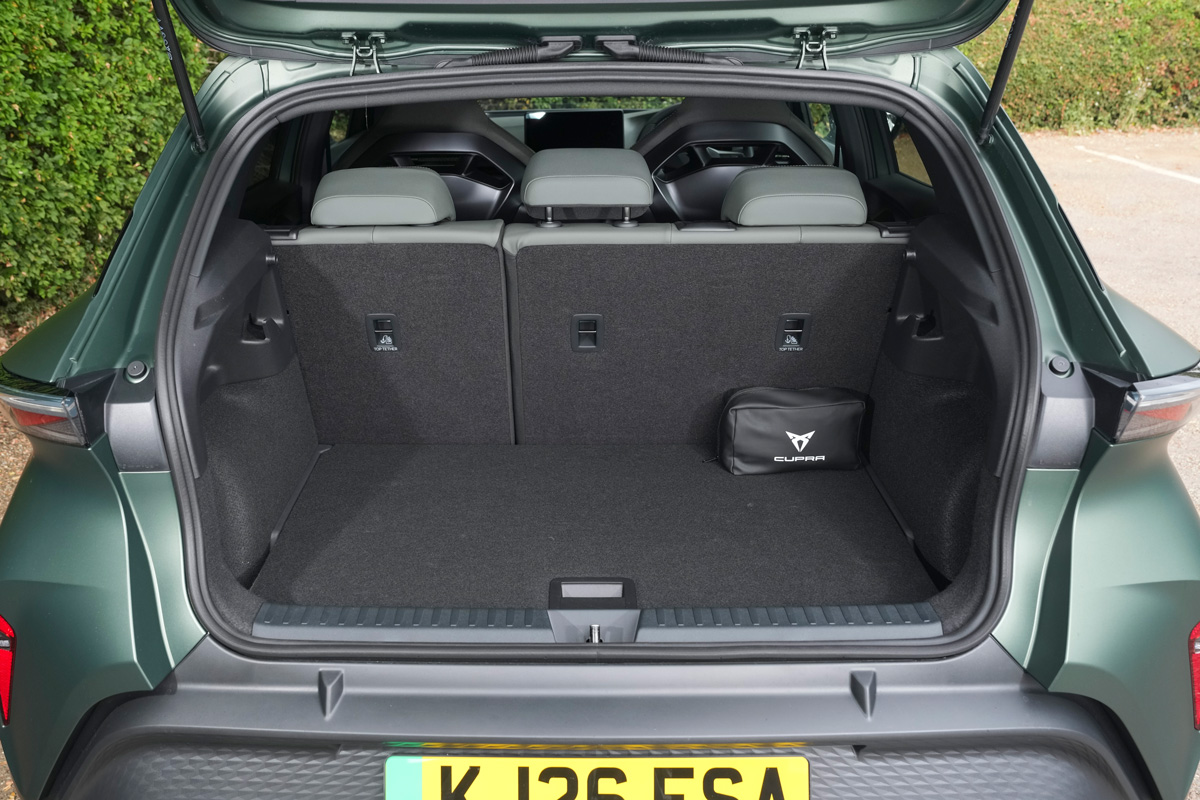
Big boot with plenty of in-cabin storage
Adjustable suspension on range-topping versions
What to consider
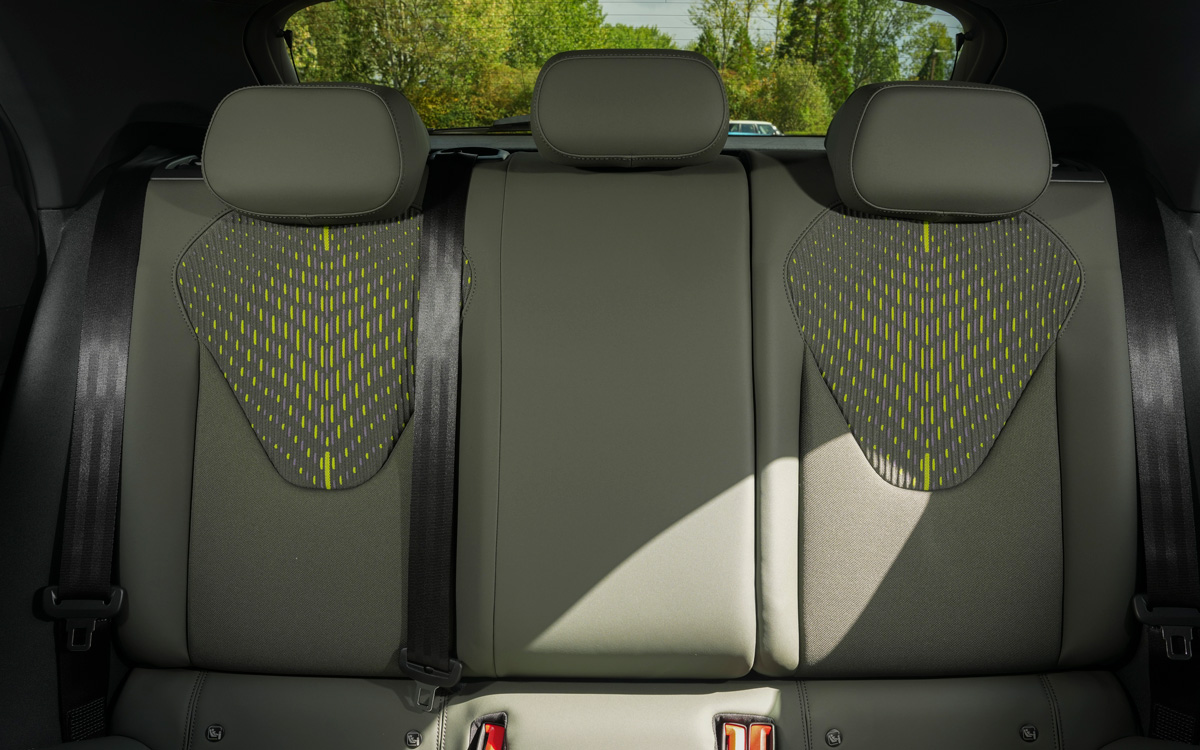
Slightly tight rear seats
The infotainment system could be simpler
Touch controls for the volume and air conditioning are frustrating
The CarGurus verdict
Where small electric cars have largely been about comfort and range for the past 15 years or so, we’re now getting to the point where manufacturers are interested in bringing entertainment to pocket-sized EVs, not just big, range-topping models. There have been some mediocre showings – the old Volkswagen ID.3 GTX springs to mind – but there are finally some serious performance hatchbacks, built for fun and enjoyment, that just so happen to be powered by electricity.
The Cupra Raval is a fantastic little machine, and if you buy one of the top-spec Raval VZ or Raval VZ Extreme variants you’ll be getting behind the wheel of a seriously entertaining electric hot hatchback. Coming from Cupra, a brand that has historically been all about performance and fun, we should have expected nothing less. Opposition is fierce, with the related Volkswagen ID. Polo GTI alongside the Peugeot e-208 GTi, Vauxhall Corsa GSE and Alpine A290. But the Raval is still entertaining and versatile enough to be worthy of your attention.
out of 5 expert review
What is the Cupra Raval?
The Cupra Raval is an electric hatchback, built to rival the likes of the Volkswagen ID. Polo, Alpine A290, Renault 5, Vauxhall Corsa Electric and Peugeot e-208. As such, it has five doors, five seats, and can be bought with one of two batteries: a 37kWh unit if most of your journeys are short and a larger 52kWh capacity pack if you cover more miles.
But where Volkswagen, Vauxhall and Peugeot took a while to reveal sporty versions of their pocket-sized EVs, Cupra launched the Raval saying the entire range is about fun and emotion. So at one end of the range the entry-level Raval Origin should excite you with its looks and driving character. At the other, the top-spec VZ and VZ Extreme hot-hatchback versions – available to buy from the get-go – should have you smiling from ear to ear. Well, that’s the theory, anyway.
Practicality
How practical is it?
There are six versions of the Raval to choose from, namely Origin, V1, V2, V2 Launch Edition, VZ and VZ Extreme. All of them have 441 litres of storage space in the boot, which is brilliant – the exact same as the Volkswagen ID. Polo, and significantly more than the Peugeot e-208’s 309 litres and the Alpine A290’s 329 litres. There’s also a two-position boot floor and a great underfloor storage area (though not for the base Origin model).
Every Raval gets 60:40 split rear seats, but Cupra hasn’t disclosed an official storage capacity figure for when they’re folded flat. Given that the Raval and ID. Polo are built on the same Volkswagen Group MED+ front-wheel-drive platform, we’d be willing to bet the Raval would be there or there abouts compared to the ID. Polo’s 1,240 litres.
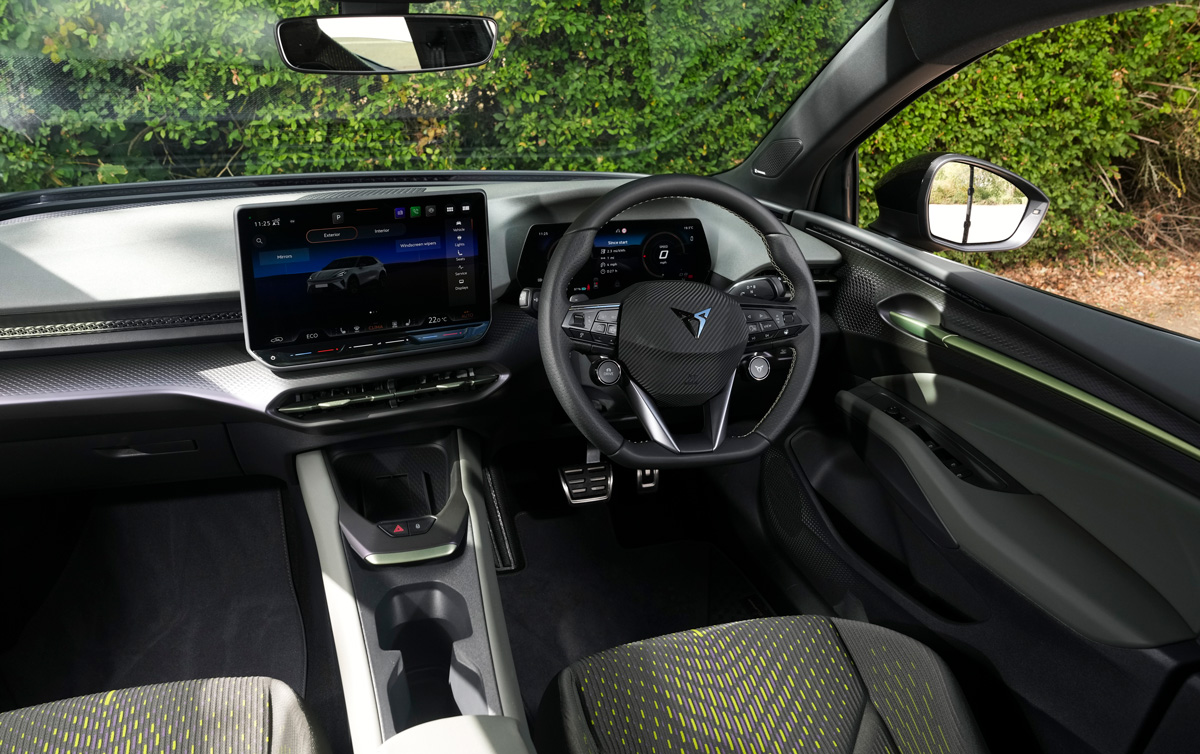
Climb inside and you’ll not be wanting for space up front, with an airy and bright feel throughout. The seats are comfortable with plenty of adjustability, and there’s an average level of in-cabin storage. There’s a storage space just below the centre air vents where you can keep your phone, for example (with the exception of the entry-level Origin model you’ll find a wireless phone charger), with two cup holders just behind that. There’s also a central storage bin covered by a folding centre armrest, and then an open storage space under all of that in the divide between driver and passenger. Here’s where you’ll find two USB-C ports and a 12V auxiliary port.
Head and legroom in the back are good, though the rear seats are a squeeze. You don’t feel as though you’re being crammed into a small, dark box, however, with two small air-conditioning vents to help keep things comfortable. On all but the Origin model there are two more USB-C ports for the back seats, too, and there’s the option of a panoramic sunroof for £580 with all Raval variants.
The Raval has an unbraked towing capacity of up to 750kg and a braked capacity of up to 1,200kg, which is impressive given the car’s relatively small footprint. That’s the same capacity as the ID. Polo (shock) and more than the Alpine A290’s 500kg unbraked and braked capacities. The Corsa GSE and e-208 GTi on the other can’t tow anything at all. If hauling a trailer down the road is something you see yourself doing with a Raval, know you’ll need to spend £165 for tow bar preparation and £580 for the bar itself.
The accessories range for the Raval isn’t massive, with nothing to cater for pet owners – things like harnesses or water bowls, which some manufacturers offer with cars this size. But you can get front mudflaps and Cupra-branded car covers, along with a semi-rigid rubber boot floor cover or a flexible, reversible boot liner. Cupra also offers roof bars with a 75kg capacity, which you’ll need if you want a roof-mounted bicycle rack, ski or snowboard rack, or a 450-litre roof box.
Driving
What's it like to drive?
The six Raval trim levels – Origin, V1, V2, V2 Launch Edition, VZ and VZ Extreme – open doors to certain features and technologies but also specific driving experiences. The entry-level Origin comes with the 37kWh battery and a 113bhp electric motor, while both the Raval V1 and the V2 can be had with either the 37kWh battery and a 133bhp motor or the 52kWh battery and a 207bhp motor. At the top of the pecking order are the Raval VZ and Raval VZ Extreme, both of which are fitted with the 52kWh battery an electric motor producing 222bhp.
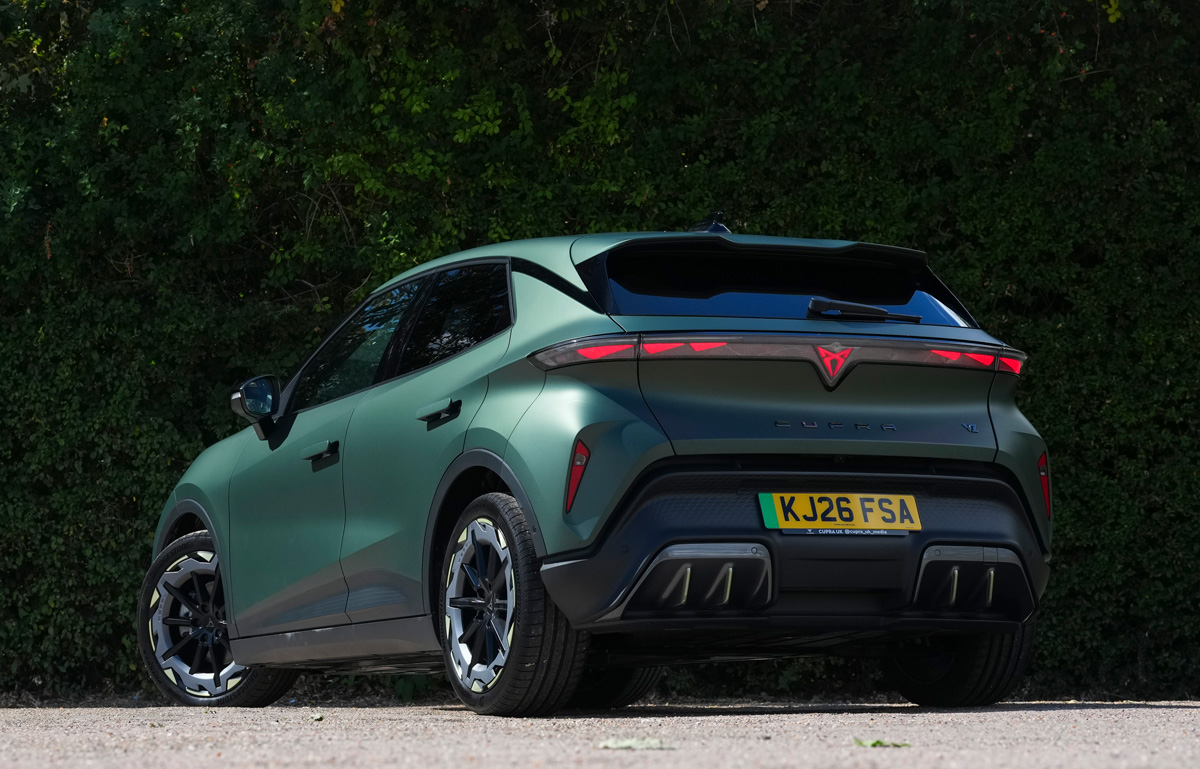
Our test-drive was in a Raval VZ, the electric motor of which produces 214lb/ft alongside its 222bhp. This is actually the same torque figure as both the V1 and the V2 models when fitted with the 52kWh battery, even though their peak power figures are lower at 207bhp. But what really pushes our Raval VZ and the mechanically identical VZ Extreme into proper hot hatchback territory is the electronically adjustable Dynamic Chassis Control suspension, the fitment of an electronic limited-slip differential, a 15mm drop in ride height and a 10mm wider track.
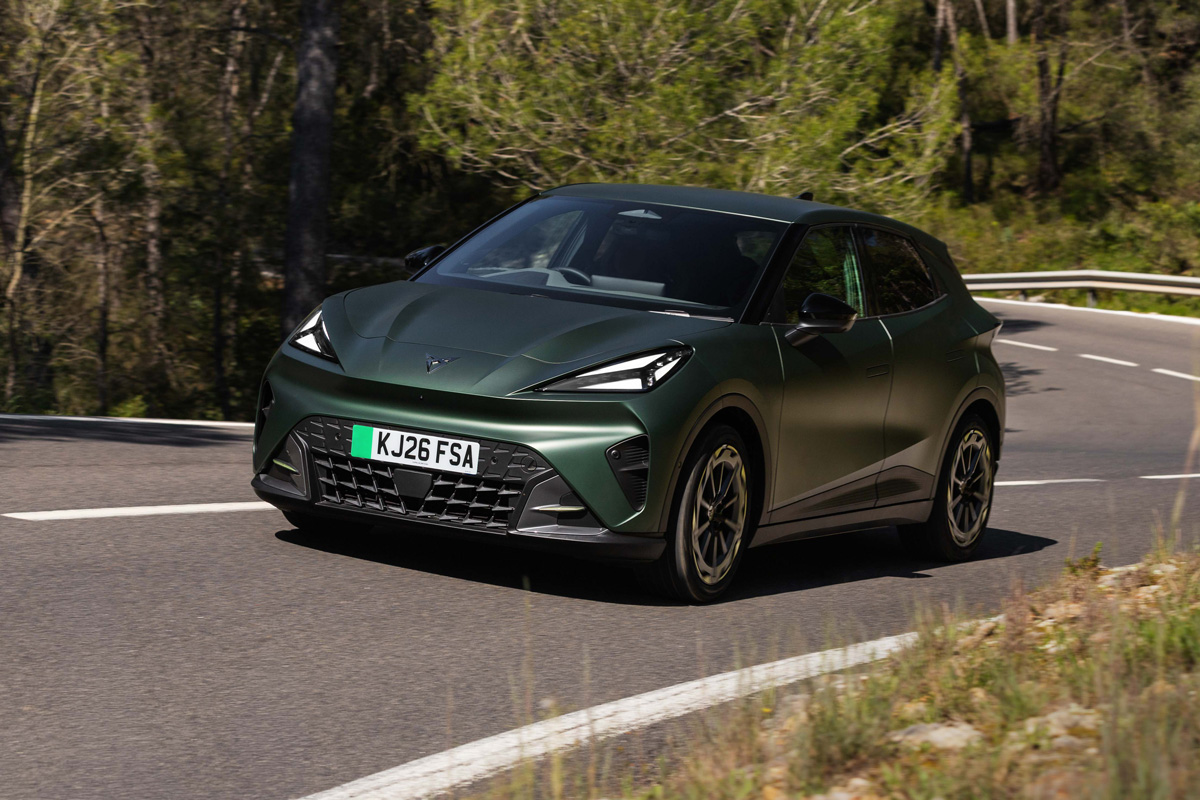
It doesn’t take long for you to realise this is a spicy little creation, as while the top speed may only be 109mph, the 0-62mph sprint takes just 6.8 seconds. Grip is excellent, with sticky 235/40 tyres wrapping 19-inch alloy wheels, and as you head into a corner and apply the throttle you can feel that limited-slip differential working away beneath you, finding grip where you’d expect the nose of the car to start pushing wide. You feel confident to push, too, because the steering weight and response are both well judged.
There are five drive modes, namely Range, Comfort, Performance, Cupra and Individual. They do what they say on the tin, with Range and Comfort delivering lighter steering, a less aggressive throttle response, a softer ride and so on. Performance and Cupra modes sit at the other end of the spectrum, while Individual allows you the freedom to have maximum attack from the throttle, say, but a softer feel from the suspension. This is one of the real benefits from Dynamic Chassis Control.
The suspension itself finds a nice balance between responsiveness and comfort in all modes – you’re never too fearful of a pothole or bump shaking your spine to pieces. That being said, the parameters for Individual mode are far too wide with a total of 15 different settings, the extremes of which are best avoided. The brakes, meanwhile, are powerful and responsive, giving you a good and consistent feeling whether you’re pootling around town at low speeds or firing your way along a nice stretch of road.
Measuring 4,046mm long, 1,784mm wide and 1,514mm tall, the Raval feels small and nimble, in part because the wheels are pushed right to the corners of the car, but also because of its approximate 1,550kg kerb weight. The driving position is brilliant, with plenty of adjustability and support from the seats, plus good adjustability from the steering wheel. The cabin is reasonably quiet with little tyre roar, too, the main source of noise coming from around the windscreen.
Paddles behind the steering wheel aren’t for actual gears or synthesised gears, the latter you can find in something like the much larger Hyundai Ioniq 5. They’re used instead to control the level of regenerative braking, and on our test drive it became clear that the two lowest settings are probably the nicest for everyone onboard – otherwise small lifts from the accelerator pedal are met with awkward lurches from the car as the motors harvest energy for the battery.
Tech and equipment
Technology, equipment & infotainment
We’ve covered the driving tech – the clever differential, the drive modes, the range – but there’s plenty more to digest. Every Raval gets a 10.25-inch ‘Digital Cockpit (the screen ahead of the driver, put simply) and a 12.9-inch central infotainment display, angled slightly towards the driver. Apple CarPlay and Android Auto are standard, as is a DAB radio, Bluetooth, air conditioning, a leather steering wheel, LED headlights and taillights, adaptive cruise control, rear parking sensors, driver monitoring with attention and drowsiness assist, traffic sign recognition, lane keep assist, front and rear cross traffic alert, blind spot monitoring, and automatic emergency braking.
The 12.9-inch touchscreen’s interface isn’t the simplest to navigate, with numerous menus, sub-menus and the ability to customise certain areas, but you do get used to it eventually. Happily, you can also set favourite functions, making it easier to switch off the driver monitoring system, for example. But the touch sensitive controls just below the display itself for the climate control and the volume are a pain to use. Much more preferable would be plain, old-fashioned rotary dials or buttons. As for the 10.25-inch display behind the steering wheel, there are several layouts to choose from and none of them are unclear or distracting.
The Origin model is the most basic of the range. Though it gets all the kit mentioned above, it’s fitted with 17-inch wheels where every other model gets 18s or 19s. Furthermore, the door mirrors are electrically adjustable but fold manually, there’s no built-in navigation, there’s no voice assistant, there’s no reversing camera, the climate control is single-zone, and the interior is largely cloth rather than anything fancier.
Move up to the V1 and there are a few more goodies, including 18-inch wheels, illuminated door handles, built-in navigation, the addition of front parking sensors, a wireless phone charger, dual-zone climate control, a heated steering wheel, an auto-dimming rear-view mirror, heated front seats (still fabric covered), a rear-view camera, plus keyless entry and go. From there you could step up to the Raval V2, which benefits from 19-inch wheels, a 475W 12-speaker Sennheiser sound system, multicoloured ambient interior lighting, electrically adjustable ‘Dinamica’ covered seats and more.
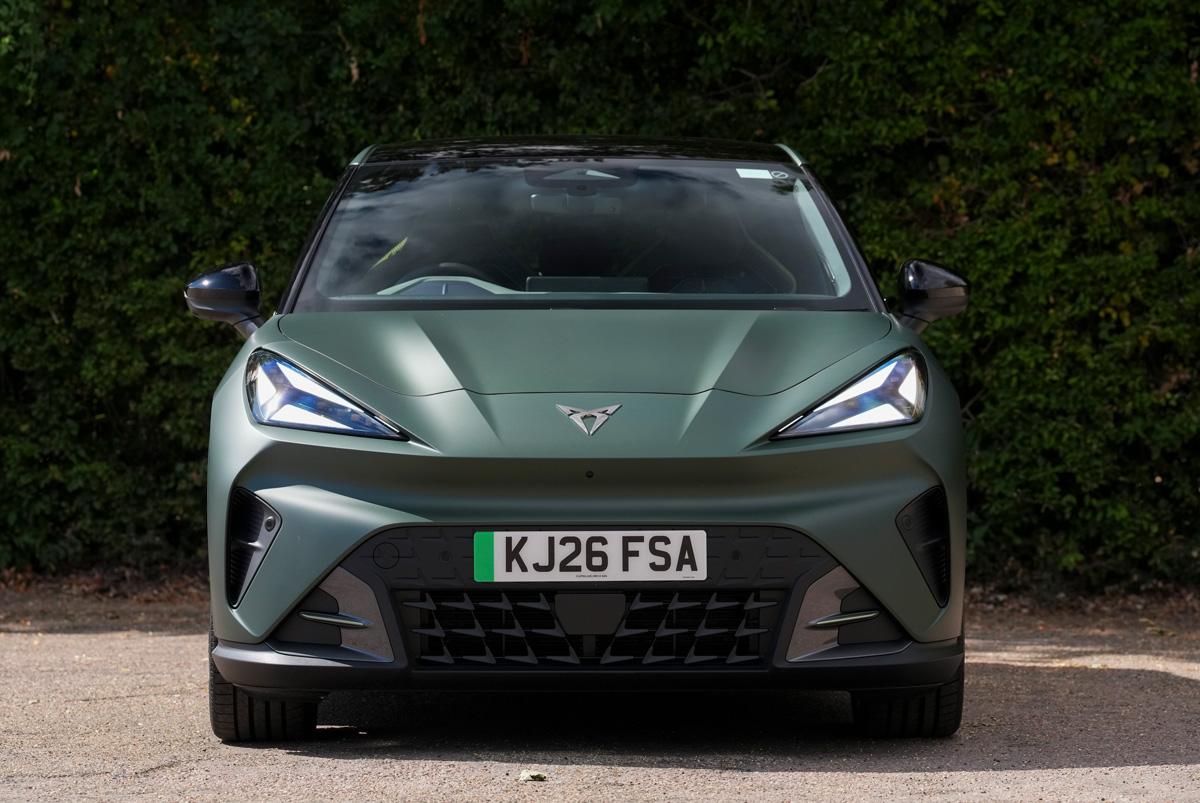
Finally there’s the VZ and VZ Extreme, both of which are packed with pretty much everything you could possibly want. They get bespoke sets of 19-inch wheels, Matrix LED headlights, specific VZ or VZ Extreme front and rear bumpers and details, aluminium pedals, and bucket seats.
It’s worth mentioning some features are available as options. Matrix LED headlights can be added to the V2 as an individual option, for example. Then there’s the ‘Drive Pack’, standard with the VZ Extreme but not available with the ‘regular’ VZ, which can be added to either the V1 or V2. This includes a top view camera system (one camera up front, one at the rear, and one on each side for four in total), Intelligent Park Assist and Remote Park Assist with Trained Park Assist, and ‘Travel Assist 3.0’ with Traffic Jam Assist. That’s a lot of ‘assists’, but all those systems are designed to take away some of the strain from you as the driver when pootling along the motorway, parking, or if you’re stuck in slow-moving traffic.
A heat pump is available with the V1, V2 and VZ Extreme for £960, and it’s an option we’d recommend going for if you can. It’ll do things like take heat energy that would normally be wasted and use it to provide heat to the climate control system, for example, meaning less of a strain on the battery to produce a toasty interior.
Running costs
Cupra Raval running costs
The top of the range Raval VZ and VZ Extreme with their 52kWh batteries are said to manage 238-273 miles on a single charge, but it’s that lower figure you’re more likely to see in the real world. You should expect even fewer miles if you drive them hard, which will be difficult not to do when presented with a nice section of road.
A Raval with either the V1 or V2 trim level combined with the same 52kWh battery will fare marginally better, with WLTP figures of 273-277 miles. The 37kWh V1 and V2 versions on the other hand manage a claimed 201-203 miles to a single charge. At the time of writing there’s no official range for the Origin model, but as it comes with the 37kWh battery only it’s likely to yield almost exactly the same figures as a 37kWh V1 or V2.
Every Raval costs less than £50,000, good news as it means there’s less yearly road tax to pay – vehicles costing more than this are liable for an additional £440 per year from years two to six of ownership as part of the Expensive Car Supplement, plus the normal £200 of VED road tax (the threshold is only £40,000 for regular petrol, diesel or hybrid vehicles). The Raval also qualifies as a Band 2 or Level 2 car under the UK governments Electric Car Grant scheme, which takes £1,500 off what would have been the asking price. So where a Raval VZ Extreme would have been £36,310 without the ECG, you’ll see it priced from £34,810.
As for servicing, if you’re buying a Raval brand new or your car is 90 days old or less you can sign up for Cupra e-Care. This is Cupra’s electric car servicing and maintenance offering, and there are three types: the Essentials Plan, the Standard Plan and the Plus Plan. The Essentials Plan will set you back £6.21 for 24 months or £149 upfront, and includes your first service with an inspection and battery state of health check, plus a general health check which includes one brake fluid change and one pollen filter change. The Standard Plan is £13.25 for 48 months or £636 up front, for which you get two services with two inspections and two battery state of health checks, along with two brake fluid changes, two pollen filter changes and the car’s first two MOT tests. Finally there’s the Plus Plan, the most expensive of all at £21.75 for 48 months or £1,044 per month. That buys everything in the Standard Plan but with two tyre replacements as well. There are further servicing plans if your Raval is 91 to 365 days old, and more plans if it’s one to 15 years old.
Cupra Raval reliability
As the Raval is still so new there’s no reliability data at all. The car it’s related to, the Volkswagen ID. Polo, is also too new to give any sort of indication as to how the Raval will fare.
As for Cupra as a brand, things aren’t fantastic. The latest What Car? Reliability Survey, which collates owner’s feedback on cars up to five years old to judge which vehicles and brands are most reliable, put Cupra down in 25th position out of 30 manufacturers. That’s two places above Volkswagen but a drop from 13th position the year previous. What Car? detailed how many of the issues reported were to do with either electrical or infotainment systems, but that 36% of problems were sorted in a day or less. Don’t let that put you off buying a Raval entirely, however, as every new Cupra comes with a five-year or 90,000-mile warranty, while the battery is covered by an eight-year or 100,000-mile warranty.
What owners say
Three things to know
- If you’re buying a Cupra Raval you may be interested to learn about the My Cupra App. It allows you to keep track of your service intervals or get a service booked when the time comes. Plus, you can unlock the car with a digital key, turn on the lights, honk the horn, or check its location if you’re in a huge car park. You’re able set up charging schedules as well, plan routes and send them to the navigation system, and turn on the air conditioning before you climb aboard.
- The Raval’s two batteries differ in chemistry as well as size. The 37kWh unit is known as an LFP or Lithium Iron Phosphate battery, whereas the 52kWh pack is an NCM or Nickel Cobalt Manganese battery. That knowledge will make little difference to you as an owner, but what’s handy to know before you buy is they charge at different rates. To get from zero to 100% with a ‘slow’ 11kW AC charger will take four hours with the 37kWh battery and five hours 30 minutes with the 52kWh battery. With fast charge DC power, however, the smaller battery can only take up to 88kW, which delivers a 10-80% top up in 23 minutes. The 52kWh unit on the other hand can take up to 105kW of DC power, meaning a 10-80% top-up takes 24 minutes, even with its greater capacity. More miles added in less time, in short.
- Every Cupra Raval gets a 10.25-inch digital driver’s display ahead of the steering wheel and a 12.9-inch central infotainment screen on the dashboard. That touchscreen can show you things like your battery charging schedules, your energy usage, and when your next service is due. Every Raval also gets a DAB radio, Bluetooth, wireless Apple CarPlay and Android Auto. However, the least expensive Raval Origin doesn’t feature built-in navigation, and it gets a more basic version of Cupra’s ‘OneInfotainment’ app store, meaning fewer apps and features available to download and use compared to every other trim level.
Which one to buy
- If you want the least expensive model: The Raval Origin is the way to go if you’re after the basics. You get 17-inch wheels, air conditioning, adaptive cruise control, LED headlights and taillights, Apple CarPlay and Android Auto, and a 37kWh battery that’ll be good for around 200 miles on a full charge. All of that will set you back less than £24,000, and with 113bhp from its electric motor, 0-62mph will take about 11 seconds.
- If you want the best range: A Raval with the V1 or V2 trim level combined with the 52kWh battery is good for a claimed WLTP range of 273-277 miles. The VZ and VZ Extreme versions may have the same battery, but with more power they can’t go quite as long on a single charge.
- If you want a proper hot hatch: The Raval VZ or the VZ Extreme are the ones to buy if you’re looking for fun. Mechanically they’re exactly the same, with 222bhp, an electronic limited-slip differential, electronically adjustable suspension courtesy of Dynamic Chassis Control, and grippy 235/40 R19 tyres. They look slightly different, and there are a few more standard features with the Raval VZ Extreme, plus the availability of a couple of tech options which can’t be had on the ‘regular’ VZ. But either will be a hoot to drive.
- If you want all the technology: As mentioned above, for all the tech you’ll probably want to go with the VZ Extreme. It gets the most standard equipment and opens up access to options the equally powerful VZ version can’t have.


