Lexus NX 2026 review | Comfortable, efficient alternative to the usual German SUV
Lexus NX 450h+ cars for sale
4.0
Expert review
Pros
Smooth, comfortable ride
Feels refreshingly different from German rivals
Enviable reputation for reliability
Cons
Petrol engine sounds thrashy when pushed
Too much body lean in corners
Rear-seat area is a little dark

The CarGurus verdict
By going its own way and not chasing the German premium SUV formula, the Lexus NX stands out as a highly appealing alternative. It’s easy to live with, thoughtfully designed and exceptionally comfortable. Where many rivals lean heavily on sportiness or brash styling cues, the Lexus feels carefully engineered and premium.
Both the self-charging NX 350h and NX 450h+ plug-in hybrid make strong cases depending on your needs, combining smooth hybrid power with impressive efficiency and plentiful equipment. If you prioritise comfort, reliability and a slightly different approach to premium motoring, the Lexus NX should be on your shortlist.
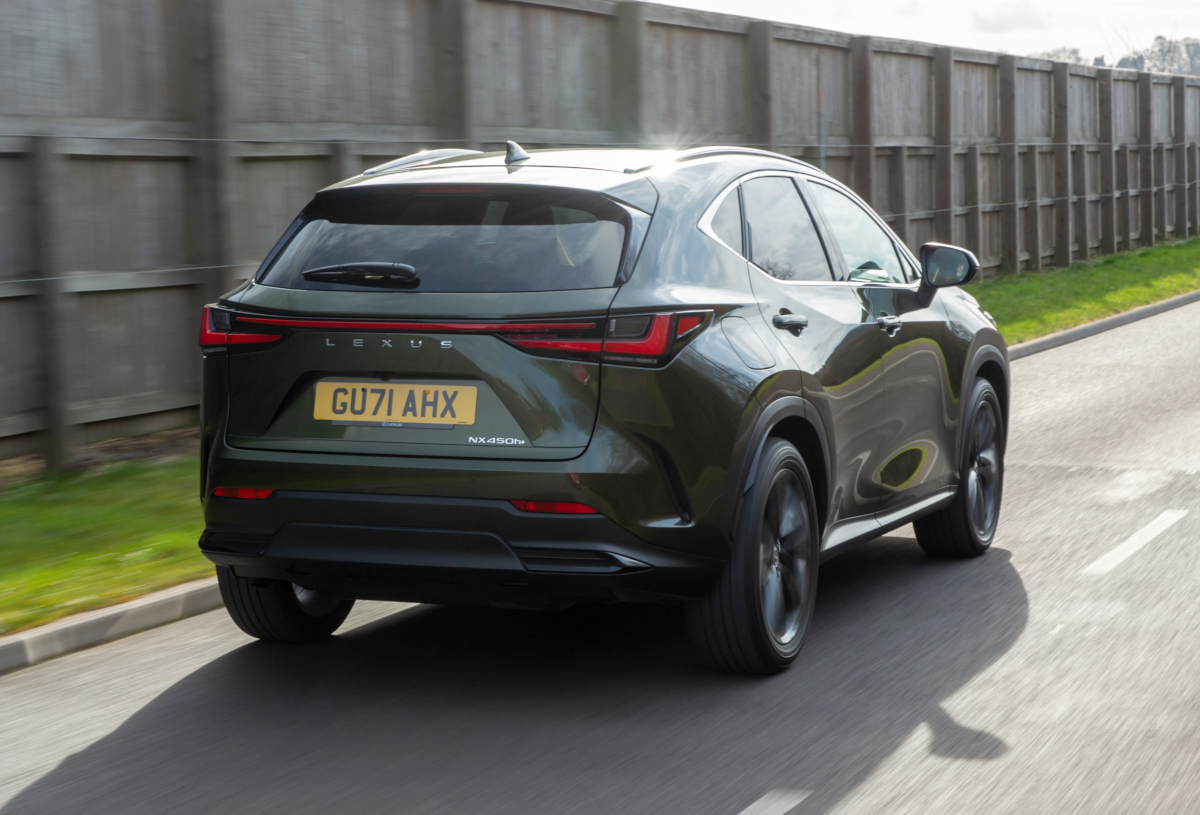
What is the Lexus NX?
The Lexus NX is a mid-size premium SUV that sits between the smaller UX and the larger RX in the Japanese brand’s lineup. First launched in 2014 and one of Lexus’s strongest sellers in Europe, the current model represents a significant evolution, moving onto a new platform and expanding its electrified powertrain options.
If you’re considering SUVs such as the Volvo XC60, Audi Q5 or BMW X3, the NX should be firmly on your shortlist, especially if hybrid efficiency and reliability matter more than outright sportiness.
While its styling follows Lexus’s established sharp-edged design language, the latest NX introduced a more modern look, with slim headlights, integrated daytime running lights and a full-width rear light bar. Beneath the familiar face, though, it’s an extensively updated car with revised chassis hardware, improved technology and a wider electrified lineup.
There are two powertrain options: the NX350h ‘self-charging’ hybrid and NX 450h+ plug-in hybrid. With 302bhp and an official electric-only range of 42-46 miles depending on specification, the 450h+ targets company-car drivers and those looking to maximise electric driving without committing to a full EV.
How practical is it?
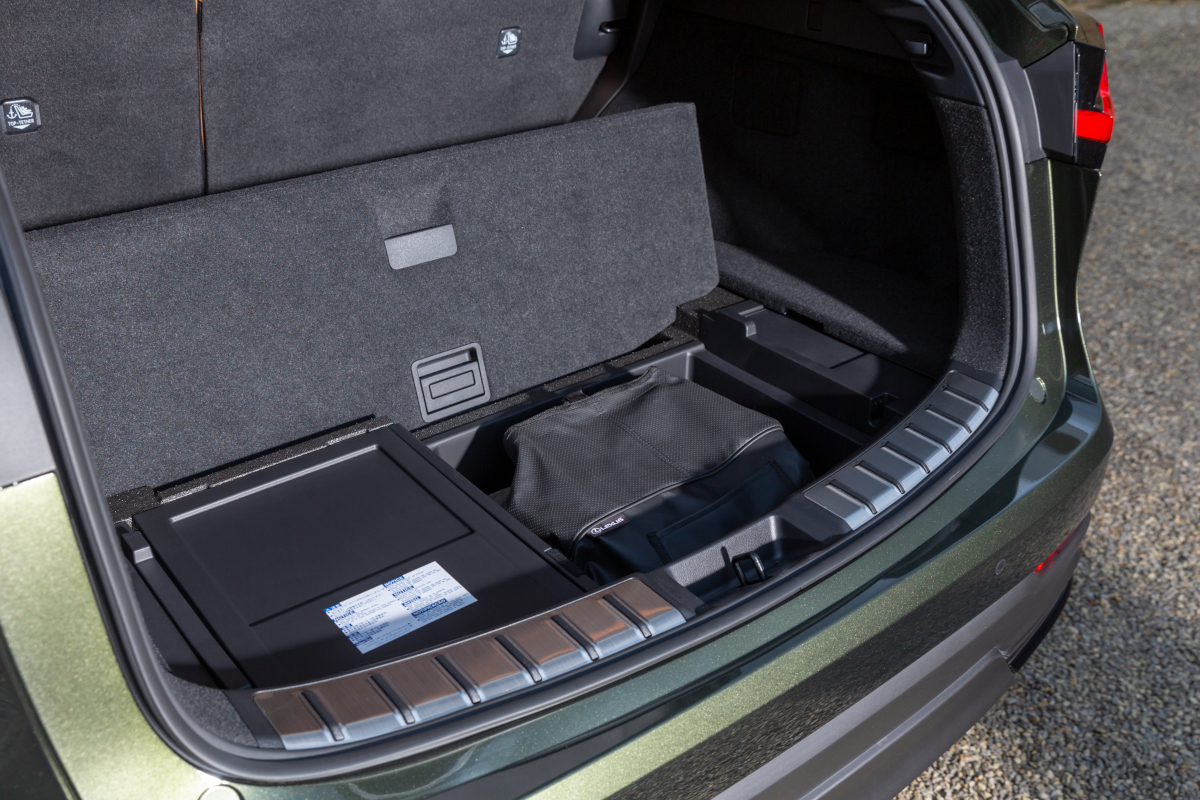
In all honesty, mid-size SUVs like the NX will never be quite as practical as an estate car or an MPV, as their body style inevitably limits outright interior space. Plug-in hybrids can also lose some practicality because the battery needs somewhere to live – often reducing boot capacity – although Lexus has worked hard to minimise that here.
There’s up to 525 litres of boot space, depending on the version, plus useful underfloor storage for charging cables. That’s notable because many rivals sacrifice a significant amount of luggage capacity in their plug-in hybrids.
All NX models also get an electric tailgate as standard, which is a welcome convenience feature. The rear seats fold in a 60:40 split rather than a more flexible 40:20:40 arrangement, and while the seatbacks recline slightly, the bench itself doesn’t slide fore and aft.
Rear passenger space is generous enough for adults, with good headroom and legroom, although the high window line means it can feel a little dark in the back compared with some alternatives. Front-seat occupants are better catered for, with plenty of seat adjustment and a high driving position.
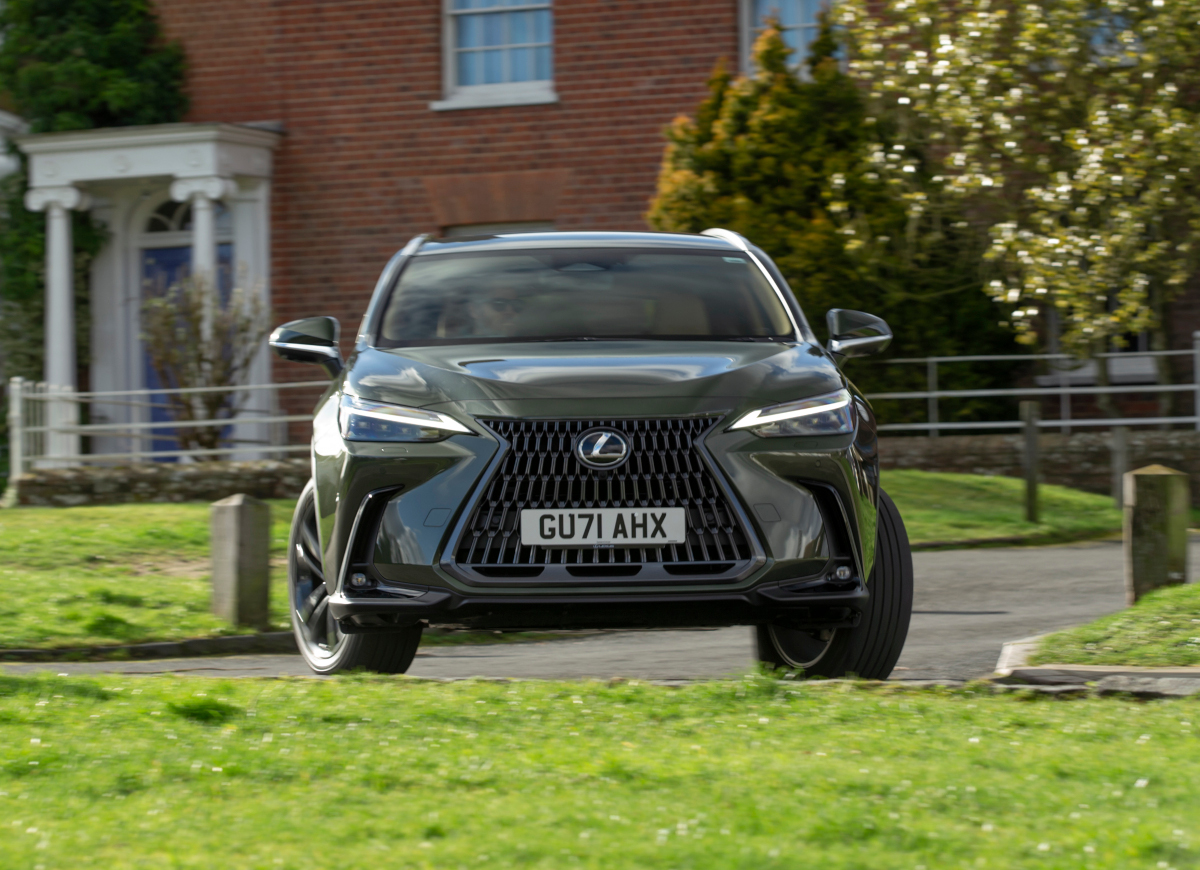
What's it like to drive?
In a word: relaxing. In rather more words, the NX refreshes by not trying to be sporty. Instead, it focuses on delivering an easygoing, smooth driving experience. The ride is excellent, soothing away lumps and bumps in the road with real aplomb. Most versions come with electrically adjustable front seats, and heated seats are standard across the range, reinforcing the car’s comfortable character. Seat ventilation is standard on all but the entry-level trim levels.
The hybrid system plays a big role in that laid-back feel. Around town, both the NX 350h and the NX 450h+ plug-in hybrid can run on electric power alone at low speeds, delivering near-silent progress. In the 450h+, a fully charged battery allows for 42-46 miles of EV, making it ideal for shorter daily commutes.
Accelerate harder and the 2.5-litre petrol engine joins in. As with many hybrids that use a continuously variable transmission (CVT), the engine can hold higher revs under heavy acceleration, which makes it sound a little strained. It doesn’t ruin the experience, but it does slightly dent the car’s otherwise refined character.
Performance is strong, especially in the NX 450h+. With 302bhp and standard all-wheel drive, it can hit 62mph in just 6.3 seconds, so there’s no shortage of pace when joining motorways or overtaking. The NX 350h is more modest, but still perfectly adequate. It needs 8.7 seconds to reach 62mph in front-wheel-drive guise, or 7.7 seconds with all-wheel drive. Ultimately, though, the NX feels happiest when driven smoothly rather than aggressively, when its quietness and comfort can really shine.
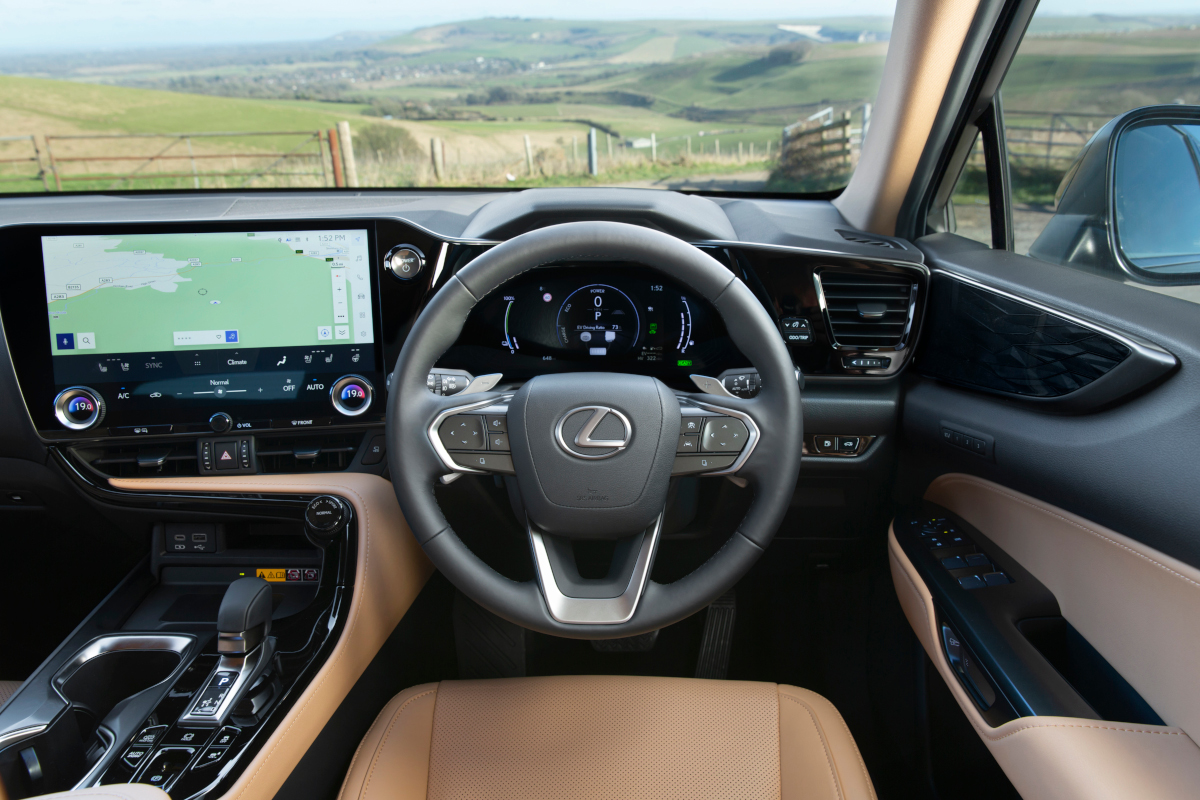
Technology, equipment & infotainment
Lexus has followed the trend towards large infotainment displays. Entry-level cars use a smaller but respectable 9.8-inch touchscreen, while models further up the range feature the broad 14-inch Lexus Link Pro system.
The 14-inch screen is bright and logically laid out. While very large touchscreens can sometimes be awkward to use on the move, the NX’s display is angled slightly towards the driver, which makes it easier to reach and interact with accurately. It’s also a significant improvement over the previous model’s fiddly touchpad controller.
What’s more, although some of the heating and ventilation controls are touch items (many prefer physical buttons as they’re generally easier to use) at least you don’t have to delve into a sub-menu to find them, and the temperature dials themselves are pleasingly smooth-acting – and easy to find without taking your eyes off the road.
Standard equipment is generous. All models get dual-zone climate control, smartphone connectivity, keyless entry, a reversing camera, an electric tailgate and a full suite of Lexus Safety System+ driver assistance systems. Higher trims add features such as electrically adjustable heated and ventilated front seats, upgraded upholstery, wireless phone charging, a 360-degree camera system and adaptive LED headlights. As a result, the NX feels well specified even before you start adding options.

Lexus NX running costs
As with all plug-in hybrids, the fuel costs of the NX 450h+ depend heavily on how often you charge it. With a real-world electric range of around 40 miles or more in favourable conditions, drivers who regularly plug in and mostly make shorter journeys could approach the very high official economy figures, which exceed 250mpg.
That’s a very specific use case, however. In the real world, and over a mix of rural, urban and motorway driving, we achieved somewhere in the region of 50-60mpg in testing. And even if you can make the most of home charging, you should be sure you’re on the right electricity tariff – plug-in hybrids tend to be less energy-efficient in EV mode than a full electric vehicle, so charging up could prove to be more expensive than you might think.
If you can’t plug it in somewhere regularly, the front-wheel-drive version of the self-charging NX 350h might make more sense, as it’ll achieve around 45mpg in real driving. Of course, if you’re thinking of a new Lexus NX as a company car, the plug-in model will attract far less benefit-in-kind tax than the self-charging car.
Servicing is required every 12 months or 10,000 miles, whichever comes first. Both the NX 350h and NX 450h+ benefit from Lexus’s Hybrid Health Check programme, which extends the hybrid battery warranty by one year or 10,000 miles after each qualifying service, up to a vehicle age of 15 years. Insurance costs are on the high side, particularly if you choose the NX 450h+, but to some extent these are offset by the lower running costs.

Lexus NX reliability
Lexus’s reputation for reliability is excellent, and that’s backed up by the brand’s performance in the 2025 What Car? Reliability Survey, where it finished ninth out of 30 manufacturers overall. The NX itself also scores well: among hybrid cars up to five years old it was ranked 11th out of 25 vehicles, better than the previous-generation NX.
Given that track record, it’s worth noting that the standard Lexus warranty is just three years and 60,000 miles, which is shorter than some rivals. You can, however, extend your cover with a Lexus Relax warranty for up to 10 years or 100,000 miles, although this is a paid option rather than standard.
- At first sight, the flimsy-looking door handles seem to be rather irritating, but actually they’re rather clever. Instead of pulling them (although you can do this), you actually press them to release the doors electronically. So far, so good. But where this gets really clever is that you can combine this system – called e-latch – with the car’s active safety features, meaning that it will physically prevent you from opening the door if there is oncoming traffic or an approaching cyclist that you haven’t seen, but which the car has detected.
- Lexus has deliberately arranged the key controls around the dashboard to put the most-used items as close to the driver as possible. It actually looks a bit haphazard, but in practice it works exceedingly well. In an era where car interiors are becoming ever more distracting, the care that Lexus has placed on ensuring you can remain focused as a driver is most welcome.
- Talking of focus, the 10-inch head-up display that’s standard on higher trim levels is fantastic. It offers up loads of information, and shows you exactly what controls you’re thumbing on the steering wheel-mounted touchpads. As a result, you don’t need to take your gaze from the road ahead at all.
- If you like the sportier look, the F Sport is the obvious choice. There are no performance enhancements, but you do get adaptive suspension, F Sport badging, a black mesh grille, sporty side sills, black roof rails and black door mirror casings.
- If you want maximum luxury, go for the Takumi model. This is the comfort-focused flagship version of the NX, and arguably suits the car’s relaxed character better than the F Sport. It feels noticeably plusher inside and includes features such as a 17-speaker Mark Levinson sound system, a digital rear-view mirror, 20-inch machined alloy wheels and a panoramic glass roof. It does push the price into territory occupied by larger premium SUVs, however.
- If value and running costs are your priority, the self-charging hybrid NX 350h makes a lot of sense. With 241bhp, it’s slower than the NX 450h+ plug-in hybrid but still fast enough for everyday driving, and front-wheel-drive versions can deliver strong fuel economy without the need to plug in. It’s also significantly cheaper to buy than the plug-in hybrid, which will appeal to private buyers who won’t fully benefit from the plug-in hybrid’s tax advantages.