Mercedes-Benz E-Class Review (2016-2023) review | A masterclass in laid-back luxury
Mercedes-Benz E-Class cars for sale
4.0
Expert review
Pros
Combines sophistication and comfort
Roomy and practical, especially the estate
Generously equipped, so long as you avoid the entry-level model
Cons
A BMW 5 Series or Jaguar XF is more exciting to drive
The AMG models are hugely expensive to run
Four-wheel-drive versions have worse fuel economy than rear-wheel-drive cars
The CarGurus verdict
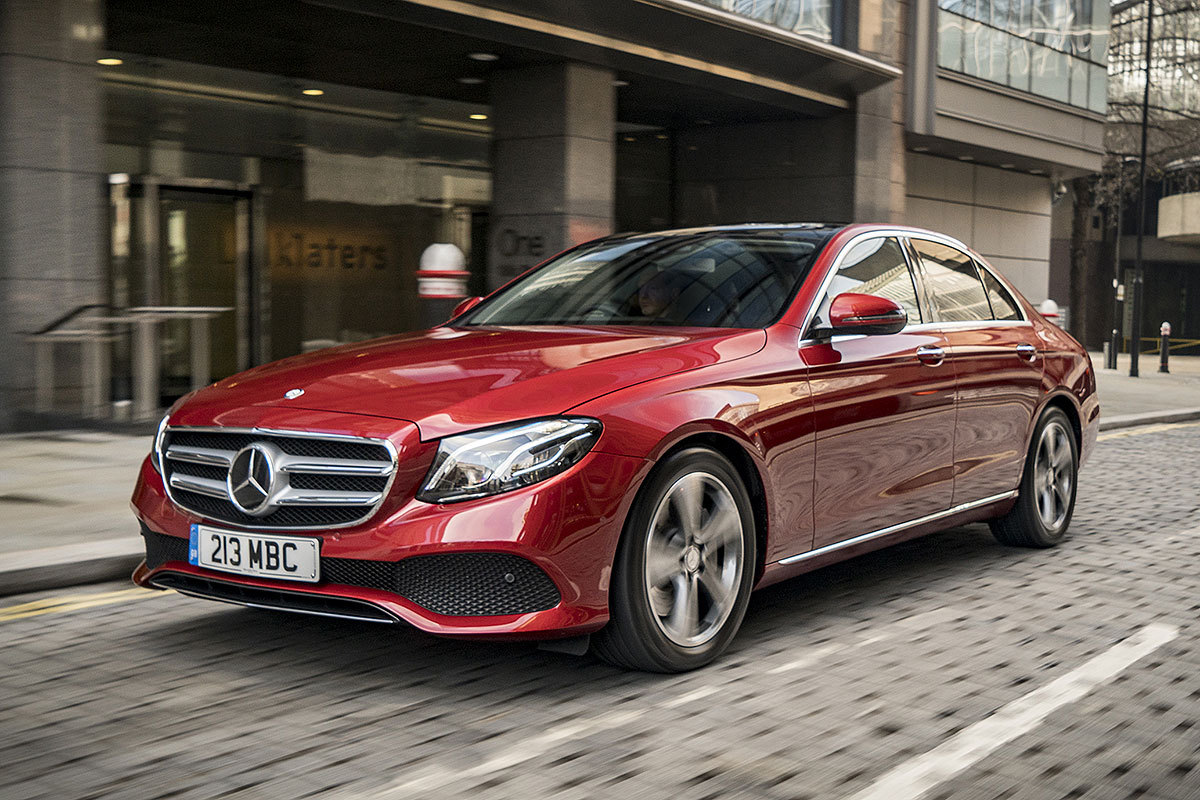
Bulging with the latest technology to protect you and enhance your driving experience, and with the character of its engines and chassis geared towards luxury and refinement, the fifth-generation Mercedes E-Class (W213) is one of the finest premium saloon cars in the world. Indeed, it could be considered a cut-price rival even to Mercedes’ own S-Class limousine. It’s beautifully made, exceptionally comfortable, stylish in an understated way, and for the most part reliable. Furthermore, it’s still new enough to feel current, but not so new it’s crammed with haptic controls, touch-screen everything and other current systems that frustrate us.
In addition, if it’s not a four-door E-Class saloon you’re after, the W213 can tempt you with a commodious E-Class estate, sleek E-Class coupe and accomplished E-Class cabriolet. How many cars offer that kind of choice nowadays? Performance junkies can revel in the Mercedes-AMG models, but the more reserved E-Classes are the true three-pointed stars.
What is the Mercedes-Benz E-Class?
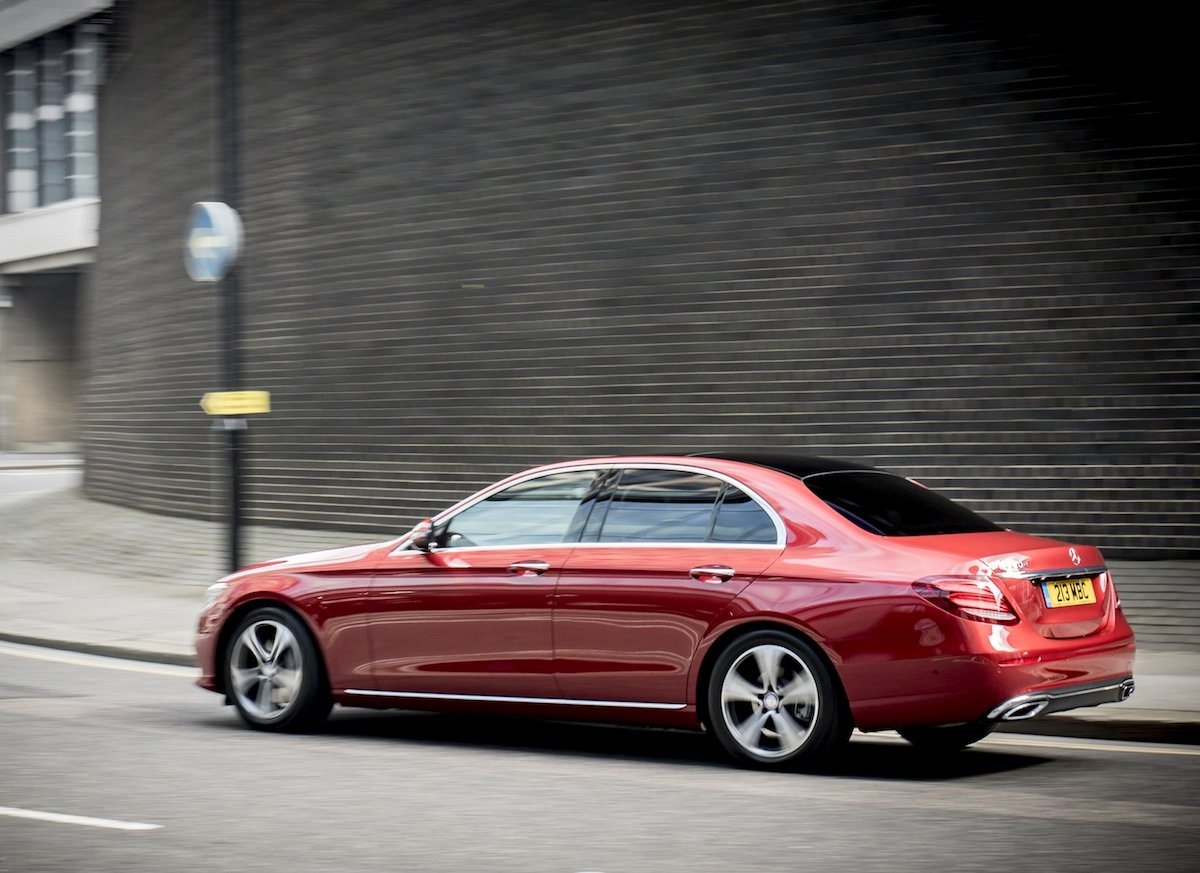
There’s a strong body of opinion that proposes the Mk5 Mercedes-Benz E-Class – known as the W213 among car gurus, pun intended – to be the world’s finest executive car, mainly thanks to its total focus on pampering its lucky occupants. Unlike contemporary rivals from Audi, BMW and Jaguar, the E-Class makes zero effort to be the sportiest car in its class. Sophistication and refinement are the order of the day.
The E-Class achieves this in a variety of ways. For a start, that three-pointed star on the grille does no harm whatsoever when it comes to prestige and desirability. It’s also a bigger car than the vehicle it replaces, the W212 E-Class, with smart styling that is very reminiscent of the larger – and far more expensive – S-Class limousine. The E-Class feels high-end partly by association.
Be in no doubt, however, the fourth-generation E-Class is a massively complicated car. Not only did Mercedes stuff it with all the clever technology it could, it was on sale at a time when powertrains had never been more complex. Conceived when the push for low- and zero-emissions vehicles was gathering pace, and where a big petrol or diesel engine might have been fine previously, the W213 needed to be more efficient and cleaner than any Mercedes-Benz E-Class before it.
How practical is it?
Just like its predecessor, the fourth-generation E-Class could be bought as a saloon, estate, cabriolet or coupe. The latter two body styles are obviously less practical, with the estate the most useful if you need to carry lots of luggage.
The cabriolet offers 310 or 385 litres of boot space, depending on whether you have the roof down or up, making it the least versatile model in the range. The coupe is better, but not by much, with 425 litres of luggage capacity. In addition, compared to the saloon or estate, there is about 50mm less headroom for anyone in the back seats. That’s the price you pay for style, although as the driver it won’t be you who pays it…
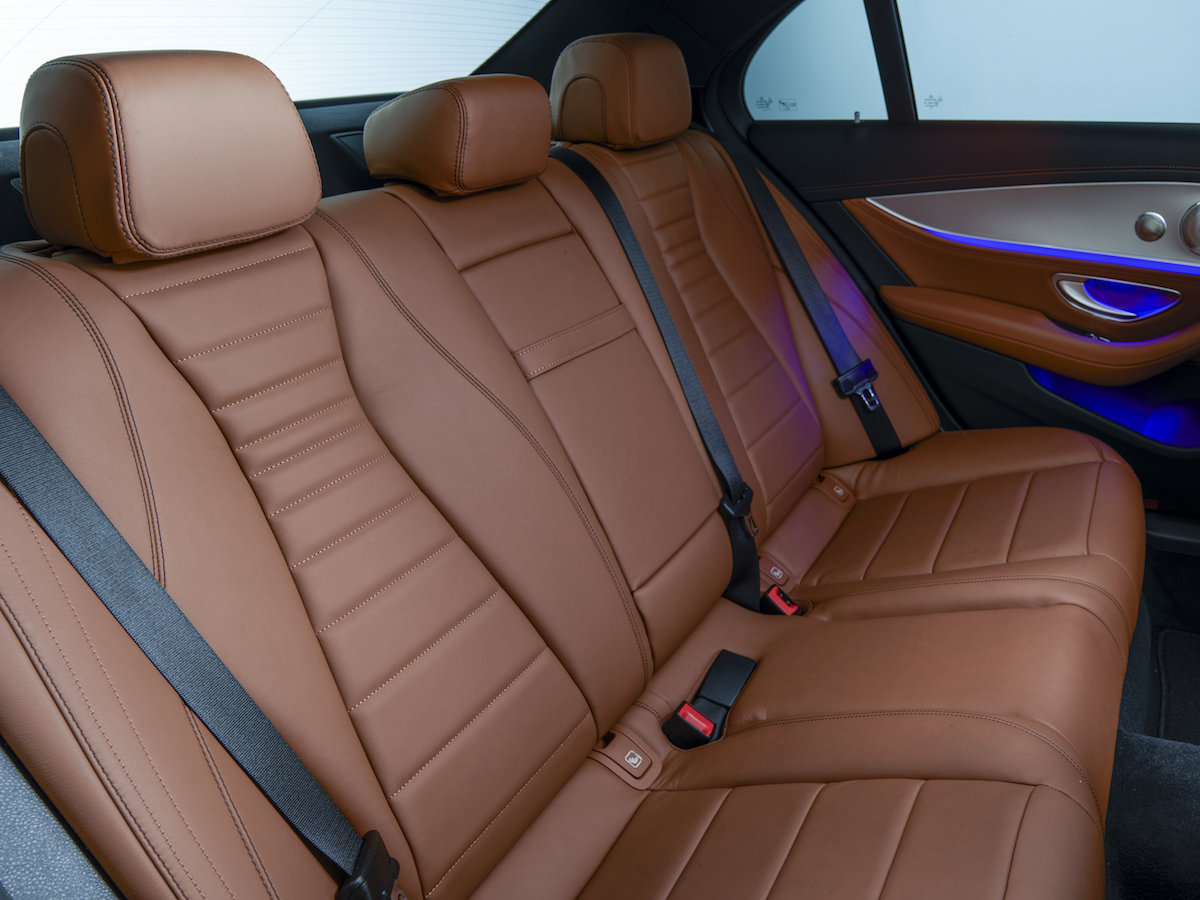
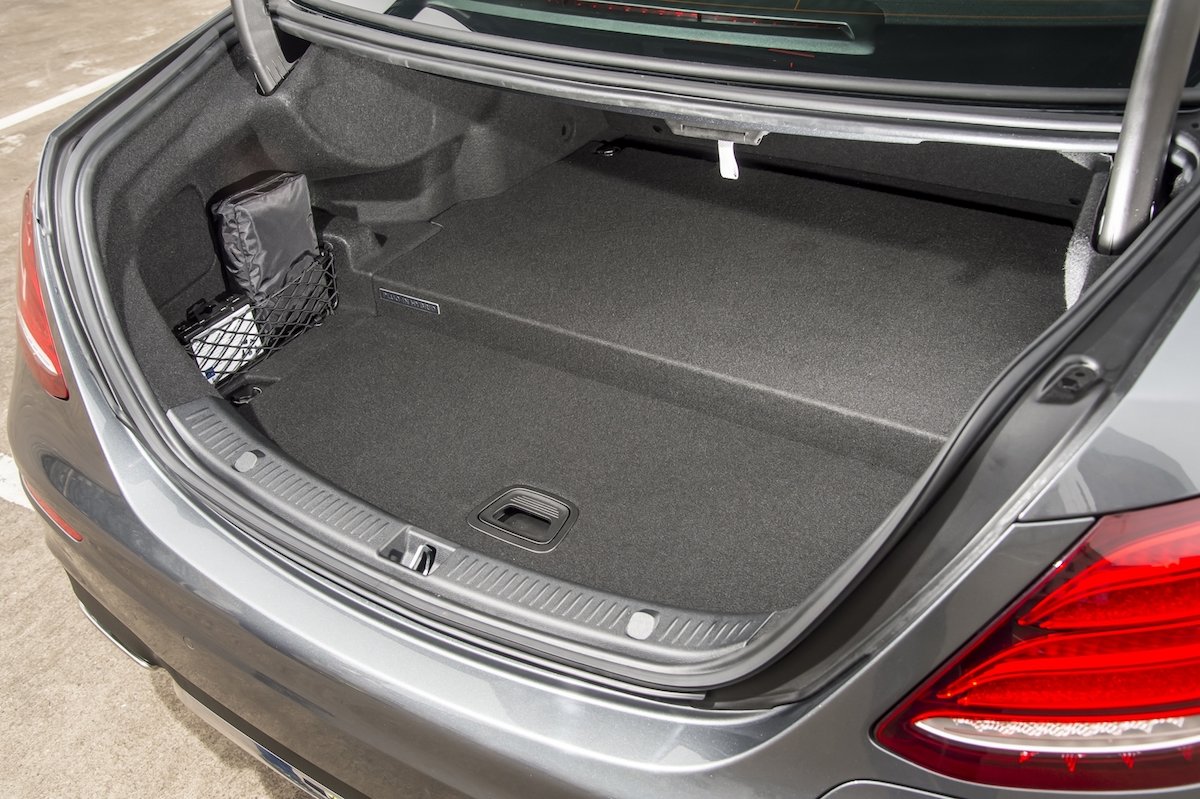
The saloon is the most practical four-door car you could hope to find. Mercedes-Benz has always put more emphasis on space and comfort than its rivals, particularly BMW, so you’ll quickly realise just how practical this E-Class can be. The hybrid E350e offers 400 litres of storage space in its boot, but diesel saloons and all AMG models have 540 litres. So if you really want a petrol engine and require a big boot, the hybrid won’t cut it: you need an AMG. Needs must, eh?
Then there’s the king of practicality: the E-Class estate. There’s a reassuring sense of knowing what you’re getting before you even look at the figures. Then you look at said numbers and realise there are music venues with less space inside. With the rear seats in place, the boot measures 640 litres, but with them folded down (a 40:20:40 split) you have 1,820 litres to play with. This is true of both the diesel versions and the full-fat AMG performance models.
As you might expect, the E-Class is a competent towing vehicle in all configurations. Both the cabriolet and coupe can tow 750kg unbraked and 1,800kg braked. The saloon and estate, on the other hand, can tow 750kg unbraked and a colossal 2,100kg braked, including the E43 AMG model. Sadly you can’t tow anything with the AMG E63, but imagine buying one of the world’s most exciting saloon or estate cars and hitching it up to a caravan? That we’d like to see.
One curious kitten in the practicality game is the E-Class All Terrain. A variant offered for the first time with this fifth-generation E-Class, it had all-wheel drive and multi-chamber air suspension as standard. The latter means 15mm of additional ground clearance (this was adjustable, depending on the driving mode), with a further 14mm of additional clearance courtesy of chunkier tyres. The mathematicians among you will realise the All Terrain rides 29mm higher than a regular E-Class Estate. Chunky wheelarches and more rugged bumpers, as well as a handful of other features, complete the look.

What's it like to drive?
Most of the E-Class’ cosseting character comes from the way it behaves on the road. This is a car that aims to waft you along in comfort and serenity, rather than get your pulse racing through a set of bends.
Whether you’re driving an example with traditional springs and dampers or the clever ‘Air Body Control’ air suspension, the ride is cosseting. The level of rolling refinement is also impressively high, making for a quiet life. That’s not to say the E-Class is any kind of slouch when the road turns twisty, though. Yes, there’s a bit more body-roll in bends than some rivals, so it doesn’t feel as crisp or as lithe, but the car still changes direction in a way that feels safe and reassuring. For us, the shortfall in sharpness is more than compensated for by superior comfort.
Most versions are rear-wheel drive, but some – including all the hardcore AMG models and the All Terrain – have or can be had with all-wheel drive. In Mercedes-speak, this system is known as 4Matic.
All cars use a nine-speed automatic transmission (no manual gearbox was offered in the UK), although AMG models have a faster, more sports-orientated gearbox to make the most of their extra oomph.
The Mercedes E-Class’ engine range is quite broad. Most are turbodiesels, such as the four-cylinder 200d with 148bhp, the 220d with 191bhp (the most popular version) and the 254bhp V6 350d. A 300d and a 400d arrived later, with outputs of 261bhp and 325bhp respectively. Petrol choices were more limited, but included an entry-level 181bhp 2.0-litre unit in the E200. Keep in mind estate models never had petrol powertrains, unless they came with an AMG badge. Speaking of which, from the company’s sporty division came the Mercedes-AMG E43 with 396bhp, the 429bhp AMG E53, and the outrageous AMG E63 S, powered by a 604bhp twin-turbocharged V8.
Buyers could also choose from a couple of plug-in hybrids, which team an electric motor with either a petrol or diesel engine. The E350e petrol, for example, could do 21 miles on EV power alone. A later E300e would manage 35 miles, while the E300de could keep going for 33 miles before its battery ran flat.
Technology, equipment & infotainment
Regardless of which trim level you choose, you’ll get a high-class cabin that is festooned with upmarket materials. All versions – even the entry-level SE (later known as the Sport) – came with a generous roster of comfort and safety equipment, including climate control air-con, cruise control, leather-effect upholstery, rain-sensing wipers, automatic emergency braking and an infotainment system that features a DAB radio and smartphone connectivity via Apple Carplay and Android Auto.
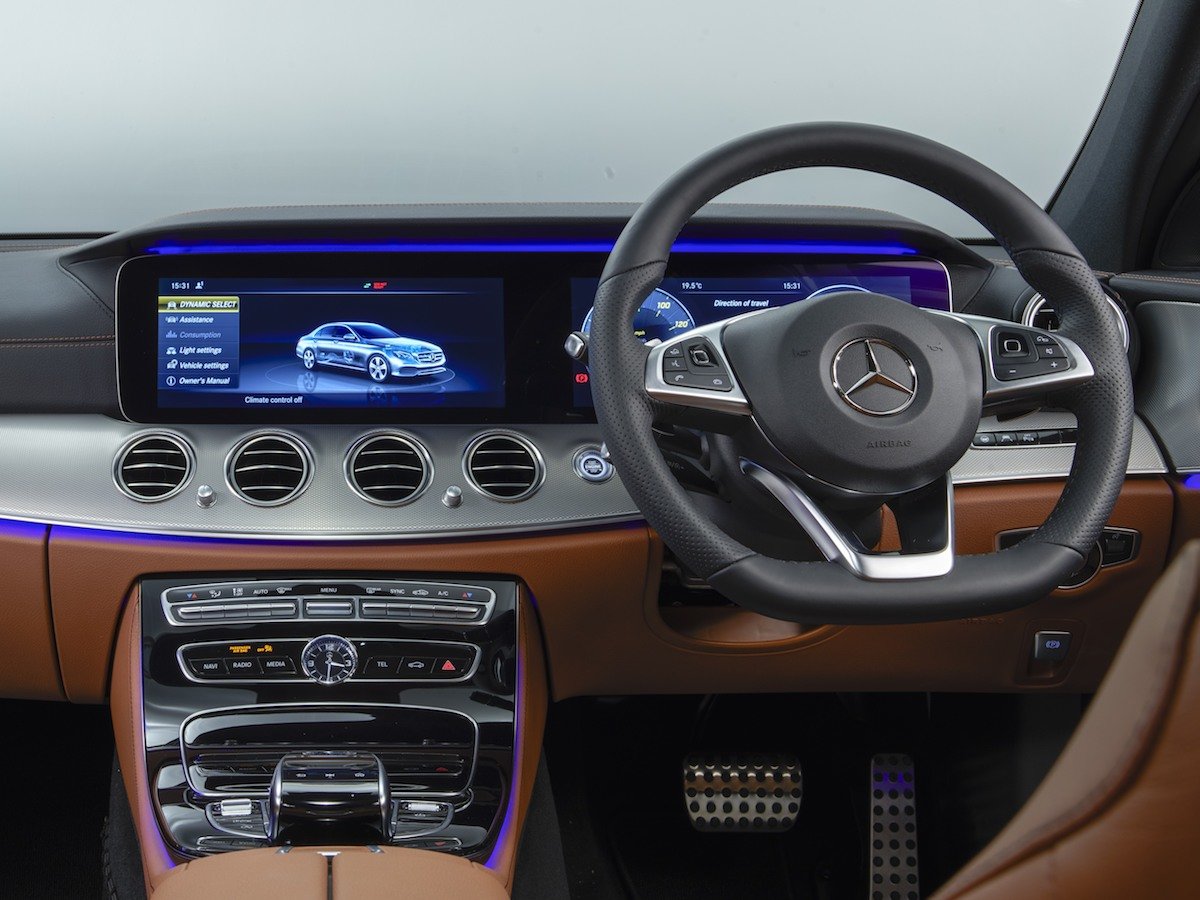
Ahead of the steering wheel, you may find a 7.0-inch display sandwiched between two analogue dials, with an 8.4-inch central screen on the dashboard. Alternatively, there could be a 12.3-inch screen as a complete replacement for the instrument cluster, plus a 12.3-inch dash-mounted screen. Later models had two 10.25-inch screens as standard, or the dual 12.3-inch displays as an option.
Much of the technology inside an E-Class will still feel useful and familiar today, if not entirely up-to-date. A prime example being the USB ports, which will be regular USB connectors rather than the USB-C sockets that we usually see today. Other tech that featured on the W213 E-Class includes Attention Assist, which will alert you if it thinks you’re getting tired and should stop for a break, plus LED headlights, engine stop-start, blind-spot assist, lane-keep assist and a 360-degree parking camera.

Mercedes-Benz E-Class running costs
You may see Mercedes-AMG E-Classes in the classifieds for very tempting prices. But do yourself a favour: resist that temptation. Unless that is, you have pockets as deep as mine shafts and you’ve genuinely taken the time to understand how costly one of these lovely creations is to run. The fuel costs alone will be extraordinary, but rear tyres and brakes are mightily expensive, too.
Mercedes-Benz is a premium brand, so its dealers charge premium prices for servicing and maintaining, even for regular E-Class models. From new, the E-Class was supplied with a three-year warranty, and sadly this will have expired for all examples of the W213 by now. However, approved used cars sold by Mercedes-Benz itself will enjoy a one-year warranty. If you’re buying a car from a private seller or any other dealership, you’ll likely get a better deal. As ever, check the service history carefully. It’s also worth considering taking any new purchase to an independent Mercedes-Benz specialist, as they will know the cars inside out, and will be able to spot minor issues before they develop into major problems.
Service intervals are typically annual or every 10,000 miles, although your E-Class’ on-board computer will alert you to the fact that a service is due and what sort of service that is. Mercedes dealers offer a fixed price monthly servicing plan from £37 a month for three years and covering three services. However, you’ll need to do careful calculations, involving your local dealer’s service charges, to determine if this is actually good value or not. Canny owners take out the plan just ahead of their E-Class’s more costly ‘B’ service, thereby ensuring that during the three years they enjoy two ‘B’ services and one cheaper ‘A’.
Excluding the AMG models, fuel economy is pretty good. The diesels in particular are excellent on long journeys, sipping fuel with incredible restraint.
Mercedes-Benz E-Class reliability
Despite the Mercedes-Benz brand not doing so well in large-scale owner satisfaction surveys, the fifth generation E-Class is, by and large, a low-hassle ownership prospect.
Rather like its predecessor, though, the W213 E-Class has been subject to a number of safety recalls, the most disturbing of which both concern the airbags. In one recall for cars built between August 2016 and March 2017, there was the possibility of the airbags not going off at all. While in another, targeted at around 400,000 UK Mercedes across several different ranges, and built from November 2011 to July 2017, a broken steering column spring could trigger the airbags erroneously, potentially spewing out fragments of spring at the same time. It's also worth checking that remedial work has been done on a recall for oil leaking from a turbocharger feed pipe, which has the potential to cause a fire.
Given the complexity of the numerous safety and convenience systems in the Mk5 E-Class, it’s unsurprising that electrical glitches form the majority of owner complaints about the car. The infotainment and navigation system can be very slow to start up initially, and can then take two or three minutes to re-route you if you stray from the original path. Although not a widespread issue, several owners have reported that the automatic parking system has malfunctioned, in one instance trying to park the E-Class in a space that was already occupied. As a consequence, there’s some distrust of the Parking Pilot system.
As with so many modern cars, ascertain that all the relevant software updates have been carried out at a dealership, otherwise you may find issues with the navigation and the way that the infotainment system interacts with your mobile phone.
- Excluding the hardcore AMG models, there were two main trim levels for the fifth-generation E-Class: SE (later known as Sport) and AMG Line, with the latter being slightly sportier (although there are numerous different editions based around the AMG Line theme). Both provide lavish equipment, including satellite navigation, parking sensors, dual-zone climate control, a self-parking system, LED headlights, LED tail lights and 64-colour selectable mood lighting.
- The E-Class’s twin-screen panoramic instrument and infotainment displays were an option on many models. It’s an excellent system that looks great and is easy to use, so if you have the time and patience, it's well worth hunting out a used example with this technology fitted.
- While the Mk5 E-Class’s standard steel suspension is excellent, providing a plush ride and secure handling, Mercedes’ air suspension, known as Airmatic, is even better. This was a desirable option when new, so it shouldn't prove too difficult to find on a used example. You can expect to pay a little more for the improvement in ride quality that it brings, and be aware it’ll cost more to fix if it goes wrong. In our view, it's well worth it.
- If you want the best all-rounder: Choose the E220d SE. Its 191bhp 2.0-litre turbodiesel engine isn’t the most powerful in the Mercedes E-Class line-up, but it pulls vigorously, cruises calmly and delivers up to 54.3mpg according to the official figures. However, some owners claim significantly better mpg figures than that (the most efficient body style is the saloon). It's also significantly quieter and smoother than the 2.1-litre diesel engine fitted to the E220 diesels in the previous generation E-Class. Even without any options, you’ll feel exceedingly well looked-after from behind the wheel, such is the level of standard equipment.
- If you spend lots of time in a city: Any one of the hybrid versions of the fifth-generation E-Class will do you well. A 2017 E350e petrol, for example, has a fully electric driving range of 21 miles, yet will get from 0-62mph in 6.2 seconds if needed. Similarly, a 2021 E300de diesel will manage 32 miles on battery power alone, and will sprint to 62mph in 5.9 seconds.
- If you want swift performance and economy: Go for the E350d, available from launch in 2016 until June 2017. Its 254bhp 3.0-litre V6 growls quietly but evocatively, and will whisk you from 0-62mph in only 5.9 seconds. Yet it is also capable of up to 48.7mpg in the official test. It really is a peach of an engine, and one that really suits the E-Class.
- If you love a thrill: The E63 S AMG with its 603bhp twin-turbo V8 sounds magnificent, stampedes from a standstill to 62mph in 3.4 seconds and bellows on to a 186mph maximum. The E43 AMG models are good dynamically, and their V6 engines are still powerful by most standards, but there’s something very special about the V8-powered E-Class.


