Mercedes-Benz EQC (2019-2024) review | Mercedes’ first electric SUV still impresses today
Mercedes-Benz EQC cars for sale
4.0
Expert review
Pros
Relaxed and comfortable to drive
Very quick, but cheap to charge
Spacious and practical
Cons
Not as much fun as a Jaguar I-Pace
High insurance premiums
Some rivals can recharge more quickly

The CarGurus verdict
The Mercedes-Benz EQC remains an impressively refined and luxurious electric SUV. Its quiet cabin, comfortable ride and strong performance make it particularly well suited to long-distance driving, while the interior still feels suitably premium several years after launch.
It’s not the sharpest electric SUV to drive, and its real-world range now looks modest compared with newer rivals, but it remains a more relaxing and comfortable vehicle than some sportier alternatives. Heavy depreciation has also made the EQC surprisingly good value on the used market.

What is the Mercedes-Benz EQC?
The Mercedes-Benz EQC was the German brand’s first dedicated electric SUV. It also marked the beginning of the firm’s wider EQ electric car range. It was designed to rival premium electric SUVs such as the Audi E-tron, Jaguar I-Pace and Tesla Model Y, combining near-silent electric performance with the comfort and refinement buyers expect from Mercedes-Benz.
In the UK, the EQC was offered exclusively in EQC 400 4Matic form, using a dual-motor, four-wheel-drive system powered by an 80kWh lithium-ion battery. Official WLTP range is up to 254 miles depending on specification, although the real-world range is usually lower – especially in cold weather or on motorway journeys.
Charging is handled via Type 2 and CCS connectors mounted on the rear flank of the car (where you’d normally find the filler flap on a petrol or diesel SUV). The EQC supports AC home charging and DC rapid charging, with a maximum DC charging speed of up to 110kW. Mercedes-Benz said this allowed a 10-80 percent charge in around 40 minutes when connected to a suitably powerful rapid charger.
Using a typical 7.4kW home wallbox, a full charge takes roughly 11 hours, making overnight charging straightforward for most owners. Mercedes-Benz also supplied a three-pin domestic charging cable, although charging this way is significantly slower and best treated as an emergency backup option, rather than a daily solution.

How practical is it?
The EQC is spacious and practical by the standards of a large five-seat electric SUV. Its 500-litre boot is comfortably big enough for family duties, whether that means luggage, pushchairs or dogs, while the 40:20:40 split-folding rear seats add flexibility when carrying longer items. With all rear seats folded down, luggage capacity increases to 1,460 litres.
Rear passenger room is also generous enough for adults to travel comfortably on longer journeys, although some similarly sized SUVs offer slightly more outright cabin and luggage space. The rear doors could open wider for easier access when fitting child seats, while the middle rear seat is less comfortable because of the raised floor and firm seat base.
Unlike some newer electric SUVs, the EQC does not offer a front storage compartment (also known as a ‘frunk’) under its bonnet. That’s partly because it was based on a platform originally designed for petrol and diesel cars, rather than being a bespoke electric vehicle from the outset.

What's it like to drive?
The EQC is very pleasant to drive. Power comes from a pair of electric motors producing a combined 402bhp and driving all four wheels, giving the big Mercedes-Benz strong performance and effortless acceleration.
However, the EQC’s real strength is comfort and refinement, not outright sportiness. Ride quality is excellent by the standards of a large electric SUV, while wind and road noise are impressively well suppressed, even at motorway speeds. The relaxed and quiet driving experience suits the car’s character perfectly.
There’s plenty of traction from the four-wheel-drive system, but the EQC is not especially agile. Noticeable body-lean also discourages enthusiastic cornering. Those looking for a sharper, more engaging electric SUV may prefer the Jaguar I-Pace, but the Mercedes-Benz feels far more focused on comfort and refinement than driving thrills.
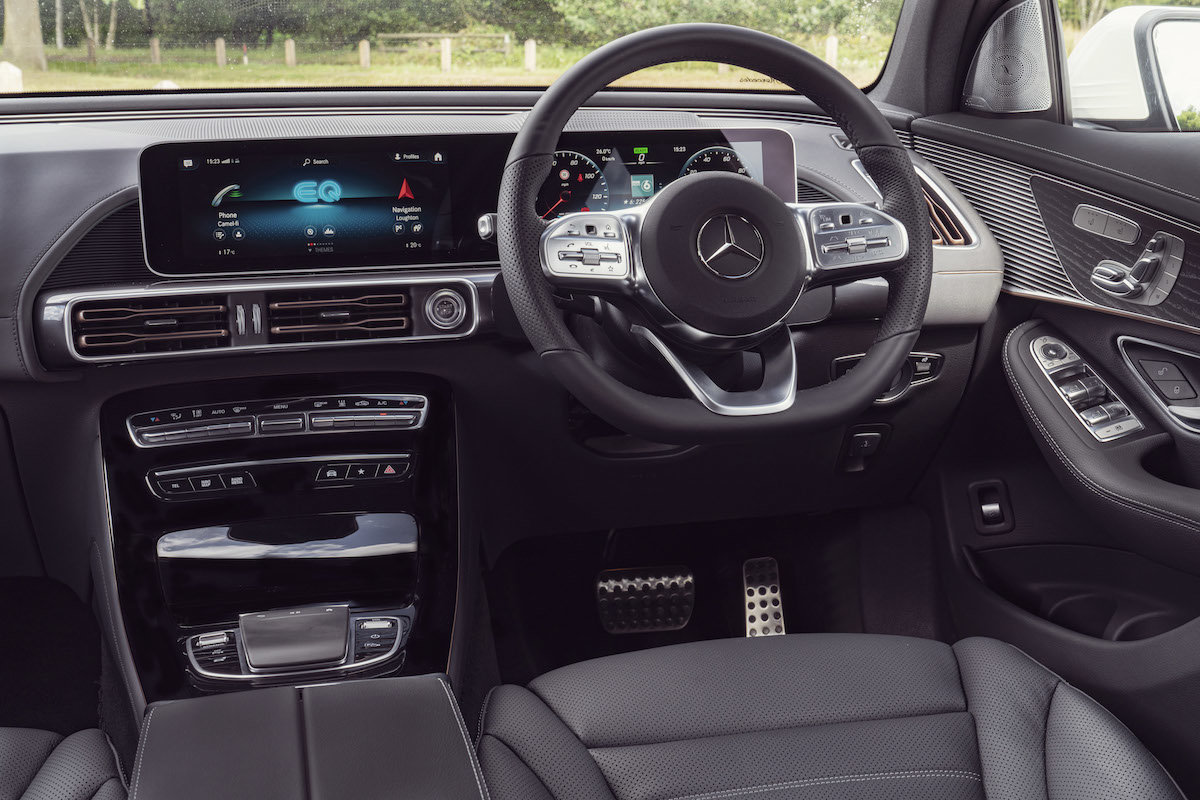
Technology, equipment & infotainment
Inside, the EQC delivers the premium look and feel buyers expect from a modern Mercedes-Benz. Material quality is excellent, while details such as the rose-gold air vent trims help the cabin feel more distinctive than a regular GLC.
The dashboard is dominated by Mercedes-Benz’s widescreen MBUX infotainment setup, which combines digital displays for the driver with a central touchscreen. The system offers plenty of functionality and customisation, although some menus can feel slightly complex compared with rival systems from BMW and Audi.
Standard equipment levels are generous, with most models featuring LED headlights, ambient lighting, heated seats, keyless entry and leather-style upholstery. Higher-spec versions added larger alloy wheels, upgraded styling details and additional technology features.

Mercedes-Benz EQC running costs
The EQC should prove considerably cheaper to run than an equivalent petrol or diesel premium SUV, especially if you can regularly charge at home using an off-peak energy tariff. Running costs naturally vary depending on electricity prices and charging habits, but home charging is still significantly cheaper than refuelling a comparable combustion-engined SUV.
The official range of up to 254 miles translates to noticeably less in real-world conditions, particularly on motorways or in cold weather. Even so, the EQC remains reasonably efficient for a large and heavy electric SUV of this era.
Insurance costs are high, as you’d expect for an upmarket SUV, while replacement tyres can be expensive. Servicing requirements are generally simpler than on petrol or diesel alternatives, although Mercedes-Benz maintenance and repair costs can still be higher than those of mainstream rivals.

Mercedes-Benz EQC reliablity
There is less long-term reliability data available for the EQC than for more established Mercedes-Benz models, partly because it was only on sale for a relatively short period. However, early signs are quite encouraging.
In the latest What Car? Reliability Survey, the EQC finished eighth out of 27 electric SUVs, suggesting owners have generally had positive experiences with the car. Mercedes-Benz as a brand performed less impressively overall, however, finishing joint 22nd out of 30 manufacturers in the same study.
Like most electric vehicles, the EQC benefits from having fewer moving parts than a comparable petrol or diesel SUV. Mercedes-Benz also backed the car with an eight-year, 100,000-mile battery warranty, which includes protection against excessive battery degradation.
- Early EQC models were criticised for making some desirable features optional rather than standard. Smartphone connectivity, augmented-reality navigation and adaptive cruise control were all tied to expensive option packs on certain versions, which felt mean given the EQC’s premium price tag.
- One of the EQC’s more impressive features is its regenerative braking system, which can automatically adjust braking strength depending on traffic, junctions and road conditions ahead. Drivers can also manually alter the level of regenerative braking using the steering wheel paddles.
- The system quickly becomes intuitive to use and helps make the EQC particularly relaxing in everyday driving. In its automatic setting, the car smoothly balances coasting and energy recuperation with very little driver input required.
- Best all-rounder: Most buyers will be happiest with an AMG Line model, as it adds the styling and technology features that suit the EQC’s premium character. Cars fitted with the Premium Pack are particularly desirable thanks to their upgraded infotainment and convenience features.
- Best for value: Entry-level EQC models still come generously equipped and now represent surprisingly good value on the used market. They offer the same smooth electric drivetrain and luxurious refinement as more expensive versions.
- Best for comfort: If ride quality matters most, avoid cars fitted with the largest 21-inch alloy wheels. Smaller-wheeled versions ride noticeably better, which suits the EQC’s relaxed character. Given the current state of UK roads, we think it’s worth trading a little style for comfort.