Mercedes-Benz GLB-Class (2019-2025) review | Premium compact SUV that seats seven
Mercedes-Benz GLB-Class cars for sale
4.0
Expert review
Pros
Impressive practicality and space
Seven seats when most rivals have five
Wow-factor of MBUX infotainment system
Cons
Panoramic sunroof reduces headroom
Not as capable off road as a Land Rover Discovery Sport
The AMG model is a bit OTT
The CarGurus verdict
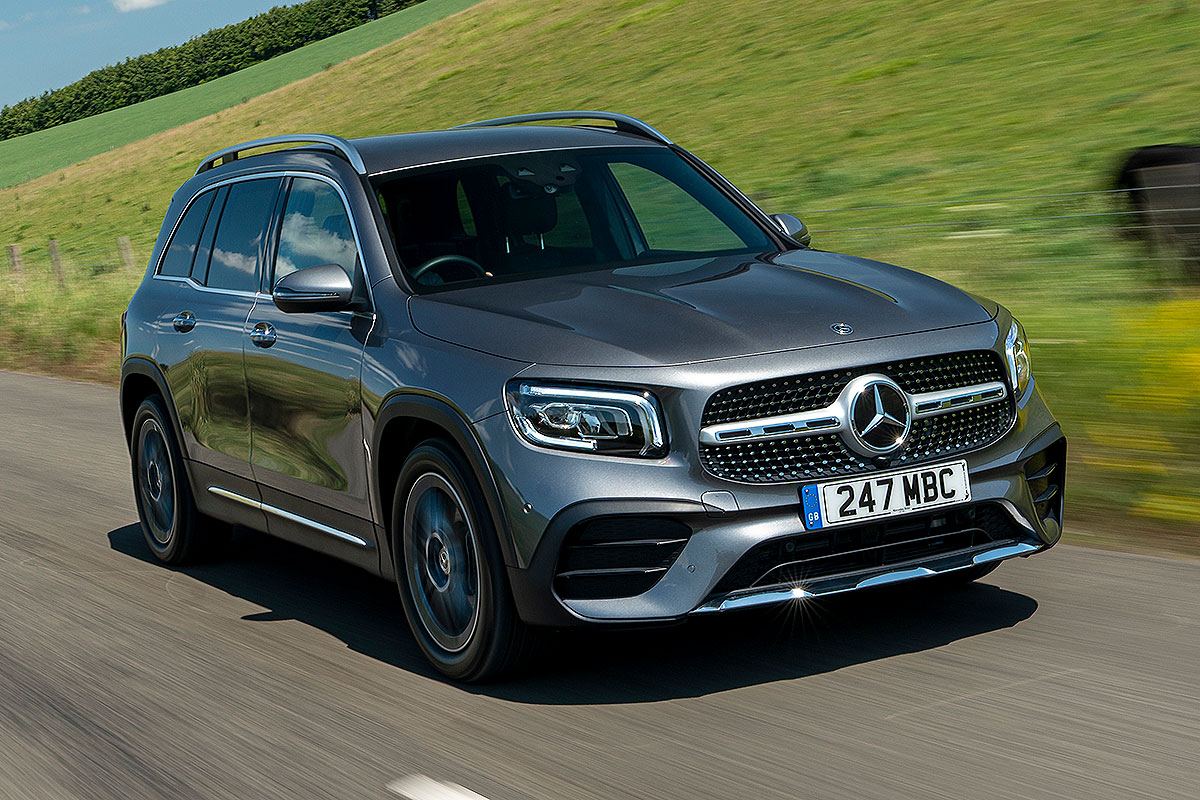
The Mercedes-Benz GLB scores highly, thanks to its focus on practicality rather than fashion. While many compact SUVs prioritise sleek styling and coupe-like proportions, the GLB instead delivers exactly what family buyers actually need: lots of cabin space, excellent visibility and the option of carrying two additional people when required.
The boxy, almost G-Class-like design means it lacks some of the visual flair of many rivals, but the trade-off is a cabin that feels far roomier and more usable than many alternatives. Add in the impressive MBUX infotainment system, strong safety credentials and a premium-feeling interior, and the GLB is a convincing choice as a family SUV.

What is the Mercedes-Benz GLB-Class?
Mercedes-Benz likes to fill every possible niche in its model range, which is how the GLB arrived in 2019 to sit between the smaller GLA and larger GLC SUVs. While it follows the general trend for compact SUVs and crossovers, the GLB takes a more practical and traditional approach than many of its rivals.
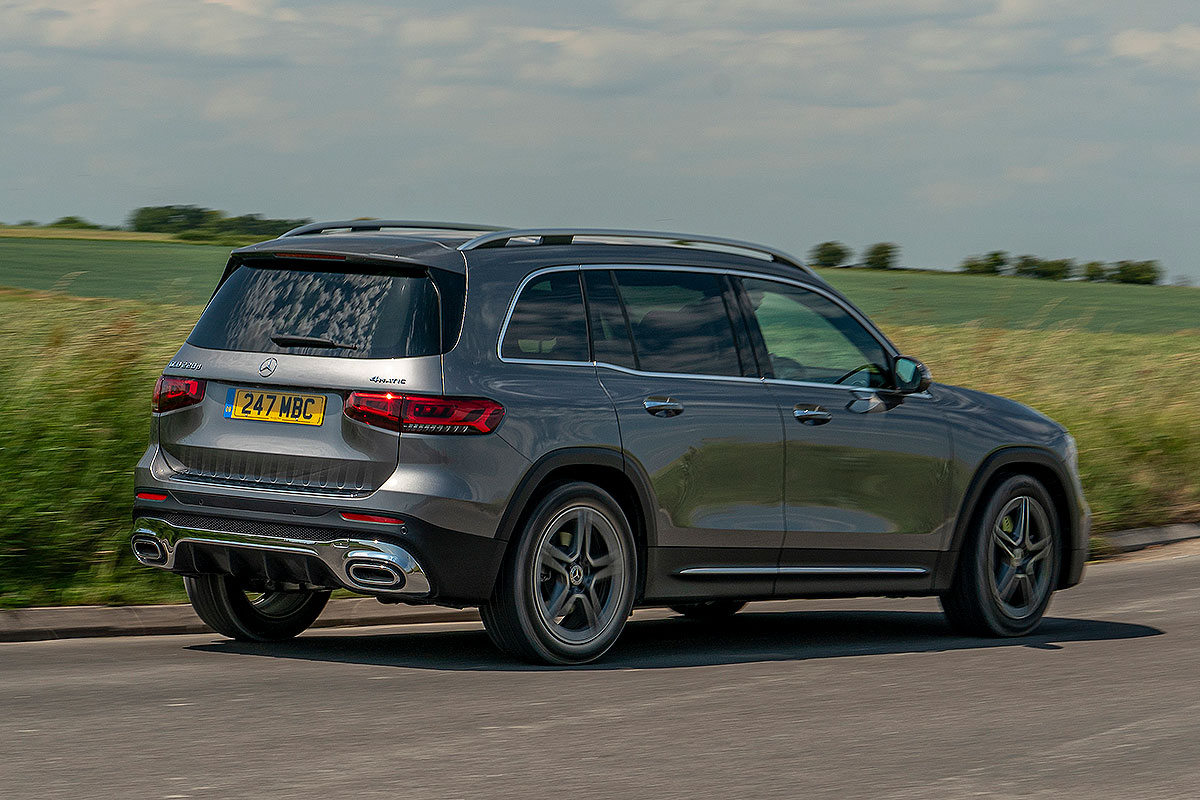
Based on the same underpinnings as the A-Class, B-Class and GLA, the GLB combines relatively compact dimensions with a surprisingly spacious cabin. Unlike many fashion-led SUVs, there’s no swooping, coupe-style roofline here. Instead, the GLB features a tall, upright and deliberately boxy design that prioritises practicality, visibility and interior space. Squint hard and it looks a bit like a Mercedes-Benz G-Class…
That approach helps the GLB stand out in the premium compact SUV market, particularly because it offers the option of seven seats – something that’s still relatively unusual at this size and price point. All later versions of the GLB come with seven seats as standard.
Mercedes-Benz has since revealed a replacement for the original GLB, but the first-generation car is still on sale and makes a lot of sense as a used buy, thanks to its combination of compact dimensions, premium ambiance and seven-seat practicality.
How practical is it?
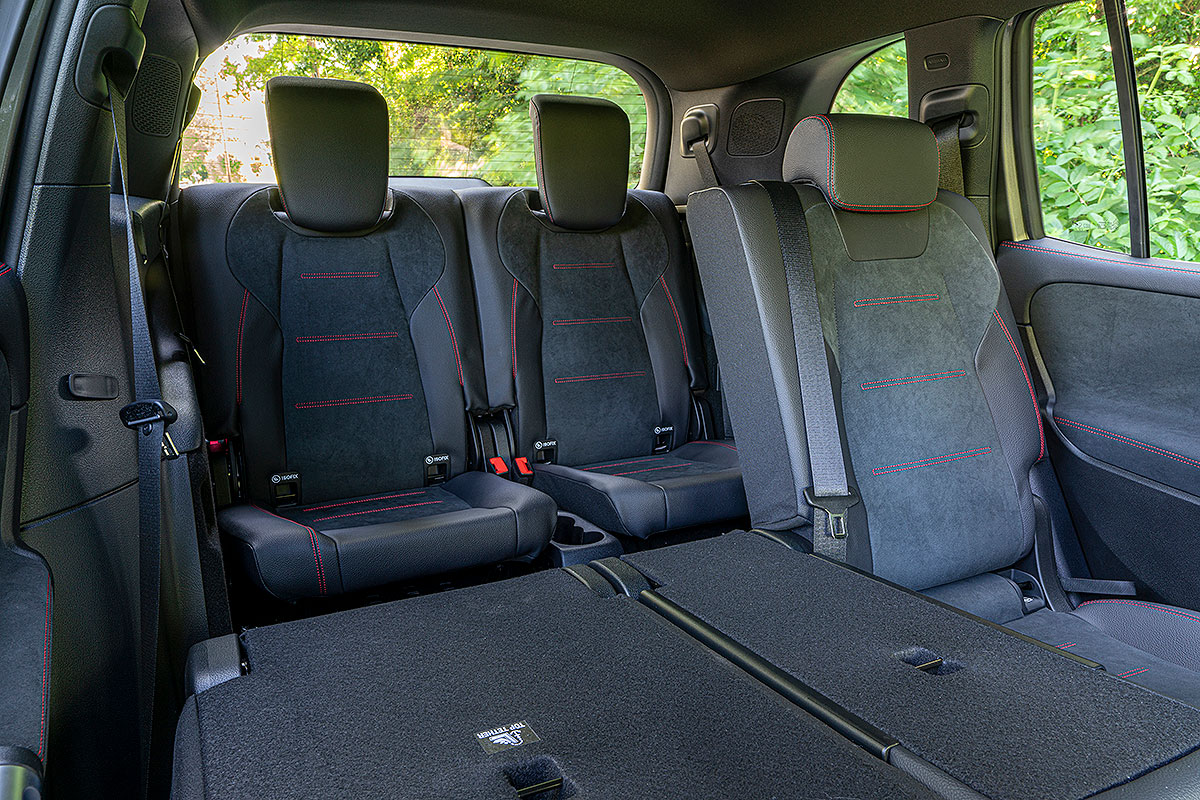
Practicality is one of the GLB’s biggest strengths. Unlike the many compact premium SUVs that prioritise style over space, the GLB was designed very much with family buyers in mind. Its tall roofline and boxy shape help create plenty of headroom and a far airier cabin than in many competitors.
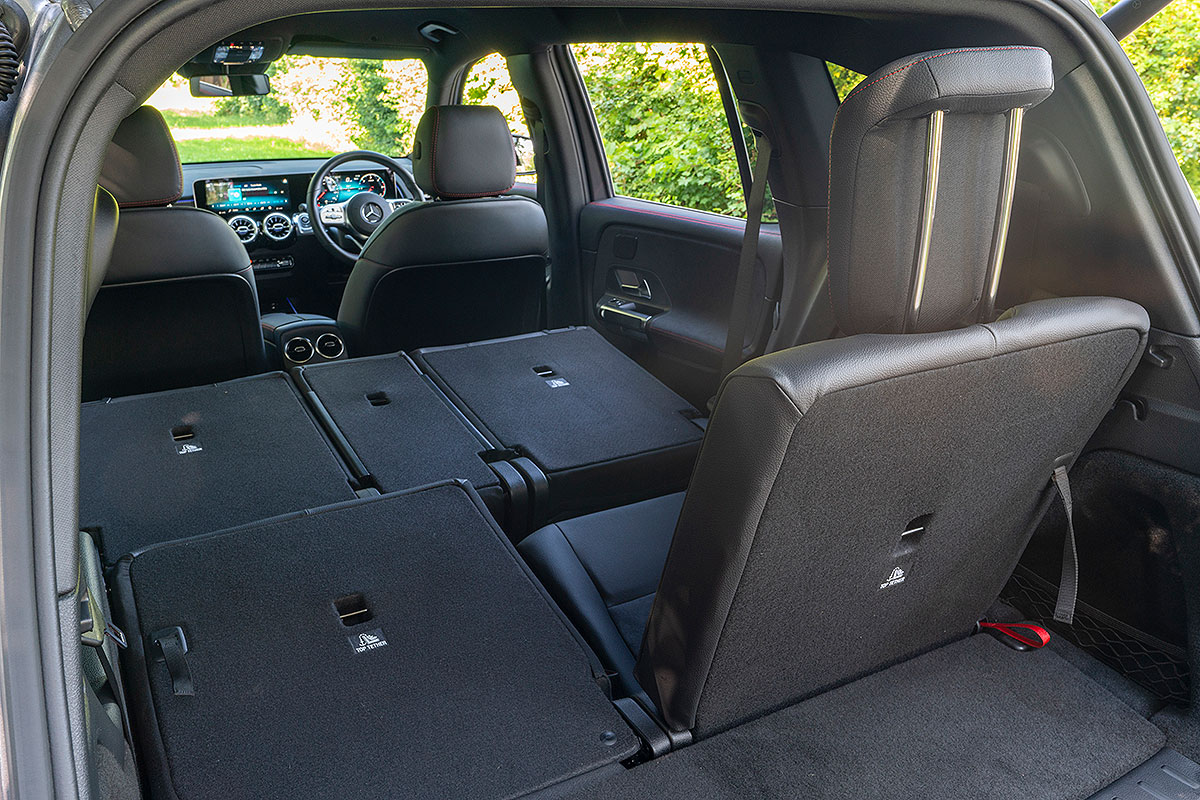
One of the GLB’s key selling points is its seven-seat layout. The third-row seats fold neatly into the boot floor when not needed and are best suited to children or shorter journeys, but they still make the GLB more versatile than many of its rivals, including the Audi Q3 and BMW X1. Boot space is another strong point, with five-seat versions offering 570 litres of luggage capacity, which expands to 1,805 litres with the rear seats folded down. Naturally, luggage space is more limited when all seven seats are in use, but that’s a compromise common to all seven-seat SUVs.
Rear-seat room is impressive for this class, and the large rear doors make fitting child seats easier than in some coupe-inspired alternatives. Overall, the GLB feels much more practical and versatile than its relatively compact dimensions might suggest.
What's it like to drive?
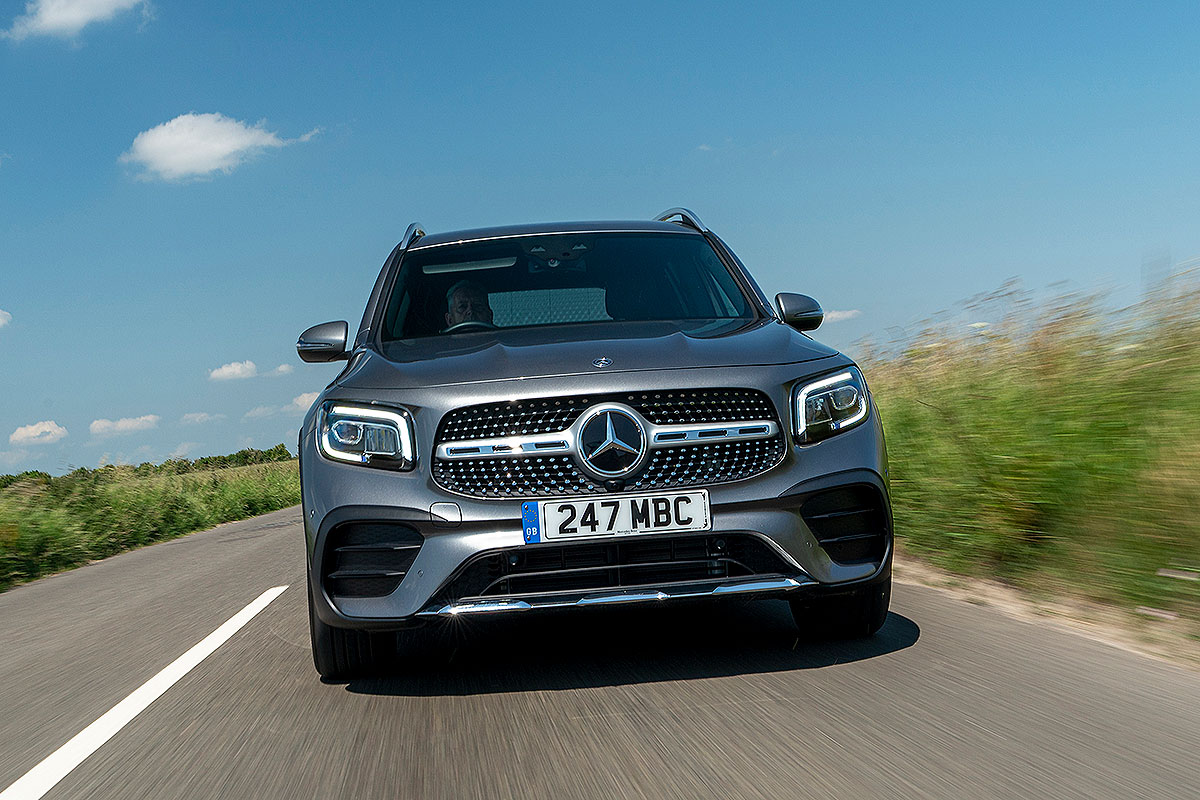
The GLB is not especially sporty or exciting to drive, but it feels secure, comfortable and relaxed in everyday use. Ride comfort is generally good, visibility is excellent and light steering makes the GLB easy to manoeuvre in town, despite its boxy shape.
Engine performance is perfectly adequate across the range, with the GLB 200d and 220d diesel models particularly well suited to motorway driving thanks to their strong low-down torque and relaxed cruising manners. The GLB 200 petrol model is quieter and smoother around town, while all versions come with a seven- or eight-speed automatic transmission.
Mercedes-Benz’s 4Matic four-wheel-drive system is fitted to the GLB 220d, improving traction in poor weather and on slippery surfaces. It’s not intended to rival serious off-roaders such as the Land Rover Discovery Sport, but it will cope with muddy tracks, rough car parks and winter weather.
A Mercedes-AMG GLB 35 4Matic was previously available. With a 2.0-litre turbocharged petrol engine producing more than 300bhp, it felt surprisingly rapid for a practical seven-seat SUV, although the tall body and comfort-focused setup meant it lacked the agility and precision of other AMG models.
Technology, equipment & infotainment
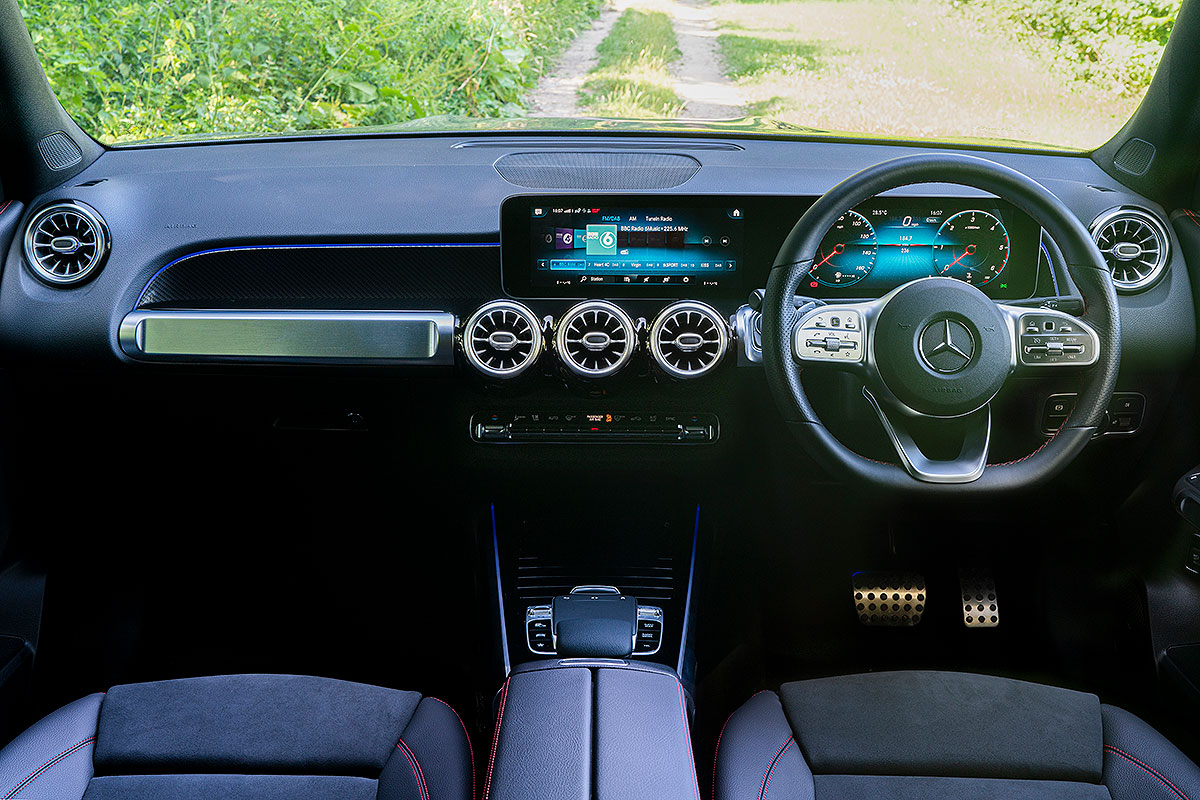
Technology was one of the GLB’s biggest strengths when it was launched, particularly thanks to Mercedes-Benz’s impressive MBUX infotainment system. The dashboard is dominated by a pair of 10.25-inch widescreen displays – one for the digital instrument panel and the other for the central infotainment touchscreen. It gives the GLB a far more modern feel than many cars in its class.
Both screens are highly configurable and can be operated using the touchscreen itself, the steering wheel controls or a touchpad mounted between the front seats. Mercedes-Benz also wisely retained physical shortcut buttons for commonly used functions, making the system easier to use on the move than some fully touch-sensitive alternatives.
Even the entry-level Sport Executive model features automatic climate control, heated seats, four-way lumbar support and a full suite of driver assistance systems, while AMG Line Executive spec adds the likes of wireless phone charging, 64-colour ambient lighting and sports seats. The AMG Line Premium and AMG Line Premium Plus complete the range, with Mercedes-Benz also offering an array of option packs and accessories.
Mercedes-Benz GLB-Class running costs
The GLB should prove reasonably affordable to run by the standards of seven-seat SUVs. Diesel engines are the most economical choices in the range, particularly the GLB 200d, which is capable of returning around 50mpg according to the official figures. The GLB 220d is only slightly less efficient, but that’s due to the weight of the four-wheel-drive system.
Petrol models are smoother and quieter around town, although they naturally use more fuel than the diesels. That said, around 40mpg is decent for a car of this size – plus it makes more sense if you spend most of your time on the school run or doing urban journeys.
Insurance costs are generally comparable with other premium compact SUVs, although higher-spec 4Matic and AMG versions sit in more expensive insurance groups. Servicing costs can also be higher than those of mainstream rivals, particularly if you stick with Mercedes-Benz main dealers, although many owners choose independent specialists once their car’s warranty has expired.
Mercedes-Benz GLB-Class reliability
Mercedes-Benz’s reputation for reliability is a little more mixed than the premium badge might suggest. In the latest What Car? Reliability Survey, the brand finished joint 22nd out of 30 manufacturers. However, the GLB itself performed more respectably, finishing 16th out of 76 family SUVs.
Most reported issues relate to electrical systems and software rather than major mechanical failures. As with many modern Mercedes-Benz models, the GLB’s extensive driver assistance technology and MBUX infotainment system can occasionally suffer glitches or warning messages, although serious problems appear to be relatively rare.
The GLB has also been subject to several recalls since launch, including issues relating to fuel system components, turbocharger oil supply pipes and body sealing around the front wheelarches. Any used example should have had the relevant recall work completed, but it’s still worth checking the car’s history with a franchised dealer.
Overall, the GLB appears to have a reasonably solid reliability record so far, particularly when serviced correctly. Mercedes-Benz originally supplied the GLB with a three-year, unlimited-mileage warranty, which is below par when some mainstream manufacturers offer five or seven years of cover.
- Mercedes-Benz’s MBUX infotainment system was one of the GLB’s standout features when new and still feels impressively modern today. All trim levels in the current range feature a pair of 10.25-inch widescreen displays in a single glass panel, giving the cabin a much more upmarket feel. Both displays are highly configurable, while AI is used to learn your habits, such as your preferred route home from work and favourite radio station.
- Buyers considering a four-wheel-drive GLB should look for a 4Matic model fitted with the optional Off-Road Engineering Package. This adds an additional off-road driving mode, downhill speed regulation and various off-road display functions. It’s not going to challenge a Land Rover when the going gets tough, but it can prove useful in a muddy car park or on rough tracks.
- If rear passenger space is a priority, pay attention to the specification. High-spec models fitted with the panoramic glass roof lose a noticeable amount of rear headroom, particularly for those in the middle row of seats.
- Best for low running costs: The GLB 200d Sport Executive makes the most financial sense for many buyers. Its diesel engine offers strong fuel economy and relaxed motorway cruising, while likely holding its value better than equivalent petrol models. If the budget allows, consider upgrading to one of the AMG Line models, as these are likely to be in higher demand on the used car market.
- The sweet spot: A GLB 200d AMG Line Premium is probably the pick of the range. It combines the efficient diesel engine with some desirable options, including dual-zone climate control, a memory function for the front seats, 20-inch alloy wheels and improved exterior styling. It also avoids the extra weight and running costs of four-wheel drive.
- Best for family buyers: All GLBs come well equipped with safety tech, including active brake, lane-keeping assistance and a reversing camera. Higher-spec models add Mercedes-Benz’s extensive Driver Assistance Package, which includes adaptive cruise control, blind-spot monitoring and additional steering and braking assistance. The GLB is also one of the few compact premium SUVs - The extravagant choice: The Mercedes-AMG GLB 35 4Matic is an unusual but entertaining proposition. Its turbocharged petrol engine produces more than 300bhp, helping it to hit 60mph in around five seconds. That’s quick enough to rival a hot hatch. The difference is, you can’t carry seven people in a hatchback. It’s a rare but intriguing car to seek out on the used market.