Mercedes-Benz SL-Class (2012-2020) review | Beautifully built luxurious roadster and coupe
Mercedes-Benz SL-Class cars for sale
4.0
Expert review
Pros
As capable as it is desirable
The benefits of a roadster and a coupe in one
Epic performance of AMG SL65
Cons
Not as dynamic or sporting as a Porsche 911
High running costs
The AMG's performance overstretches the chassis

The CarGurus verdict
There aren’t many cars that can genuinely be called iconic, but the Mercedes-Benz SL is one of them. A hugely capable and desirable roadster and coupe in one, it might not be as sharp to drive as a Porsche 911 or as luxurious as a Bentley Continental GT, but it’s so rounded that it’s a difficult car to find fault with.
The V6-powered SL 400 is appealing, but the V8-powered SL 500 is the one we’d want. The AMG models, for all their thunderous engines and ludicrous performance, write cheques the SL’s laid-back chassis is unable to cash.
The SL is at its best as a dignified grand tourer: perfect for a cross-continental cruise across Europe, a weekend roof-down escape in the Cotswolds, or even the daily commute – if you can justify the running costs. Its greatest strength is its adaptability, combining comfort, performance, luxury and open-air charm in a way few cars manage quite so well.

What is the Mercedes-Benz SL-Class?
The Mercedes-Benz SL-Class is one of the brand’s long-running legends, with a history stretching back more than half a century. This generation, sold from 2012 to 2020, continued the familiar SL formula, combining elements of a grand tourer, luxury roadster and sports car into one beautifully built package.
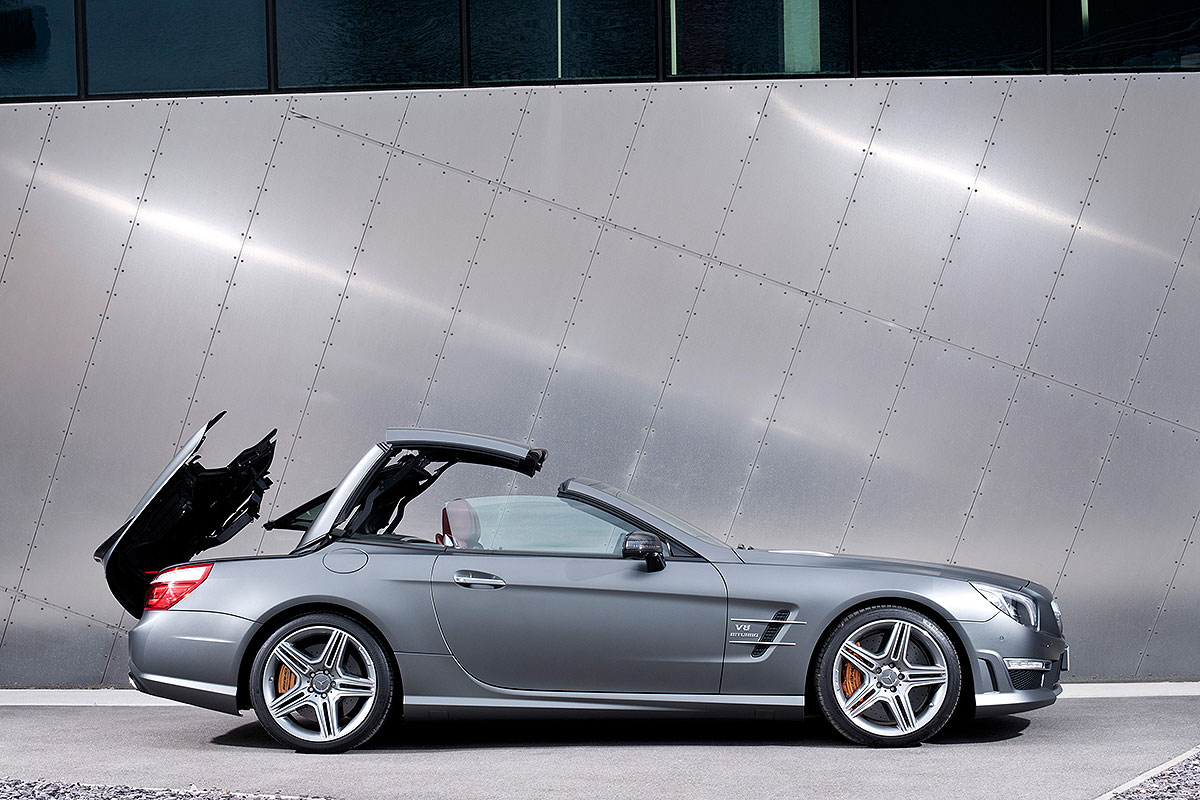
A big advantage over many rivals is the folding metal hardtop. With the roof raised, the SL feels more like a refined coupe, offering better refinement and security than a traditional soft-top. Lower the roof and it becomes a glamorous two-seat roadster, complete with the open-air theatre that’s guaranteed to turn heads outside a trendy wine bar.
This dual character is central to the SL’s appeal. It’s not as sharp to drive as many sports cars, but it feels more luxurious, more relaxing and more usable in everyday driving than many conventional convertibles.
How practical is it?
The SL’s folding hardtop is one of its defining features. Mercedes-Benz calls it the Vario-roof, and it can be opened or closed in less than 20 seconds at speeds up to 25mph. Seeing the SL transform from a coupe into a roadster is like watching engineering origami, with the metal roof folding neatly away beneath the boot lid.
The mechanism does inevitably eat into luggage space, but the SL remains surprisingly usable. Boot capacity is 485 litres with the roof in place, dropping to 364 litres with it folded down. That’s still enough for a weekend away, although you’ll need to pack with the folded roof mechanism in mind unless you want to leave some luggage at the hotel.
Mercedes-Benz also fitted an automatic boot separator, which helps keep luggage clear of the roof, while the stowed roof can be electrically lifted to improve access to bags underneath. Buyers could also choose a panoramic version of the Vario-roof with a sunblind, allowing more light into the cabin even when the roof is closed.
What's it like to drive?
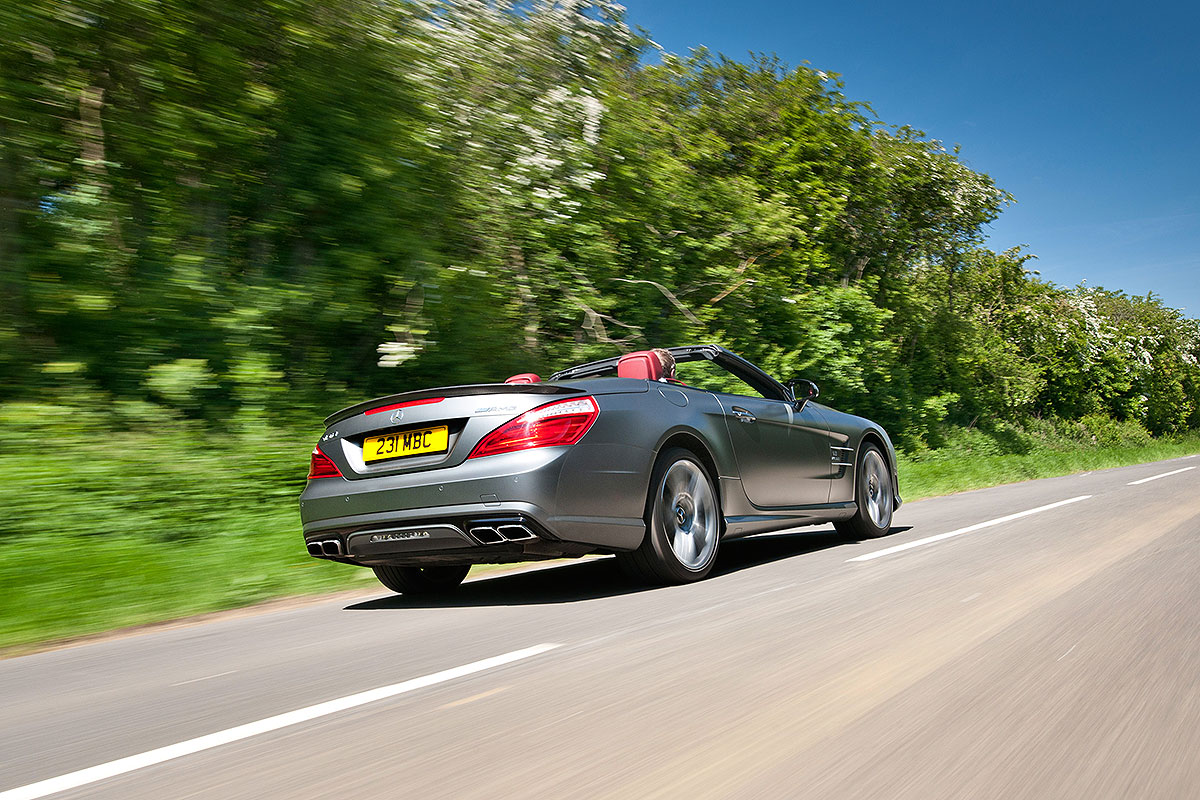
When this generation of SL, known internally as the R231, was introduced, it brought back some of the lightness that had been lost with previous versions. Mercedes-Benz made it almost entirely out of aluminium, which benefitted both performance and fuel economy. Indeed, the SL was also something of a technology showcase for Mercedes-Benz, with features such as Active Body Control available as an option.
Even so, the R231 SL isn’t the most sporting car among its contemporaries. Even the AMG variants, with their huge power outputs and Active Body Control suspension, can’t quite match the best sports cars for driver engagement.
That’s not to say the SL can’t be enjoyable to drive. It can be remarkably capable when driven enthusiastically, but it doesn’t feel like a car that wants to be treated that way. Its real strengths lie in comfort and, for a two-seat roadster, surprising everyday usability.
Technology, equipment & infotainment
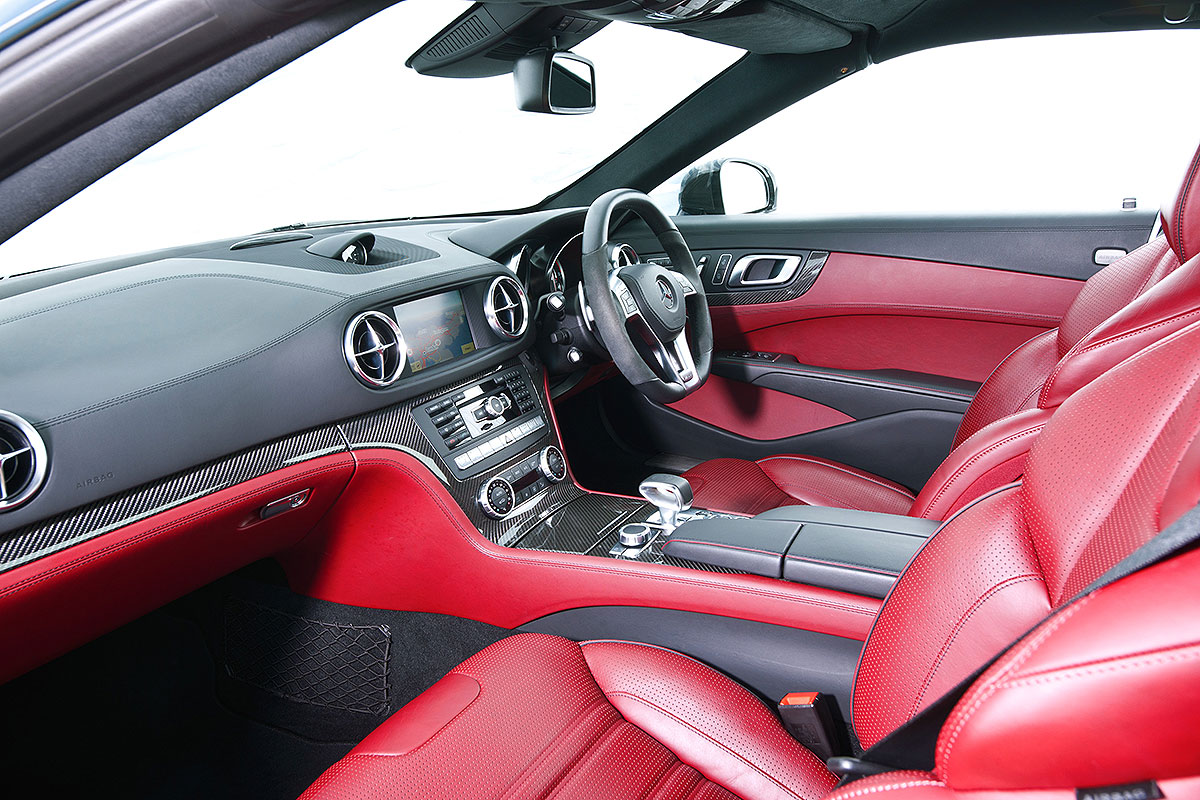
The SL’s infotainment system was comprehensive for its time, although it now feels dated compared to the slick MBUX setups found in newer Mercedes-Benz models. The Comand Online system includes a 7.0-inch colour display, navigation, DAB radio, voice control and Bluetooth connectivity, all controlled via the rotary dial on the centre console.
Later cars also gained smartphone integration, including Apple CarPlay, so it’s worth checking the specification of a used example. The system is not as visually impressive as newer touchscreen-based alternatives, but it’s generally straightforward to use and suits the SL’s more traditional luxury feel.
Standard equipment was generous, particularly on later Grand Edition models. Highlights included Nappa leather upholstery, the wonderful Airscarf neck-level heating, dual-zone climate control, LED headlights, heated seats, an electrically operated wind deflector and the panoramic Vario-roof. Grand Edition Premium versions added more luxuries, such as ventilated massage seats, soft-close doors and a Harman Kardon surround-sound audio system.
Mercedes-Benz SL-Class running costs
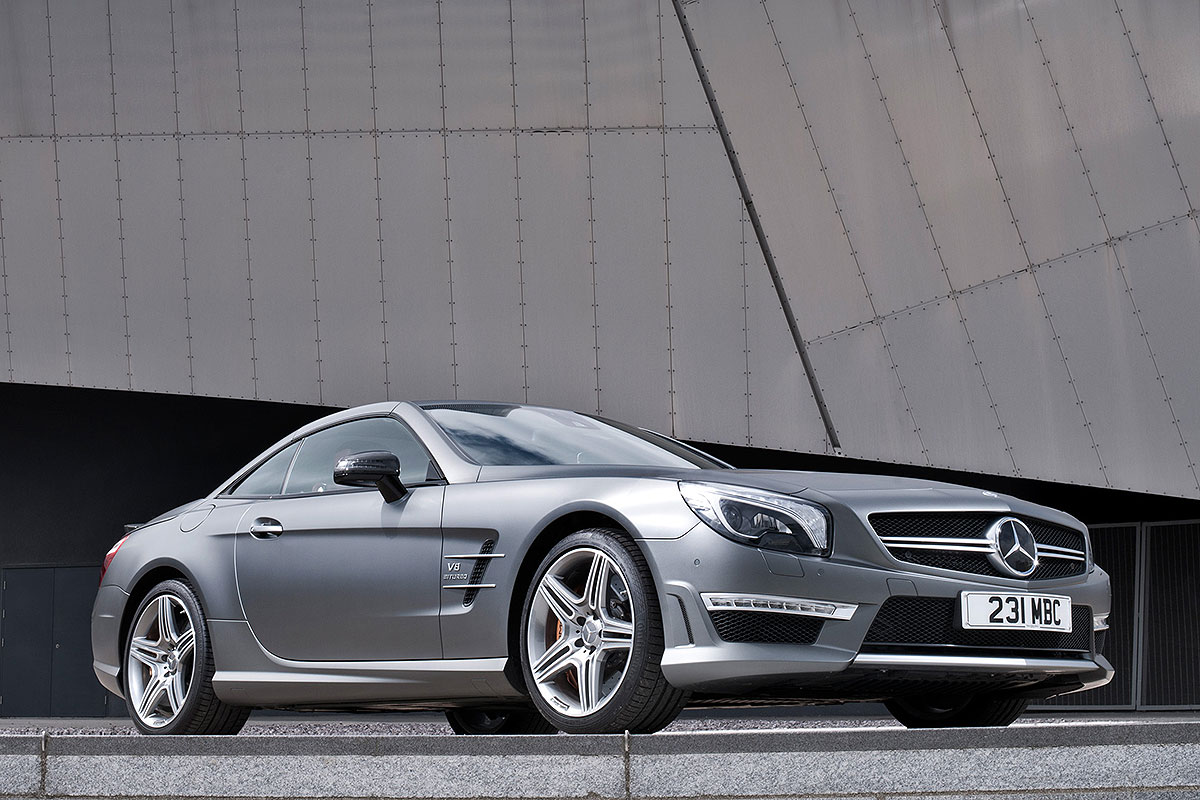
The SL was an expensive car when new, and it remains costly to run today. Even the less powerful V6 models were luxury cars with expensive servicing, insurance and maintenance costs, while V8 and AMG versions raise the stakes still further.
Fuel economy varies considerably depending on engine choice. The SL 400 is the most sensible option, with later WLTP figures of 28.8-29.7mpg, while the SL 500 officially returned 26.4-27.4mpg. In real-world driving, expect those figures to drop, especially if you push the SL to its full potential. The AMG SL 63 and 65 are in a different league again for fuel, tyres and servicing costs. It’s a case of, if you have to ask…
Insurance is expensive, too, with later SL 400 and SL 500 models both sitting in the top group 50. Large wheels, wide tyres and complex roof mechanisms also mean maintenance bills can quickly become substantial if the car has been neglected.
That said, the SL is not a disposable luxury car. Buy a well-maintained example (which so many are), keep up with servicing and use a reputable Mercedes-Benz specialist, and it should still feel like a proper high-end roadster – even with a significant mileage on the clock. Good examples may also hold their value well as the R231 edges closer to classic status.
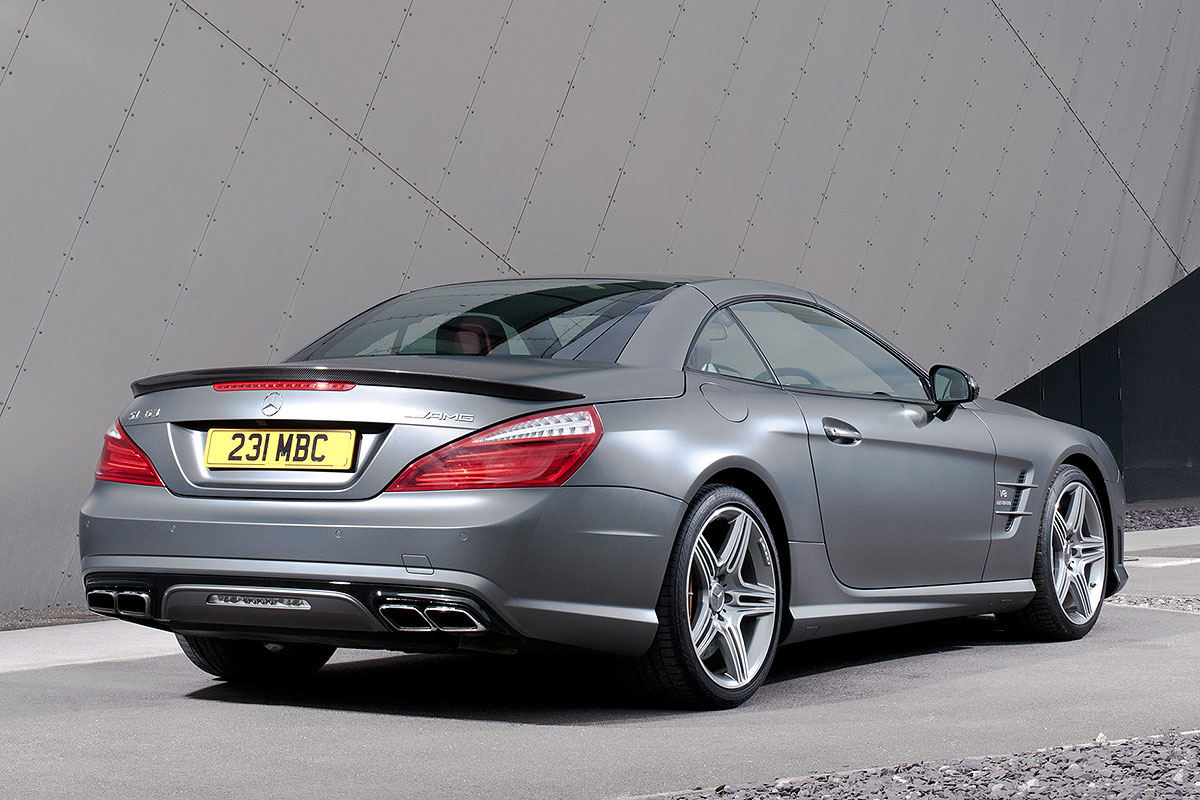
Mercedes-Benz SL-Class reliability
The SL’s long production life should work in its favour when it comes to reliability. This generation was sold from 2012 to 2020, giving Mercedes-Benz plenty of time to iron out early issues, while later facelifted cars should benefit from additional development. And while it wasn’t a volume seller, you can afford to be picky when faced with eight years of sales.
There are no major widespread horror stories to put buyers off, but the SL is still a complex luxury roadster, so condition and maintenance matter enormously. Check the service history carefully and make sure all electrical systems work properly, including the infotainment system, seat adjustment, seat heating and ventilation, Airscarf system and roof mechanism.
The folding metal hardtop is one of the SL’s defining features, but it can be expensive to fix if neglected. Make sure it opens and closes smoothly, especially if the car has spent long periods unused over winter. The engines and automatic transmissions are generally proven, but any used SL should still be inspected thoroughly before purchase, especially if you’re looking at a high-mileage or AMG version.
Mercedes-Benz as a brand finished joint 22nd out of 30 manufacturers in the latest What Car? Reliability Survey, so the badge alone is no guarantee of trouble-free ownership. However, a well-maintained SL with evidence of regular servicing and completed recall work should still prove a dependable car.
- The R231 SL was offered with a broad engine range during its life. Earlier cars included the naturally aspirated SL 350 V6, while later versions offered a twin-turbocharged SL 400 V6 and V8-powered SL 500. Mercedes-AMG models sat at the top of the range, including the SL 63 with its twin-turbo V8 and the rare SL 65 with a twin-turbo V12. The SL originally had a seven-speed automatic transmission, but later non-AMG cars moved to a nine-speed automatic. All versions of the car are rear-wheel drive.
- Safety has always been a major part of Mercedes-Benz’s identity, and that applies even to a glamorous two-seat roadster like the SL. Standard safety equipment included rollover bars that deploy automatically if the car detects a potential rollover, plus safety systems such as Pre-Safe and Attention Assist. Later cars could also be fitted with the Driving Assistance Package, which added features such as active blind-spot assist, active lane-keeping assist and Distronic
- Despite the SL name originally standing for ‘Sport Leicht’ or ‘Sport Light’, this generation is more about luxury than saving weight. Standard equipment on later cars included Nappa leather, Airscarf neck-level heating, dual-zone climate control and an electrically operated wind deflector, while Premium models added ventilated massage seats, soft-close doors and a Harman Kardon sound system.
- The all-rounder: While it’s easy to be seduced by the V8 in the SL 500, the SL 400 is as able, and a little bit more agile, too. With 362bhp available from its 3.0-litre twin-turbo V6 engine, it’s no slouch, hitting 62mph in just 4.9 seconds and going on to an electronically limited 155mph.
- The monster: If you absolutely have to have the most powerful, most expensive and greatest number of cylinders with your SL, accept nothing less than the Mercedes-AMG SL 65. With a 6.0-litre V12 under its bonnet and a pair of turbos upping the power, the SL 65 pushes out a supercar-rivalling 621bhp, backed up by 738lb ft of torque. These cars are rare, and for good reason: the SL 65 commanded a price tag in excess of £160,000 when new. And while it’s the most powerful SL, it’s not actually the best.
- The most sporting: For that you need the Mercedes-AMG SL 63. It doesn’t have the same mighty output as the SL 65, but 577bhp isn’t too much of a drop in power, while it’s also quicker in the 0-62mph sprint, covering it in 3.7 seconds compared to the SL 65’s 3.9 seconds. Without a big V12 up front, the V8-engined SL 63 is an easier, more engaging car in the bends. That’s relatively speaking, of course, as the SL is not an out-and-out sports car. For that, you should look at a Mercedes-AMG SLS, or latterly the AMG GT, or any number of alternatives from Porsche, Ferrari, Maserati, Jaguar, Audi, Bentley and BMW, among others.
- The classic: The definitive SL is a dignified, brisk machine with a V8 under its bonnet, and that’s exactly what the SL 500 is. It lacks the overt style and aggression of the AMG models, but with up to 455bhp in later versions it’s still effortlessly quick. We reckon it’s the car that will be considered the archetypal R231 SL when it reaches classic status.


