Mercedes-Benz Sprinter review (2019-present) | Hard-working van with a polished image
Mercedes-Benz Sprinter cars for sale
4.0
Expert review
Pros
A desirable package with a premium badge
Plenty of safety equipment
Wide range covers just about every payload and capacity requirement
Cons
High list price of the electric model
The 3.0-litre V6 is more expensive to run than other models
Sheer choice means you need to take your time to find the ideal Sprinter for your business

The CarGurus verdict
The Mercedes-Benz Sprinter is a big player in the large commercial van market, and it's not difficult to see why. The kudos of having a premium badge on your business vehicle's grille is obvious, but the Sprinter backs that up with a huge range of versions, strong carrying capacity and the kind of configurability that makes it feel like Mercedes-Benz has thought of almost every possible use case.
What's more, the Sprinter is good to drive by large-van standards, with a comfortable cab, impressive safety kit and the latest MBUX infotainment system giving it a more polished feel than many rivals. It’s not the cheapest big van to buy, and some competitors offer better value, but the Sprinter still makes a very strong case for itself as a premium, hard-working and highly configurable commercial vehicle.

What is the Mercedes-Benz Sprinter?
Few brands cover quite so many bases as Mercedes-Benz. The three-pointed star appears on everything from F1 cars to the lorry that comes to collect your recycling, and almost everything else in between. The Sprinter sits firmly in the useful bit of that spectrum: a big van with a premium badge, serious carrying capacity and a reputation that makes it one of the best-known names in the commercial vehicle world.
This generation of Mercedes-Benz Sprinter has been around since 2019, but it’s still one of the benchmarks for large vans. It’s available as a panel van in a choice of lengths and heights, with rear-wheel drive or all-wheel drive depending on version, plus separate chassis cab and crew cab derivatives for more specialist uses. There’s even a fully electric eSprinter, which offers up to 272 miles of range and can be charged from 10-80 percent in as little as 34 minutes, depending on the size of the battery.
The Sprinter’s rivals include the Ford Transit, Volkswagen Crafter, MAN TGE, Renault Master, Vauxhall Movano, Fiat Ducato, Peugeot Boxer, Citroen Relay, Iveco Daily and Maxus Deliver 9, but the Mercedes stands out by combining heavy-duty practicality with a more upmarket image than most.

How practical is it?
A van lives or dies by how much it can carry, and the Mercedes-Benz Sprinter gives buyers a huge amount of choice. The panel van is the core model, but the wider Sprinter range also includes chassis cab and crew cab versions for more specialist conversions. In other words, if the standard van doesn’t, ahem, deliver, there’s every chance a different Sprinter derivative will.
The current Sprinter panel van comes with three front seats and is offered in three body lengths: L2, L3 and L4. There are two roof heights, although the lower H1 roof is available only on L2 versions, with H2 high-roof models making more sense if load volume is the priority. Rear-wheel drive and all-wheel drive versions are available, depending on model, while buyers can choose between Pro and Select trims.
As standard, panel vans come with a full-length partition, wood flooring, double-wing rear doors that open to the side wall, and a spare wheel. That gives you a strong starting point, but the options list is vast, with different bulkhead arrangements, sliding doors, load securing rails, uprated suspension, larger fuel tanks and payload-related upgrades available depending on the version.
The chassis cab and chassis crew cab models are there for businesses that need something more specialised. The chassis cab has three seats and is designed to be converted into things such as dropsides, tippers, Lutons, refrigerated bodies, recovery trucks or camper vans. The chassis crew cab adds a second row of seating, giving space for up to seven people before the rear body conversion is added.
That breadth is one of the Sprinter’s key strengths. The Ford Transit, VW Crafter or Iveco Daily can all offer a similar spread of versions, but Mercedes-Benz has made the Sprinter feel like a properly configurable tool rather than just a big box on wheels. The downside, naturally, is that getting the right one means doing your homework. Length, roof height, payload, drivetrain and conversion type all matter far more here than badge or trim.
What's it like to drive?
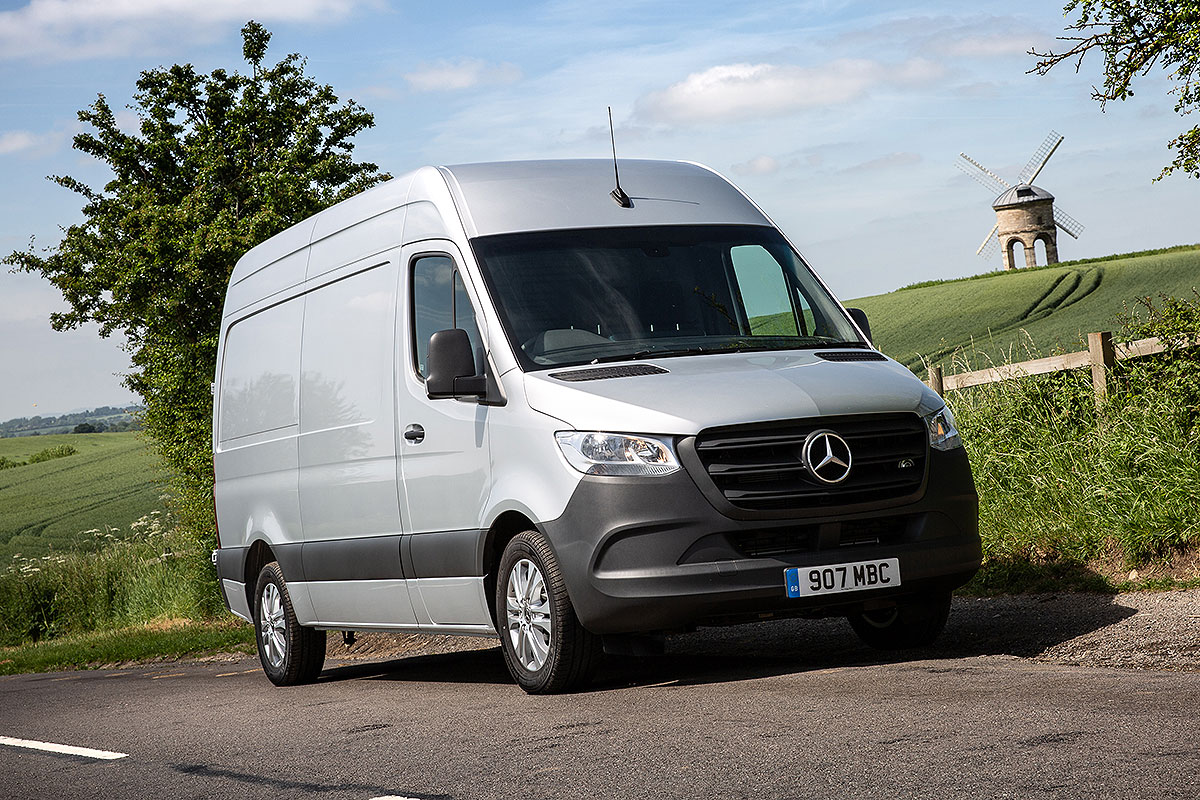
The Sprinter is a big van, so nobody should expect hot-hatch responses – even if your parcel is late (again) – but it’s impressively easy to drive for something so large. The driving position is high, visibility is good, and the steering is light enough to make town work less intimidating than the dimensions suggest. Longer versions still need plenty of space, of course, but the Sprinter feels stable and settled once you’re up to speed.
Diesel models remain the obvious choice for many operators, especially those covering long distances, carrying heavy loads or working routes where charging would be awkward. The current diesel panel van range is available with rear-wheel drive or all-wheel drive, depending on version, while manual gearboxes and the 9G-Tronic automatic are offered. Most buyers will be happy with the regular rear-wheel-drive models, while all-wheel drive is worth considering if the van will be used on construction sites, rural tracks or in poor winter weather.
The 9G-Tronic automatic is the nicer choice if your budget allows. It suits the Sprinter’s relaxed character, takes the effort out of urban driving and makes a lot of sense for multi-drop work or long-distance use.
The eSprinter is also now a serious option rather than a token electric van with a short range. It’s all about the twos, with the eSprinter available with a choice of two lengths, two heights, two trim levels and two battery sizes. With the larger battery, the eSprinter offers up to 272 miles of range, which should be enough for a day of urban deliveries, especially if your routes include clean-air zones and depot charging. Diesel will still suit some operators better, but the eSprinter is credible enough to be considered as a realistic prospect.
Refinement is good by large-van standards. The cab feels more substantial and upmarket than many rivals, and the Sprinter is at its best covering long distances with a load on board. It’s not the cheapest van in its class, but it does feel like one of the most polished. And there’s something about arriving at a business with a three-pointed star on the grille.

Technology, equipment & infotainment
Being part of a global automotive giant works in the Sprinter’s favour. It means Mercedes-Benz can equip its big van with the sort of safety kit, connectivity and driver assistance systems that would once have been more common in passenger cars than commercial vehicles.
The cab is well built and logically arranged, with a comfortable driving position, plenty of storage and the sort of practical touches you want in a working van. It still feels like a van, because it is one, but it has a more polished feel than many rivals.
The latest Sprinter comes with Mercedes-Benz’s familiar MBUX infotainment system as standard, displayed via a 10.25-inch touchscreen. It includes DAB radio, Bluetooth, voice control, USB-C connections, smartphone integration, over-the-air updates and connected services. The system is more sophisticated than you’ll find in many vans, although operators will need to check which features require activation, subscriptions or a linked Mercedes-Benz account.
Safety equipment is strong, too. Current panel vans come with features such as Active Brake Assist, Blind Spot Assist, Sideguard Assist, Crosswind Assist, Active Lane Keeping Assist, Intelligent Speed Assist, Attention Assist, a reversing camera and tyre pressure monitoring. That’s a serious list of Assists for a working vehicle, and it helps explain why the Sprinter feels more upmarket and car-like than most big vans. A big car, granted, but still car-like.
Mercedes-Benz Sprinter running costs
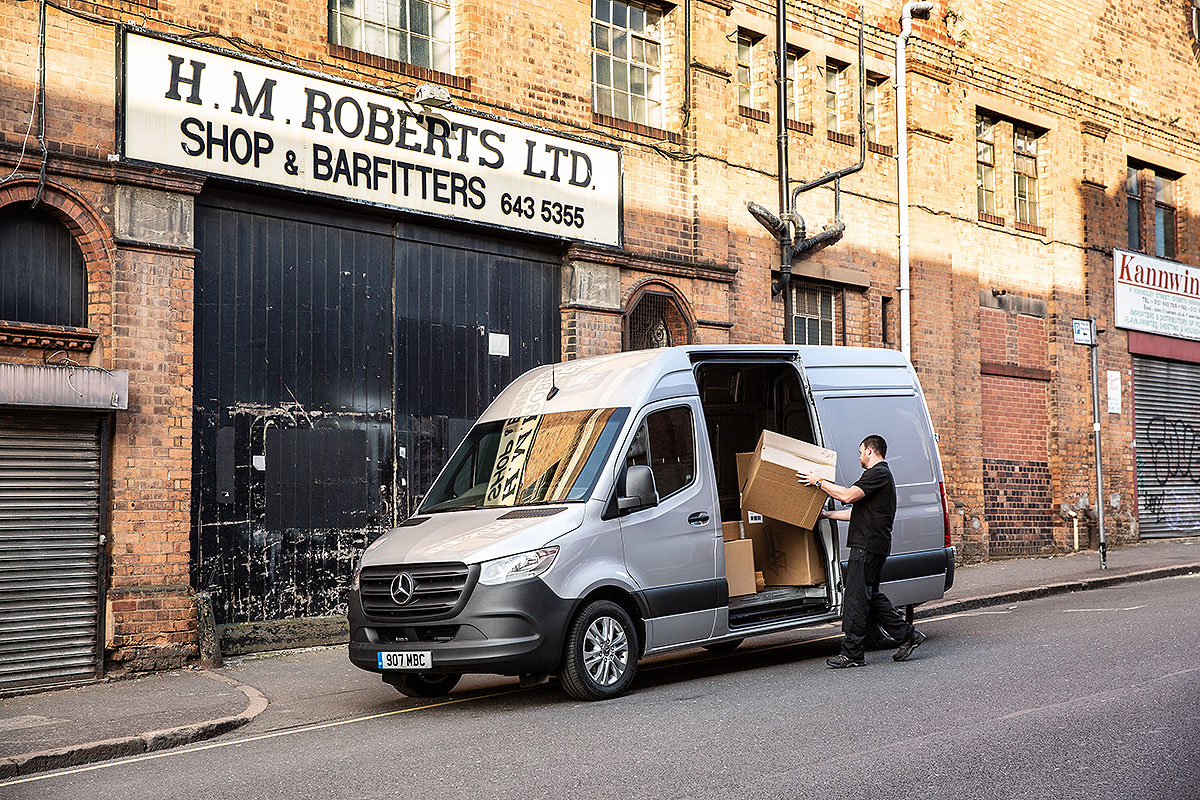
As with any van, the most important numbers are not just payload and load volume, but how much it costs to keep the thing earning money. The Sprinter isn’t the cheapest large van to buy, but the three-pointed star carries weight with customers and residual values are likely to be strong, which helps soften the blow over the longer term.
Diesel is the sensible choice for many operators, especially those covering long distances, towing, carrying heavy loads or working routes where charging is inconvenient. Fuel economy will vary significantly depending on body length, roof height, payload and whether you choose rear-wheel drive or all-wheel drive, but the Sprinter should be competitive by large van standards. The 9G-Tronic automatic gearbox will add to the purchase price, but it could be worth having if your drivers spend much of their time in traffic.
Mercedes-Benz quotes figures ranging from 22.2mpg to 34.4mpg, depending on size and trim, but in general, the smaller the van, the better the fuel economy.
The eSprinter is now much easier to recommend than it once was. Officially, it should manage between 161 and 272 miles on a single charge, depending on the battery and version. Meanwhile, rapid DC charging can potentially take it from 10-80 percent in 34 minutes. That makes it a serious option for urban deliveries and those who operate in a clean-air zone. It won’t suit everyone, but lower charging costs, reduced maintenance requirements and zero tailpipe emissions could make the sums work for many operators.
Connected services also help keep the Sprinter working efficiently. Current vans come with MBUX, smartphone integration and digital services, while fleet-focused tools can help with maintenance planning, remote access, vehicle monitoring and driver behaviour.
The bottom line is that the Sprinter is unlikely to be the bargain-basement option, but that’s not really the point. It’s a premium large van with a strong image, a wide choice of versions and the potential to keep whole-life costs to a minimum if you choose the right drivetrain and specification for the task in hand.

Mercedes-Benz Sprinter reliability
The Mercedes-Benz Sprinter has a strong reputation in the van world, helped by the fact that it is used by everyone from delivery firms to tradespeople, camper converters and emergency services. It’s built to work hard, but like any modern large van, reliability will depend heavily on how it has been used, loaded and serviced.
The diesel engines are well proven, and the Sprinter’s commercial vehicle roots mean it’s designed for high mileage. That said, hard-working vans lead hard lives, so used buyers should look carefully for evidence of regular servicing, proper maintenance and repairs carried out with quality parts. Check for warning lights, noisy suspension, gearbox issues, uneven tyre wear, worn load-area trim and signs that the van has spent its life overloaded or abused.
The eSprinter might be a safer option. Electric vans have fewer moving parts than diesel models, but battery health and charging history matter. Anyone buying used should check the range estimate, charging behaviour and service history carefully, especially if the van has been used for high-mileage delivery work.
Every new Sprinter comes with a three-year, unlimited-mileage warranty, and Mercedes-Benz’s aftercare network is a big part of the appeal. Service24, MobiloVan breakdown cover, fixed-price service options and app-based diagnostics can help keep downtime to a minimum, which matters far more to van operators than whether the badge looks good in the yard.
- The Sprinter range is broader than the average van buyer might expect. The panel van is the core model, but Mercedes-Benz also offers chassis cab and chassis crew cab versions for more specialist conversions. That means the Sprinter can be anything from a regular delivery van to a tipper, Luton, recovery truck, refrigerated vehicle or camper conversion.
- The eSprinter is now a proper part of the range rather than a token electric van. It won’t suit every operator, especially those covering long distances with heavy loads, but for urban deliveries and use within clean-air zones, it makes a lot of sense.
- Technology is one of the Sprinter’s strengths. Current models come with Mercedes-Benz’s MBUX infotainment system, a 10.25-inch touchscreen and a long list of safety and driver assistance features. That helps the Sprinter feel more upmarket than many rivals. All panel vans include a wireless wifi hotspot, plus Apple CarPlay and Android Auto smartphone connectivity.
- The city van: If your Sprinter will spend most of its life in town, avoid going bigger than you need to. An L2 panel van is the easiest diesel Sprinter to live with in tight streets, loading bays and multi-drop work, while the automatic transmission is worth having if your budget allows. The eSprinter is also a strong choice if your routes are predictable and you have reliable charging access, because it suits urban deliveries and clean-air zones particularly well.
- The heavy hauler: If payload is the priority, you’ll need to pay close attention to gross vehicle weight rather than just choosing the largest body. The Sprinter panel van can carry up to 2,479kg depending on the version, while chassis cab models can carry even more before a body conversion is added. The important thing is to configure the van around what you actually carry, not what looks biggest in the brochure.
- The voluminous one: For maximum load volume in a diesel panel van, look at the longest L4 H2 version, which boasts a 4,810mm load floor and 15.5 cubic metres of load space. In other words, it’s enormous. It won’t be the easiest thing to thread through a Cotswolds village, but if your business involves bulky, relatively light loads, this is where the Sprinter comes into its own.
- The electric one: The eSprinter is no longer the compromised short-range choice it once was. Depending on battery, it offers up to 272 miles of range, up to 14 cubic metres of load space and payload of up to 1,273kg, making it a realistic prospect for depot-based businesses, urban deliveries and operators who can plan charging properly. Diesel still makes more sense for long-distance, heavy-duty or unpredictable work, but the electric Sprinter now deserves serious consideration, especially if your business has one eye on green credentials.
- The sensible all-rounder: For many buyers, a rear-wheel-drive L2 or L3 diesel panel van in Pro trim is the sweet spot. It gives you the core Sprinter strengths, a strong standard safety kit list and enough configurability for most jobs without getting carried away on size, payload or options. Speaking of which, because the Sprinter is offered with an array of options and accessories, it’s worth taking a closer look at what’s been fitted to a used van, because you might get more toys than you bargained for.