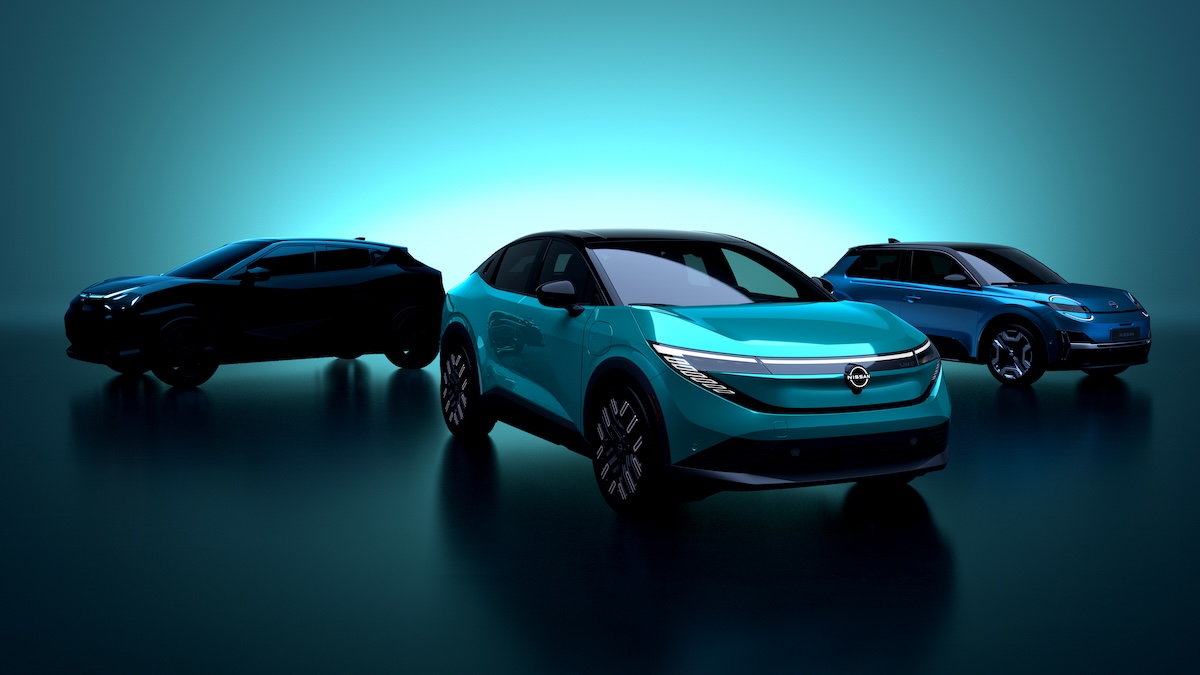
Nissan Leaf 2026 review | The best one yet


CarGurus expert score
Pros and cons
What we like
Stylish design
Superb infotainment
Competitive prices
What to consider
Rear space could be better for adults
Firm low-speed ride on 19-inch wheels
Expensive paint options
The CarGurus verdict
The Nissan Leaf has been reinvented for this third-generation iteration. Building on the breakthrough attributes of its predecessors, it’s more stylish than ever, has a top-notch infotainment system and, courtesy of the latest battery tech, goes further than ever before on a full charge.
The dynamic focus is very much on comfort rather than sportiness, yet the ride of models on 19-inch wheels can feel a little stiff at lower speeds. Rear seat space could be better for adults, and ultimate load capacity is restricted by that sporty rear window design. Overall, though, the Nissan Leaf is a high-quality, well-rounded electric car that, thanks to the Electric Car Grant, is offered at a very competitive price.
out of 5 expert review
What is the Nissan Leaf?
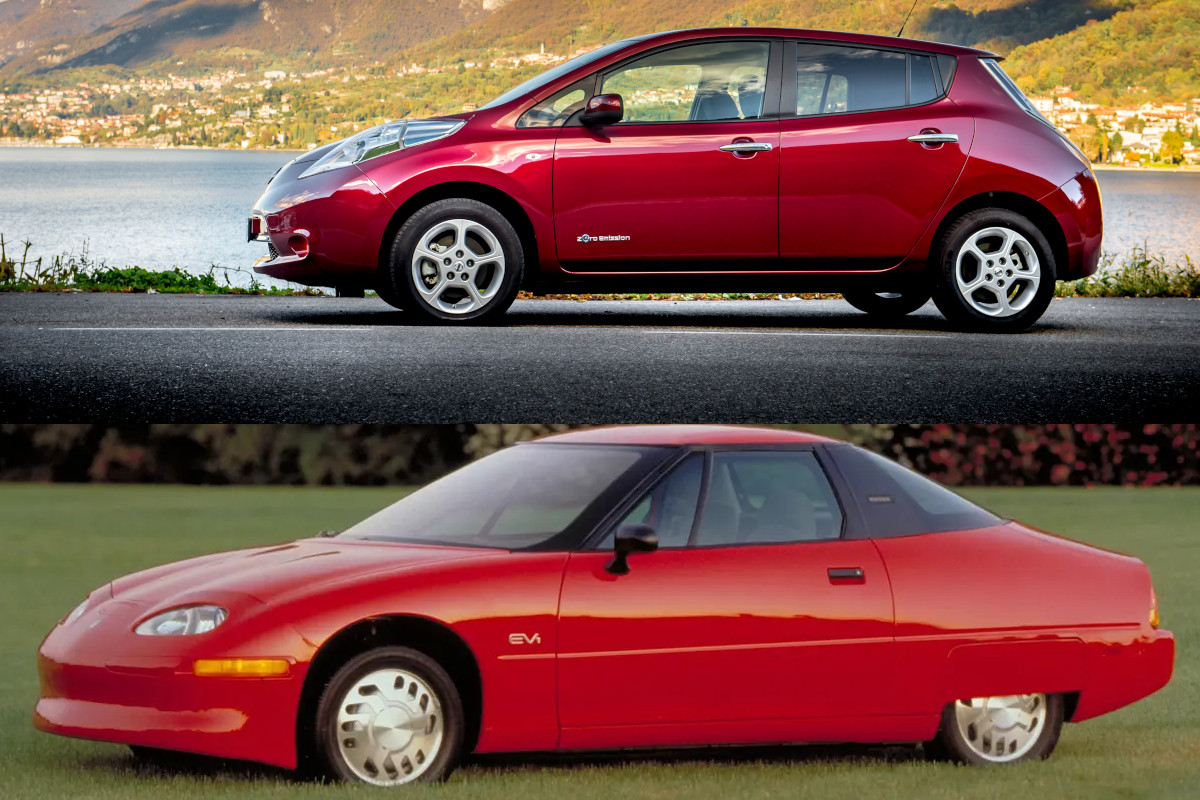
The Nissan Leaf was the world’s first mainstream electric car. The original Leaf was launched back in 2010 and it helped take EVs from being a niche technology to something that could be considered a genuine alternative to a petrol car. The second generation Leaf arrived in 2017 and now, at last, we have this all-new third-generation version.
Today’s electric car marketplace is very different from 2010. The latest Nissan Leaf now has a multitude of competitors, including the likes of the Kia EV3, Skoda Elroq, Volkswagen ID.3, Volvo EX30 and even the entry-level Tesla Model 3. This means Nissan’s had to pull out all the stops in order to make the latest Leaf a competitive proposition.
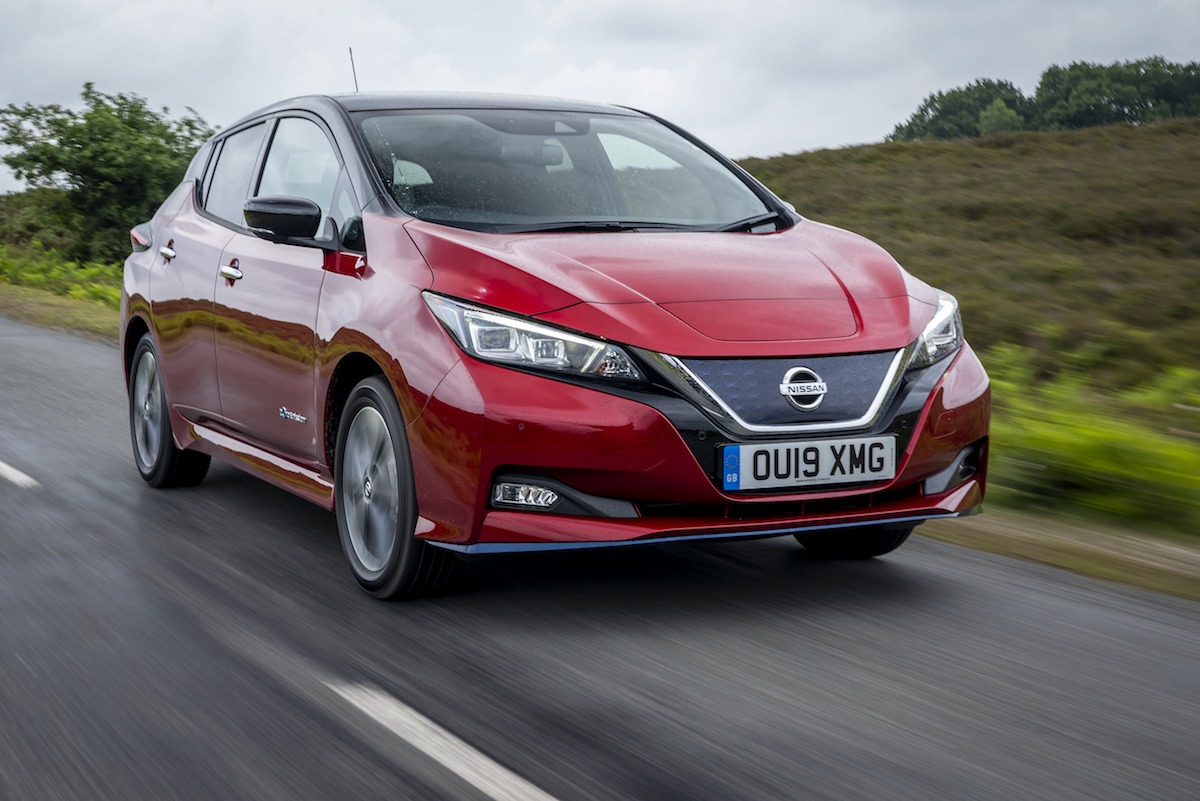
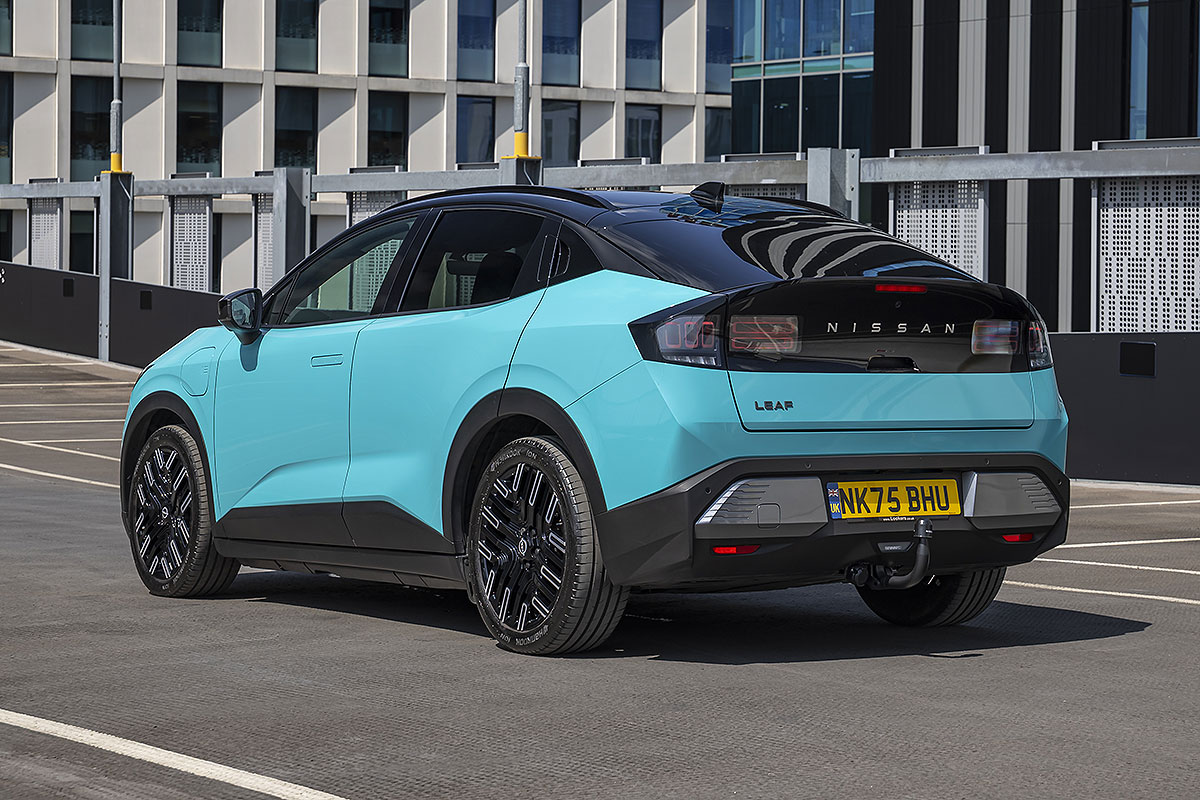
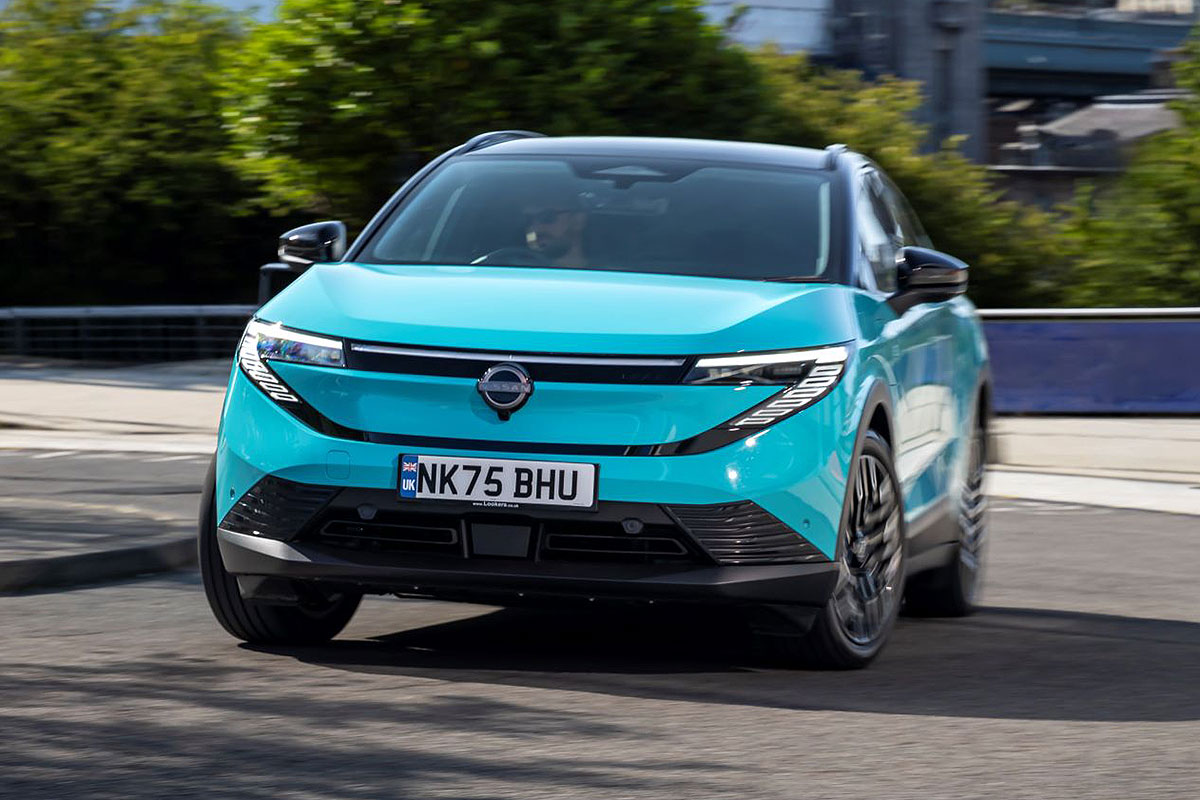
The latest Nissan Leaf is easily the most stylish model yet. Its bold new crossover design has been tuned for high levels of aerodynamic efficiency – thanks to that slippery roofline and closed-off front end, it has a Cd drag factor of just 0.25. Smart details include retractable door handles and 3D tail lights set within a black panel that harks back to the famous Nissan 300ZX sports coupe.
You can get the Nissan Leaf with two sizes of battery. The entry-level 52kWh battery has a range of up to 280 miles, but it’s the 75kWh battery, with a range of up to 387 miles, that’s likely to prove most popular. Nissan’s British engineers have calculated that, thanks to its excellent aerodynamic qualities, it will have a reliable range of almost 270 miles even when driven at 70mph on the motorway. Energy consumption, they add, can be as low as 4.5 miles per kWh of charge.
There’s an added British element to the Nissan Leaf, because it is assembled here, at the firm’s giant Sunderland factory. Design and engineering work was also carried out in the UK, at Paddington and Cranfield respectively. This has helped the Nissan Leaf qualify for the full £3,750 Electric Car Grant – which means entry-level prices drop from £32,599 to just £28,849. The price of the favoured 75kWh version falls from £35,999 to £32,249. This makes the Nissan Leaf a very competitive proposition – and the rest of the package doesn’t disappoint either.
Practicality
How practical is it?
The latest Nissan Leaf is actually shorter overall than its predecessor. At 4,350mm long, it’s 140mm shorter than before, thanks to more efficient packaging and design. This helps make it more manoeuverable in town, and easier to park. Despite this, Nissan insists it’s more spacious inside, helped by being 20mm wider and 10mm taller than the previous model.
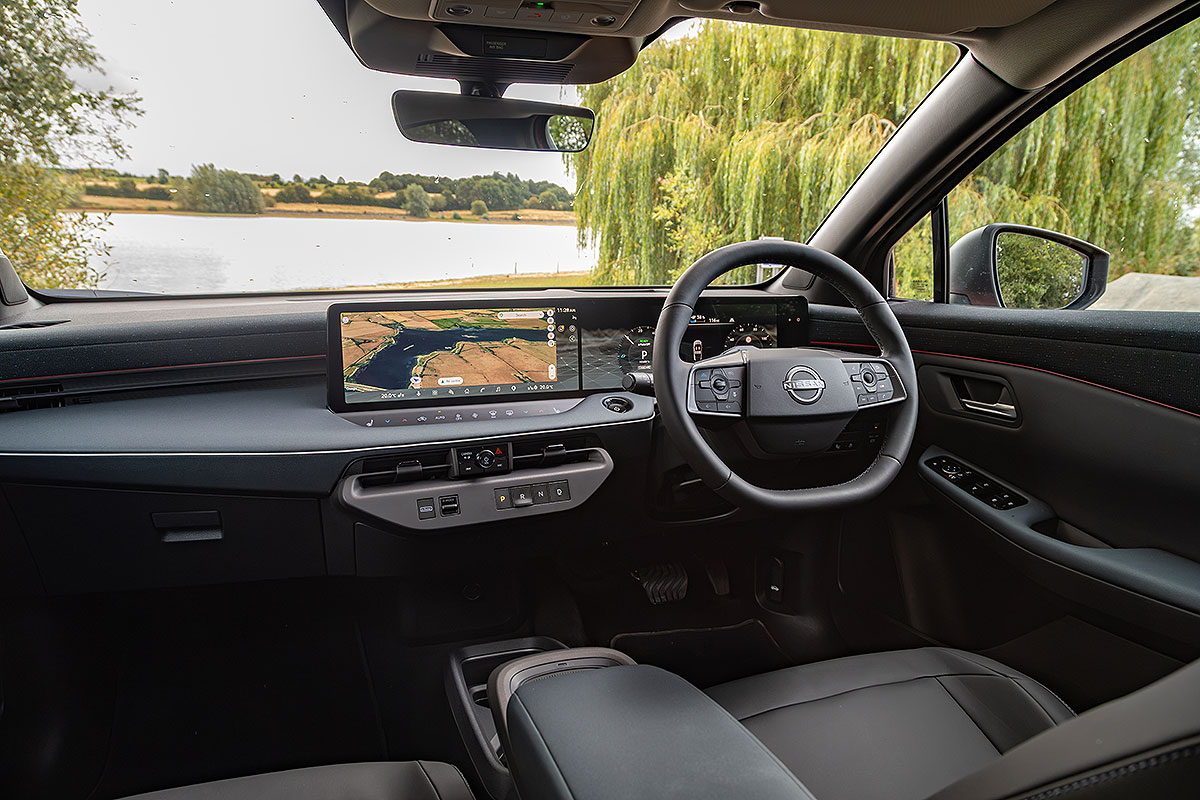
The Nissan Leaf is easy to step in and out of, thanks to wide door openings and low sills. It has a fairly high seating position, giving a semi-SUV feel behind the wheel, which is something that will please many. Visibility is generally good, thanks to the low dashboard, and the view out the side windows is clear too. We do, however, find that the angle and thickness of the windscreen pillars can get in the way when pulling out of junctions.
The Nissan Leaf doesn’t have a rear wiper, due to its aerodynamic design. The designers say the rear window has been shaped to automatically clear water from it once you’re moving. The view out the rear could be better, and while all Nissan Leafs have a 360-degree, the resolution of the reverse camera could be better.
There are plenty of practical stowage spaces inside the Nissan Leaf. The cut-away centre console creates a spacious centre cubby with cupholders big enough to store even the largest of coffee cups. The wireless smartphone charger – standard on Engage+ and above – is neatly located ahead of the centre armrest, so you don’t have to tuck your phone into a deep recess (and therefore probably forget it).
The Nissan Leaf doesn’t have physical climate control buttons, but it does have a row of haptic controls below the centre touchscreen. These need a bit of a jab to operate, so are not as slick as they could be. The square gearshift buttons on the centre console also aren’t very intuitive – you can’t engage gears by feel, so will have to squint past the steering wheel and look at them each time you want to engage drive or reverse. Full marks to Nissan for the physical buttons on the steering wheel though, including an ergonomically-designed rotary controller on the right-hand spoke.
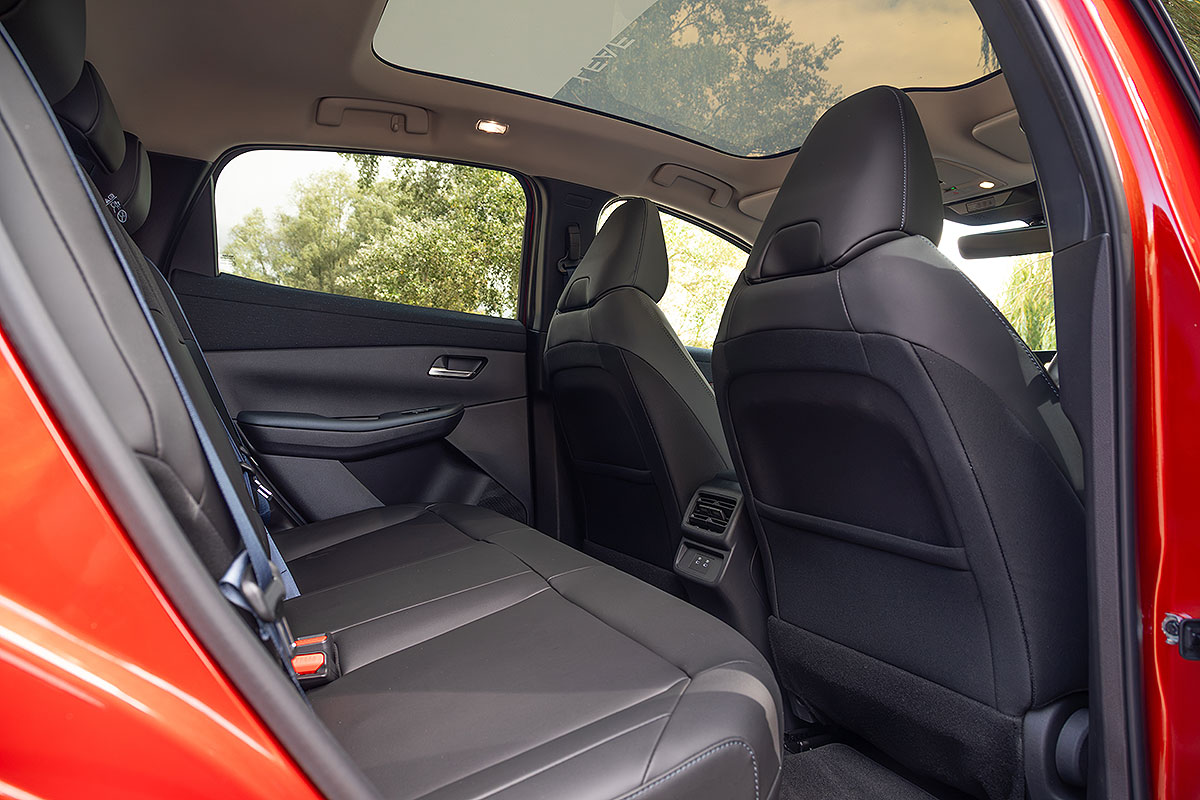
In the rear, the Nissan Leaf has a flat floor which gives it more of an open-plan feel. The dimming panoramic glass roof fitted to Advance and Evolve models helps here too – the ‘dim at a push of a button’ feature will impress passengers. It’s not perfect back there though: the sloping roof pinches headroom for taller people, more foot space under the front seats would be welcome, and the low rear seat gives a bit of a perched, ‘knees in the air’ feel.
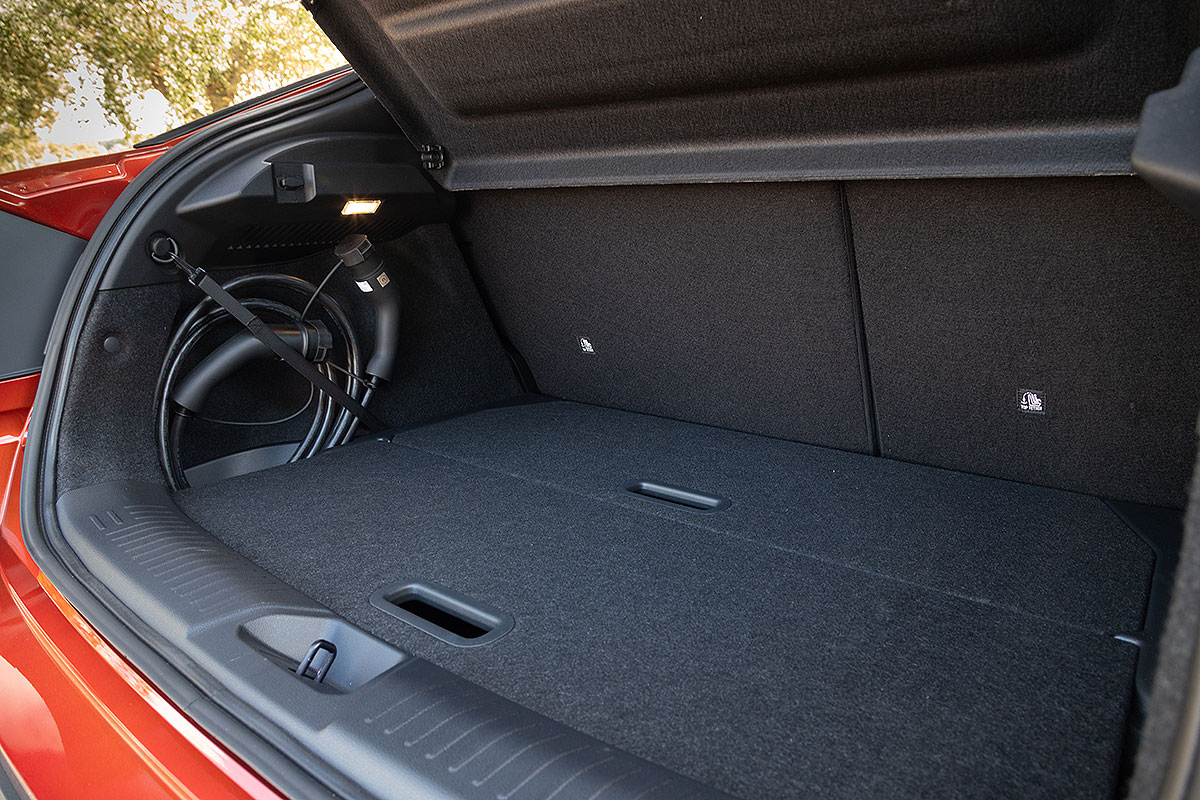
The Nissan Leaf has a 437-litre boot. The space is clean and well-shaped, with a two-part boot floor opening up access to a deep space beneath. The clever modular boards fitted to all but base Engage can be flipped up and stowed upright to stop things sliding around. Fold the rear seats and the space expands to 1,052 litres. This is somewhat shy of rivals such as the Skoda Elroq, due to the wind-cheating shape of the Nissan Leaf’s rear window. Advance grade and above have a power tailgate.
The Nissan Leaf doesn’t have a front boot, or frunk. It is, however, available with a clever underfloor cable storage system, which you can wrap cables around to make sure they don’t become tangled.
Driving
What's it like to drive?
The Nissan Leaf has a comfort-focused setup, which you appreciate from your first moments behind the wheel. The supple suspension is absorbent and does a good job of soaking up rough roads. Top-spec Evolve models with 19-inch alloys can feel a bit jittery at lower speeds, but it becomes much smoother and better-isolated at speeds above 30mph. All other Nissan Leaf run on 18-inch wheels.
Steering is confident, with the Nissan Leaf responding swiftly to small inputs. It makes it feel agile on turn-in, while a tight turning circle is useful in town. Handling is faithful, aided by a high-spec multi-link rear suspension setup. The Nissan Leaf isn’t the most dynamic of cars but, given its comfort-focused nature, it strikes a decent balance. Brakes are light and you’ll have to get used to a slight grabbiness when you first use them.
Refinement is very good. The Nissan Leaf is a smooth-running machine at lower speeds, and remains hushed as speeds rise. You will notice a bit more wind and road noise at fast motorway speeds, but it’s generally quiet and very refined in town. Nissan cites a 66% improvement in the stiffness of the CMF-EV architecture as a key reason for this.
The 52kWh Nissan Leaf is paired with a 174bhp electric motor. This is upped to 214bhp with the 75kWh battery. 0-62mph performance takes 8.6 seconds and 7.6 seconds respectively. The Nissan Leaf’s power delivery is smooth and linear, and it always feels ready to respond with confidence, even at higher speeds. This, again, is another benefit of its aerodynamic design, which reduces the impact of drag at speed. All Nissan Leaf have a limited 99mph top speed.
The Nissan Leaf has handy regenerative braking paddle shifts. This allows the level of brake energy regeneration to be toggled by flicking the two paddles, with the intensity depicted by blue triangles on the driver display. There’s also Nissan’s ‘e-pedal’ one-pedal drive system, which can be engaged by a button on the dashboard – it’s fine, but interacting with the paddle shifters is smoother.
There’s a nice ‘easter egg’ surprise when driving a Nissan Leaf fitted with the Bose stereo. Thanks to speakers mounted into the headrests, it’s able to play satnav directions or phone calls only to the driver, so other passengers won’t be disturbed. Punchy sound is also delivered by a novel, space-saving fresh air subwoofer in the boot.
Tech and equipment
Technology, equipment & infotainment
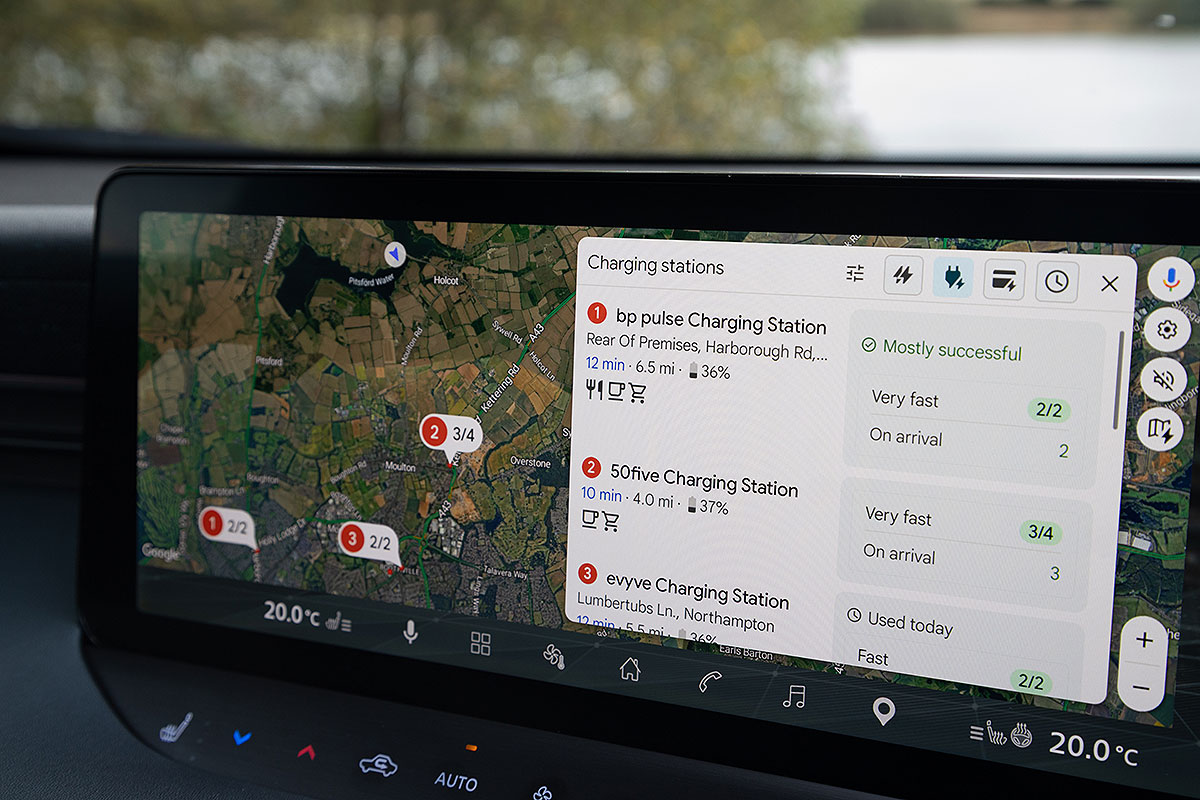
All Nissan Leaf have a dual-screen infotainment setup with two 14.3-inch displays (12.3-inch on base Engage). It’s based on Google’s snazzy Android Automotive OS, so (again, on all but base Engage) features built-in Google Maps, Google Assistant and the Google Play store (which gives access to more than 70 apps such as Spotify and Waze).
The built-in Google Maps setup is particularly clever. Because it’s fully integrated with the car, it can plan longer trips around charging stops – even down to how long you need to plug in at each stop. This makes longer electric car journeys much more reliable, reassuring and stress-free. Via the NissanConnect smartphone app, trips can be calculated remotely then sent to the car – so you can see what charging stops you may need before even leaving your house.
Full integration of Google Maps means Nissan is able to display satnav directions in both the driver display and, where fitted, the head-up display. Meanwhile, the tightly-integrated Google Assistant allows you to control the sunroof, climate control and even third-party apps like Spotify by voice – simply say the artist or song and it will start playing, promises Nissan. It can hook up to smart home devices too – such as, controlling an electric garage door.
The Nissan Leaf’s infotainment system has an all-new layout. It’s clearly defined into dedicated ‘tiles’ which you can swipe between. Nissan promises key parts of functionality are no more than one layer – or one touch – below the home screen. There are customisable backgrounds too, and they can even change according to the time of day: taking on a more restful appearance in the evening, for example. Extra marks to the padded shelf on the dashboard, which you can rest your hand on as you scroll through the infotainment system.
The Nissan Leaf’s infotainment system is satisfying to use, as it’s packed with so much functionality. The layout is fairly logical, and the ability to control key aspects using the steering wheel scroller is handy. Naturally, wireless Apple CarPlay and Android Auto are standard. Our only gripe is that it’s hard to reach the far left corners of the screen when on the move – simply because the display is so large.
Top-spec Evolve models have the high-end Bose premium sound system comprising nine speakers, including a driver headrest speaker. They are also equipped with a V2L connector, so can power external devices such as power tools or electric camping stoves.
The Nissan Leaf has DC rapid-charge functionality. It’s a rather slow 105kW on the 52kWh battery, raised to 150kW on the 75kWh battery. This means that both can go from 10-80% in around 35 minutes. After 30 minutes at max DC charging speed, the 52kWh will have added up to 176 miles of range, with the 75kWh impressively adding up to 273 miles. Both versions have a standard 11kW AC charger.
Running costs
Nissan Leaf running costs
Nissan Leaf running costs will naturally be sensible due to it being an electric car. It’s at its most competitive if you have a home charger, where you’ll be able to take advantage of competitive off-peak tariffs. They mean you could fully charge even the 75kWh battery for just a few pounds.
Insurance groups are OK, starting at group 27 for the 52kWh version and group 30 for the 75kWh. The Skoda Elroq is even more competitive here, but the Nissan Leaf still stacks up well compared to other rivals. Insurance-friendly details such as moving the charging port from the front grille to the passenger side front wing help here – the charging system is less likely to be damaged.
Nissan Leaf reliability
Nissan doesn’t exactly have a glowing reputation for reliability. In the 2026 What Car? Reliability Survey, it placed 24th out of 30 car firms – a long way from arch-rival Kia, which was seventh. However, if you look at the Nissan Leaf itself, things are a lot more positive. The previous-generation Leaf was the second most reliable electric car of all, with a superb 95.9% reliability rating. It is to be hoped this impressive performance carries across to the new car.
The Nissan Leaf has a three-year, 60,000-mile warranty. This looks unimpressive when, once again, Kia gives a seven-year, 100,000-mile warranty on the EV3. Nissan’s package does include three years’ pan-European roadside assistance though, which will even cover a flat tyre. The EV motor has a five-year, 60,000-mile warranty, and the battery has an eight-year, 100,000-mile warranty.
Nissan Leaf servicing is every year or 18,000 miles, and Nissan dealers offer service plans up to 10 years and 100,000 miles.
What owners say
The leaf is a great vehicle, well built, sturdy, quiet with all the requisite features you want or need in a car. The range is good, and best of all you can charge it at home
5 November 2025For a low level entry Acenta it as everything that we needed for a home run around car which is in excellent condition for its age, happy with the price that we paid being a previous newer leaf owner this older style is still pretty good their are plenty of older style Leafs around which says a lot about this model I think we were lucky to pick up a low mileage one, definitely worth taking your time to find the right model that suits your needs
10 October 2026Very comfortable seats. Smooth driving experience. Limited range below 200miles
13 July 2022What owners say
The leaf is a great vehicle, well built, sturdy, quiet with all the requisite features you want or need in a car. The range is good, and best of all you can charge it at home
5 November 2025For a low level entry Acenta it as everything that we needed for a home run around car which is in excellent condition for its age, happy with the price that we paid being a previous newer leaf owner this older style is still pretty good their are plenty of older style Leafs around which says a lot about this model I think we were lucky to pick up a low mileage one, definitely worth taking your time to find the right model that suits your needs
10 October 2026Very comfortable seats. Smooth driving experience. Limited range below 200miles
13 July 2022It should be remembered that the Leaf is on its second generation model and has sold nearly half a million. It may be short on chargeable miles, but has 10 years of construction/usage behind it. It has plenty of room, is well equipped and has good performance, with a very good reputation for reliability. Because of this, it stands alone in the market place and is a steal on the second-hand market.
8 April 2022Battery capacity is a big problem. with full heating on and driving for 1.7 miles, the range just dropped by 14 miles! Not great to use in cold countries even for short trips. Mileage anxiety will be a constant stress. Otherwise, the car drives fantastic!
1 December 2021For me all of the New feature that the driver wants it is all in this model! Excellent Car !
30 May 2021feels great to have an electric car - however the 24 kilowatt models ( older pre 2017 models) - only do about 105 miles per charge & a charge ising home socket- takes all night ( 8 hours)- & a fast 2 hour charge can degrade the battery- which provides power fir the motor. All in all - best electric cars are the newer ones which can do over 200 miles per charge- so its swings & roundabouts for the 24 kw & 30 kw motor electric vehicles- but they are perfect for mini cab drivers.
19 February 2023Three things to know
- The ‘free’ paint option on the Nissan Leaf is an attractive pearlescent red called Fuji Sunset. Black, grey and white are £760 options, but to fully open up the range (including the punchy Luminous Teal seen in the images), you need to spend £1,395 on a two-tone finish with black roof. This seems rather expensive to us.
- Only the Nissan Leaf 75kWh comes with a heat pump – the 52kWh battery lacks one, which will impact its real-world efficiency in winter. You also can’t get heated seats on the entry-level 52kWh Engage version.
- The Nissan Leaf’s optional panoramic roof features a built-in dimming function. It also has ‘Leaf’ lettering which, when the sun shines, is reflected onto the rear seats.
Which one to buy
- If you want the most affordable: The Nissan Leaf 52kWh Engage is the most affordable version, costing from £28,849 once the Electric Car Grant is subtracted.
- If you want the best-buy most affordable: The Nissan Leaf 75kWh Engage only costs £3,396 more, and for that, you get more power, more range – and, for an extra £405, the heated seats and steering wheel lacking on the 52kWh version.
- If you want a light interior: Only Advance and Evolve models can be optioned with the light interior. It costs an extra £400.
- If you want an electric tailgate: This must-have feature is only fitted to Advance and Evolve models.