Peugeot 5008 SUV review (2017-2024) | A seven-seater that majors on value

CarGurus expert score
Pros and cons
What we like
SUV looks meet MPV practicality
Space inside for seven
Economical engines
What to consider
No four-wheel-drive version
GT Premium spec is a bit pricey
Some infotainment system glitches
The CarGurus verdict
With MPVs out of favour, Peugeot’s decision to move the 5008 into the desirable SUV marketplace was a good one. Furthermore, its execution was absolutely brilliant (historically, Peugeot doesn’t always get it right). More than some of its seven-seat rivals, the 5008’s interior space and seating is cleverly packaged, while its smart interior is a real draw for many buyers, even if it's not quite as polished in its finish and ease of operation as more premium alternatives. Yet in a direct head-to-head with a similarly priced Vauxhall, for example, it doesn’t take long to work out the 5008 is a better buy.
Add the economical engine line-up, sensible running costs and a surprisingly generous list of standard equipment, and it’s easy to see why the 5008 would appeal to family buyers. The three Isofix child seat mounts in the rear will be a game-changer for some growing families, in particular. A decent used seven-seater? Of that there is no doubt.
out of 5 expert review
What is the Peugeot 5008 SUV?
The decline of the MPV in the early 21st century saw SUVs rise up (quite literally) to take their place. Nowhere was this more obvious than in the case of the Peugeot 5008. Just like the 3008, the 5008 name had been around the block before, as a fully-fledged MPV back in 2009. As SUVs grew in popularity, Peugeot responded first with the new 3008 SUV, revealed in 2016, followed less than a year later by the second-generation 5008. Where rivals from Vauxhall, Citroen, and Seat ditched old MPV nameplates in favour of fresh ones for their SUVs, Peugeot kept its familiar callsigns but matched them to cars with drastically different designs. Suffice to say, they did a very good job.
Although its design was different, the 5008 SUV retained the old car’s MPV spirit as a versatile seven-seater. Peugeot also packed it with numerous family-friendly touches, a decent range of engines and an interior that looked and felt – for the most part – impressively good compared to its predecessor. In fact, we wouldn’t be at all surprised if more than a few designers at other, much more premium brands looked at Peugeot’s new approach and its use of materials, and felt ever so slightly nervous. A range of efficient engines mean it shouldn’t be a major drain on the family finances, either.
The mid-life refresh of 2021 ran to little more than a revised front grille and headlamps, which gave the car a more aggressive look similar to the 508 family hatchback. Now replaced by the third-generation 5008, there’s still much to like about this once quite surprising SUV.

Practicality
How practical is it?
The 5008 is middle of the pack in terms of absolute space, but there’s lots of useful storage on board, with deep door bins, a large tray ahead of the gear lever and a lidded cubby between the front seats. There are also enough cupholders that you’re unlikely to ever go thirsty.
Passenger space is good, but one immediate point to make is that when looking at a used model, beware of cars fitted with the optional panoramic sunroof. It robs headroom in the front and middle-row seats by a not-insignificant 50mm (just shy of two inches). If you’re over six-feet tall, or regularly carry passengers above this height, it's worth making sure you can sacrifice that headroom for the extra light it brings.
The second line of seating features three individual chairs that slide back and forth, and can be reclined. Each has its own Isofix mountings for a child car seat, too. The third-row seats – two individual and slightly more basic creations – fold easily down into the boot floor. Sadly, they’re cramped compared to the second row, so adults will only really be able to jump in them for short journeys. Young children, however, will be able to get comfortable for long cross-country trips with no problems at all.
With all seven seats in place, the boot has a meagre 167-litre capacity. That's enough to accommodate anything from a cheese and tomato sandwich and a pack of Pom-Bears (that’ll keep the kids quiet, right?), all the way up to a few shopping bags or a folded pushchair. In other words, the boot is a bit of a squeeze. However, drop the third-row seats into the floor, and you liberate a cavernous 780 litres of space. And with all the rear seats down, the Peugeot’s cavernous 2,150-litre load bay does a passable impression of a small van. However, bear in mind that the floor isn’t totally flat, plus there is a big gap between the second- and third-row seats, which is easy to drop items down into.
One of the big plus points of the second-generation 5008 is a futuristic interior. Highlights include configurable digital dials, a tiny steering wheel and a large touchscreen, even if that last item isn't awfully intuitive to use. The ‘i-Cockpit’ set-up isn’t brilliant if you’re used to a bigger wheel you look at your instruments through, rather than a smaller wheel you look over. Finding a natural driving position is tricky, but there’s enough adjustment in the seat that you should be able to eventually. Moreover, the soft and squidgy seats themselves are nicely supportive, ensuring you rarely feel any aches and pains after a long stint on the road.
Peugeot chopped and changed its trim level naming structure for the 5008 over the course of its life. Broadly speaking, though, anything labeled Active is the entry level, Allure is the mid-point, and GT or GT Line is high-end. The 5008 was launched with Active, Allure, GT Line and GT Trims (going from least to most expensive). By the end of production in 2024, customers could have Active Premium +, Allure Premium +, GT and GT Premium. When looking at used models, just search online for the model year of 5008 you can afford and you’ll quickly find out what the trim levels were – and what they included.

Driving
What's it like to drive?
The engine line-up was similar to that of other Peugeot and Citroen models from the time. You could have petrol engines, badged PureTech, in 1.2- and 1.6-litre capacities, and BlueHDI diesels in 1.6- and 2.0-litre guises. A newer 1.5-litre diesel eventually replaced the 1.6.
The engines were paired with six-speed manual gearboxes or six-speed automatics to begin with, with the most powerful versions using the ‘EAT6’ auto. Later, Peugeot replaced the six-speed auto with an eight-speed EAT8 gearbox, which provided a little boost in acceleration, smoother changes, greater responsiveness and better economy figures.
At the very end of the car’s life, Peugeot introduced the 5008 mild-hybrid. Unlike the 3008, there was never a full plug-in hybrid option, as the third-row seats occupied the space that would otherwise be allocated to a large battery and electric motor. The 5008 48V mild-hybrid, however, paired the 1.2-litre petrol engine with a 12bhp electric motor connected to a battery installed under the left front seat. It also drove its wheels via a six-speed dual-clutch gearbox, rather than the regular eight-speed traditional automatic.
All versions of the 5008 drive well enough. The smaller engines feel surprisingly sprightly despite the 5008’s size, although fully-loaded they can get a bit overwhelmed. If you’re likely to fill all seven seats on a regular basis, you might want to consider the bigger, more powerful engine choices.
The 5008 feels more nimble than you’d expect, that small steering wheel delivering a light and quick response, which gives the 5008 a quite sporty feel as you turn into corners. As you’d expect from such a tall car, there is some body-roll, but it’s well contained and once settled, the Peugeot feels poised and planted. Grip is strong and only during sudden changes of direction do you sense the car’s weight and height.
While the ride feels a little firm at low speed, it’s far from uncomfortable. Once you break free of city limits, the 5008 soaks away most lumps and bumps, but it's also true that some SUV rivals ride more comfortably.
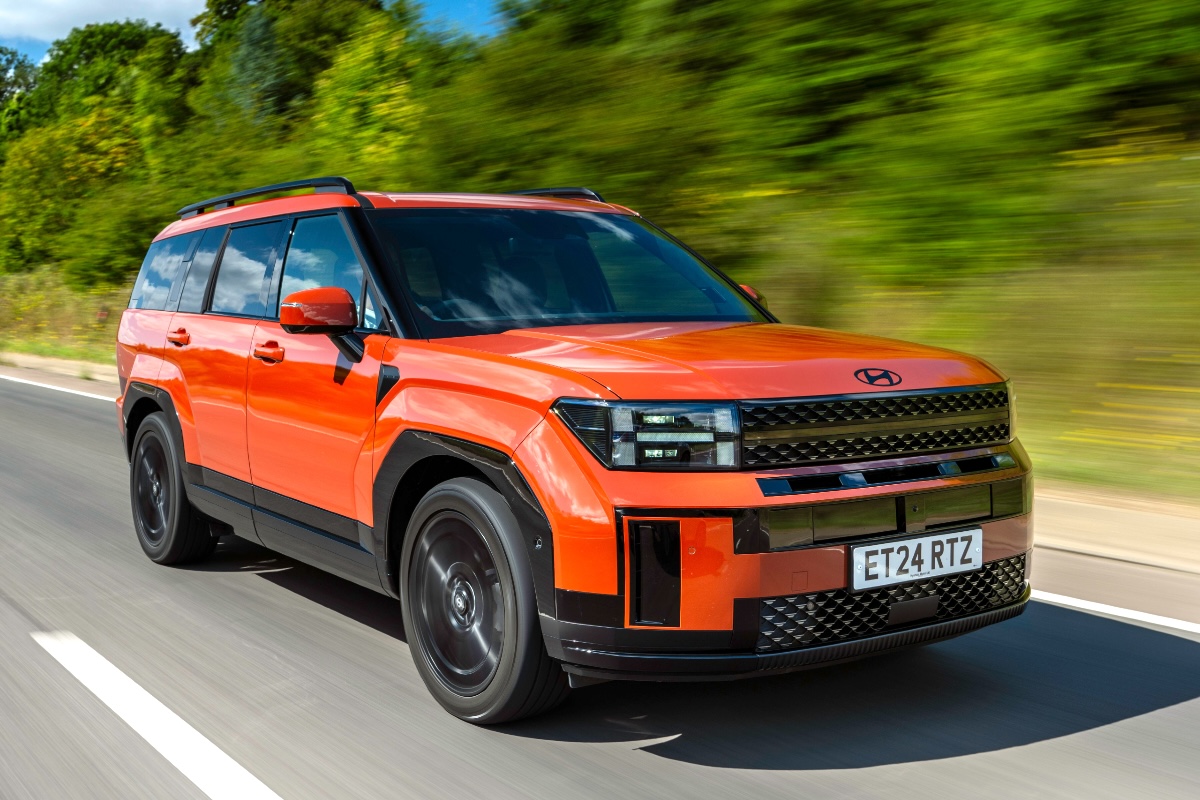
One feature you won’t find on a 5008, sadly, is all-wheel drive. It would have added a fair amount of weight, of course, but similarly sized rivals from Skoda, Land Rover, Hyundai, Kia and Seat all had the option of a 4WD version somewhere in their line-ups. Peugeot did offer its Advanced Grip Control system as an option on Allure versions upwards, which included Normal, Sand, Mud and Snow drive modes, plus hill assist and descent control. The latter merely managed the traction control and stability systems, but it was a surprisingly effective addition, allowing the 5008 to keep going in slippery conditions where traditional rivals might have got stuck.

Tech and equipment
Technology, equipment & infotainment
There’s a good spread of trim choices, with a general naming convention that included some sort of Active trim at the entry point, an Allure trim in the middle, and GT or GT Line at the top. As Peugeot brought in a number of small updates almost every year, you really will need to study the specific features that a used example has, rather than assume a given feature is fitted. Overall, the 5008 was very well equipped, just like the smaller 3008.
More basic examples featured a standard 8.0-inch central touchscreen, with higher-spec models having a standard 10.0-inch screen. Almost every car had a 12.3-inch digital instrument display as part of the I-Cockpit cabin design; only early Active models did not. You also got cruise control, dual-zone climate control, a reversing camera, Bluetooth, a DAB radio and alloy wheels, plus Apple CarPlay and Android Auto phone connectivity.
Inside the 5008, moments where you feel like you’ve been short-changed are conspicuously rare. Although higher-spec models benefited from leather seats, for example, the fabric touches across the interior of the entry-level cars were very smart indeed. It really is one of the best seven-seat interiors around.

Running costs
Peugeot 5008 SUV running costs
The 5008 represents a considerable amount of vehicle for the money. Running costs should also be very palatable, with all 5008s delivering competitive economy figures for a seven-seat SUV. If it's ultimate fuel economy you’re after, the 1.5-litre BlueHDi diesel is the efficiency champion. It returns a WLTP-tested figure of between 50.2mpg and 60.8mpg, with the entry-level models – thanks to their smaller wheels – being at the upper end of that spectrum. CO2 emissions of between 122g/km and 148g/km are also the best in the 5008 range.
If you’re driving short-hop, school-drop urban trips, the petrol 1.2-litre PureTech will be very suitable. Its combined consumption figure ranges from 39.8-48mpg, with CO2 emissions of between 133g/km and 163g/km. Diesel is great for longer trips, but the petrol engine will generally be better-suited to day-to-day journeys. Again, pick the entry-level, smallest-wheeled trim grades if you want to minimise fuel consumption.
Servicing is available on a monthly payment scheme from Peugeot. Depending on how old your car is, you can also take on the servicing contract of the previous owner for less than £20 per month. Those plans last for 36 months and 30,000 miles, 48 months and 40,000 miles or 60 months and 50,000 miles. The prices are fixed and thus inflation-proof during the term of the contract, but they don’t cover the cost of consumables such as replacement brake discs and pads, tyres, clutches and suspension dampers.

Peugeot 5008 SUV reliability
Peugeot’s reputation in this regard has been varied in recent years. Some surveys see the brand score very well, placing it in the top 10 of car manufacturers, and more often than not in front of premium brands such as BMW, Audi and Mercedes-Benz. The 2019 JD Power UK Vehicle Dependability study, for example, put Peugeot right at the top of the table, while the most recent What Car? Reliability Survey saw Peugeot come in joint 11th place out of 30 brands. The 5008 itself is eighth on the list of reliable seven-seaters, just under the half-way point on the list of 14 vehicles.
Scouring owners forums seems to underline what problems there are, and most of them centre around the infotainment system being glitchy in its operation. Major mechanical problems are few and far between, thankfully, although there have been a number of recalls for the 5008. These largely relate to parts not being tightened properly when the car was built, occasional faulty components or incorrect software. If you’re buying a used 5008, or have one and haven’t been using a Peugeot dealer to service it, call a dealer to check whether your car has been subject to any recalls.
The warranty offering isn’t as long as those of some competitors, with the 5008 covered by a two-year full manufacturer warranty with unlimited miles, then Peugeot UK covering its third year up to 60,000 miles. Compared to a Kia Sorento with its seven-year, 100,000-mile warranty, for instance, the 5008’s safety net feels a bit weak. When buying used, make sure you read the service history, and don’t be afraid to walk away from a car if it doesn’t feel right. There are literally tens of thousands of these vehicles in the UK, so you can afford to be picky.


What owners say
Three things to know
- The second-generation Peugeot 5008 might be an SUV, but it never lost sight of its MPV origins. It’s a true seven-seater for starters, with each passenger getting an individual chair. That means, unusually, the middle-row seats offer three Isofix fixings for mounting child seats, with each chair able to slide forward and back individually, as well as having a reclining backrest. You might just manage three child seats abreast back there, something that few cars can do. The third-row pair of seats will accommodate adults if those in the middle row are happy to sacrifice a bit of legroom for them. Those rearmost seats can be easily removed, too, if you want to increase the already generous boot space.
- With the exception of 2.0-litre diesel versions, every 5008 came with a space-saver spare wheel. This might not sound like an obvious point to highlight, but spare wheels were becoming increasingly rare around the time of the 5008’s introduction, often replaced by cheaper and more compact tyre repair kits.
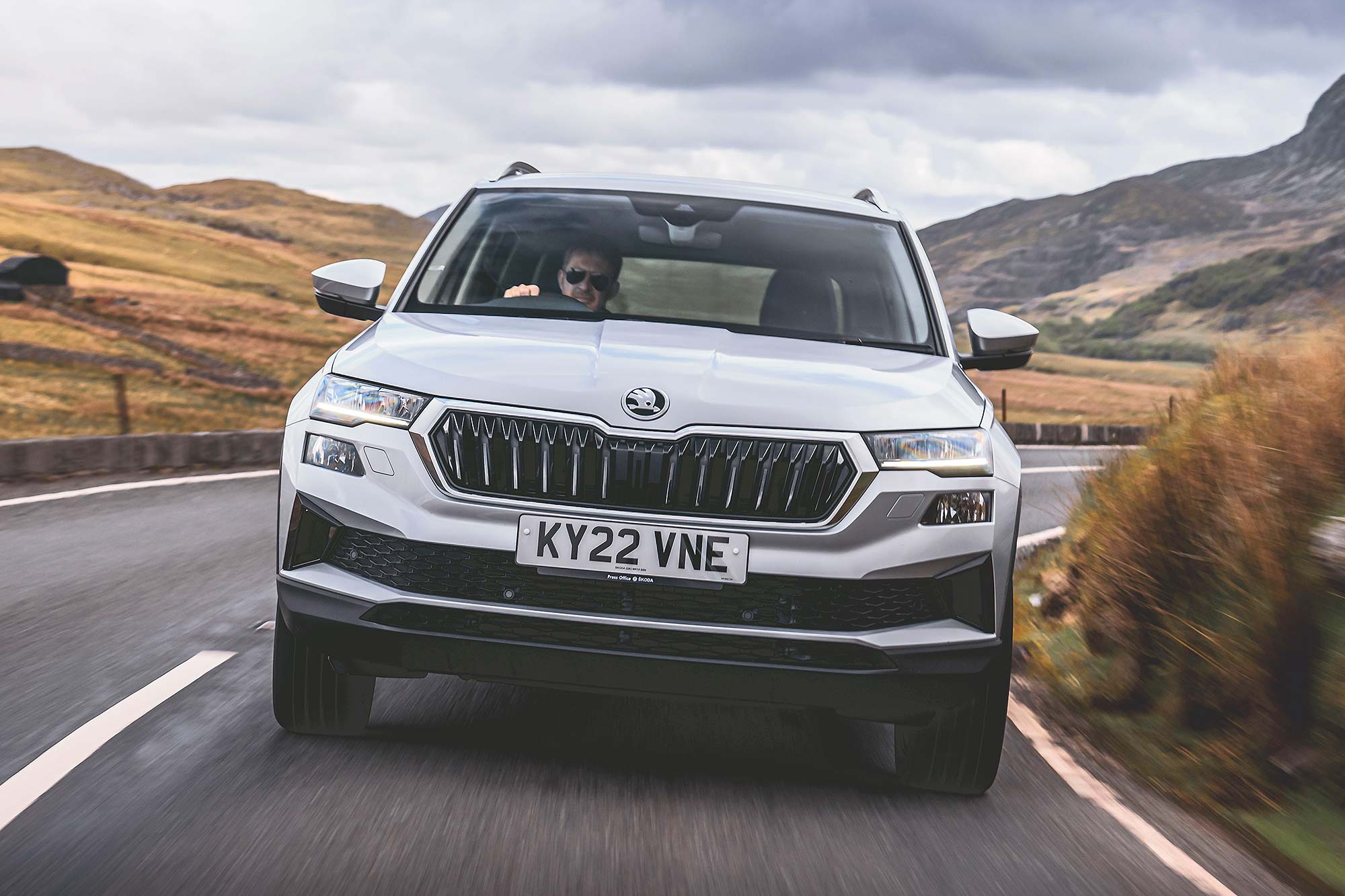
- Unlike Skoda and seven-seat rivals from BMW, Mercedes-Benz and Audi, Peugeot never made a performance-focused variant of the 5008. Entertaining as it would have been to have a 5008 GTI, Peugeot had zero interest in building a hot SUV, choosing instead to stick to its roots with hot hatches such as the 308 GTI and 208 GTI. If it’s performance you’re after, the first-generation Skoda Kodiaq vRS is a brilliant alternative at the 5008’s price point. Its interior is nowhere near as interesting as the 5008’s, but it’s a true, family-focused SUV, just like the 5008, with the necessary seven seats, big brakes, a dual-clutch gearbox and 240bhp.
Which one to buy
- The one for the family: All versions of the 5008 will haul you and six other humans, whether they be friends, colleagues or children, with real ability. Those three Isofix mounts across the middle row are a real boon. Still, for ultimate peace of mind you’ll want an Allure model, specifically because it added the Safety Plus Pack to the specification. This included lane-keeping assist, driver attention alert, high-beam assist and active blind-spot detection.
- The one to tow with: If you have an active lifestyle and you’re likely to be towing boats, caravans or horseboxes, you’ll be best off with a 2.0-litre BlueHDI 180 diesel. It has a maximum braked trailer limit of 1,750kg, a whopping 450kg more than the next best 5008: the 1.5 BlueHDI. And the torque output of 295lb ft at 2,000rpm should make light work of pulling trailers. Be sure to look for examples already fitted with the removable tow bar, as they come with TSM (Trailer Sway Mitigation) as part of the stability control system.
- The cheapest one: We don’t mean buy the cheapest 5008 you find advertised, because that will almost certainly be a very up and down experience. Essentially, we mean the original Active trim that, despite missing a few features compared to the rest of the range, was still well-specified. The list of standard equipment included 17-inch alloy wheels, an 8.0-inch touchscreen with DAB radio, Apple CarPlay and Android Auto, two-zone climate control, an emergency braking system with front-collision warning, a reversing camera, LED headlights, cruise control and even metallic paint.
- The fully-loaded one: A truly loaded example would be one of the newer GT Premium models. At the top of the trim tree and only available on cars built from 2022 onwards, it’ll have everything you could possibly need. If you don’t want the freshest of the fresh, though, then an older GT trim car will also be well-appointed.