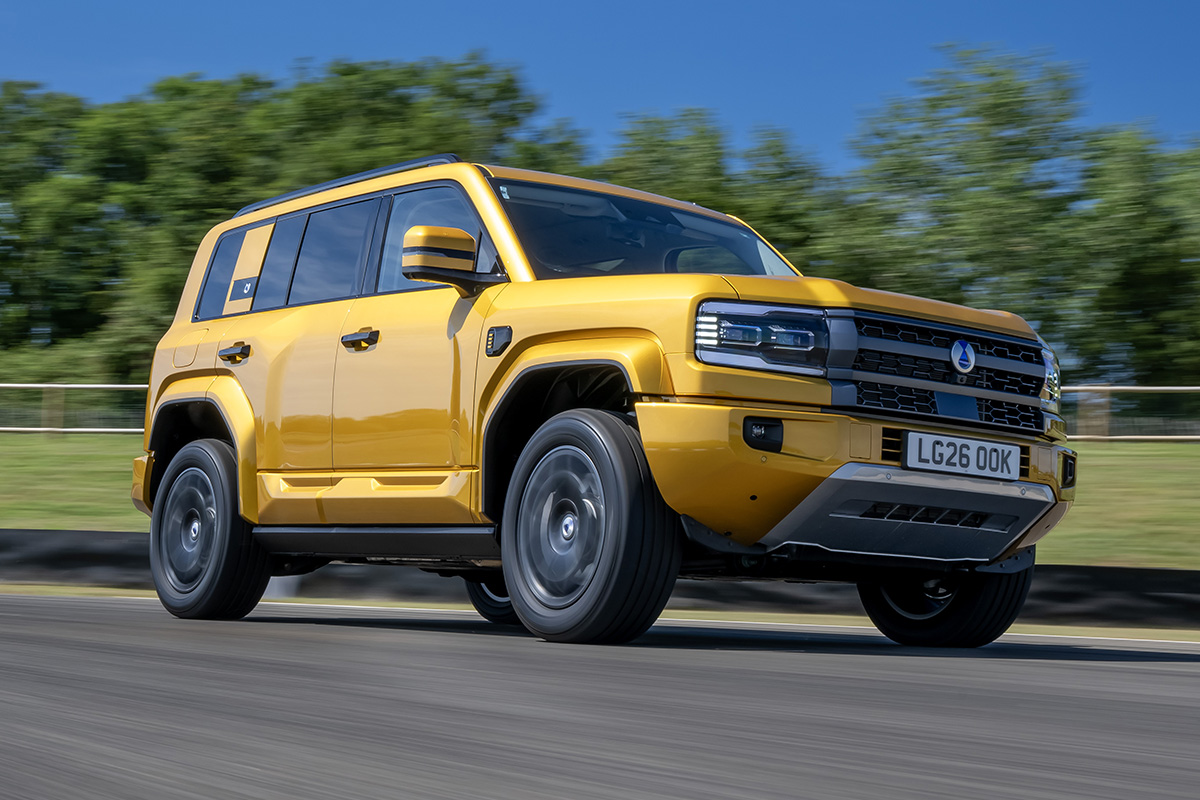
Toyota Land Cruiser 2026 review | An indestructible, go-anywhere, do-anything 4x4

Pros and cons
What we like
Family-friendly, well appointed cabin
Unburstable build quality
Rugged 4x4 skillset off road
What to consider
Quite thirsty, despite mild hybrid tech
Diesel engine clattery at low speeds
Boot space compromised by 48v hardware
The CarGurus verdict
The Toyota Land Cruiser is a very specific type of vehicle for a very particular type of customer. With lofty prices starting north of £80k, it is an expensive luxury item – but one which will likely last a very long time and prove its worth over many years, or even decades. If you love the idea of a Land Rover, but want a more diamond-clad durability promise, the Land Cruiser might be for you.
If you do not need proper off-road credentials, we would recommend looking elsewhere. But if you need a serious 4x4 that’ll keep going no matter what the conditions throw at you, crave its toy-car styling and need a family-friendly package with space for bodies and bags, then this could be just the off-roader you need. It’s this or an Ineos Grenadier unless you’ve got six figures to spend, and we suspect many buyers would rather play it safe by backing a Toyota-developed legend that’s been going for more than three quarters of a century.
out of 5 expert review
What is the Toyota Land Cruiser?
The Land Cruiser represents the pinnacle of Toyota’s SUV ambitions, with lofty prices starting from around £80k. Which might explain why it’s a rare sight on UK roads and new-car sales average just a few hundred units per year. You can order it as a passenger car or a commercial variant, which removes the rear seats, blanks the rear windows and adds a cage for maximum utility cargo-carrying. This test focuses on the passenger version.
Tellingly, this is one of the few remaining 4x4s on sale today persisting with a so-called ladder-frame chassis, a separate, sturdy steel platform (codenamed GA-F) optimised for hardcore off-roading over on-road dynamics. The Land Cruiser, Ineos Grenadier and Mercedes-Benz G-Class are the only passenger cars still to offer this construction method, which speaks volumes for their intent. If driving off tarmac and go-anywhere ability is important to you, this Toyota should very much be on your shopping list.
This focus on serious off-roading defines the Land Cruiser. At a whisker under five metres in length, it is a large car and means that its natural rivals are tough-mudders such as the Ineos Grenadier, Land Rover’s Discovery (as well as the smaller Defender), and – from the price category above – the erstwhile Mercedes-Benz G-Class, another 4x4 icon with a military background.
Practicality
How practical is it?
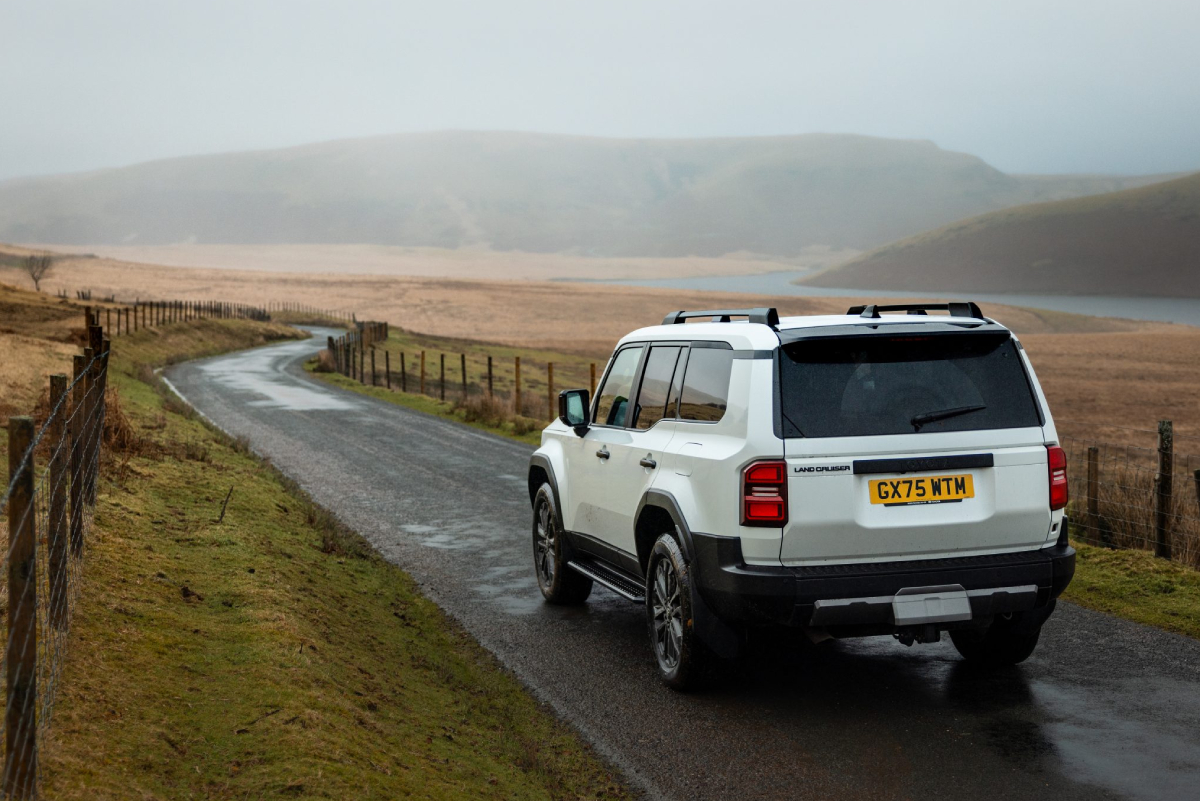
First clap eyes on a Land Cruiser and its size will leave a lasting impression. The latest version’s squared-off style makes no effort to disguise the bulk of this car – but that towering 1,935mm height, 4,925mm length and 1,980mm width mean that the Land Cruiser is one of the largest cars on sale today. A point borne out when you clamber up into the cabin, an ascent made easier by the wide sidesills and chunky handles built in to the windscreen’s A-pillars with which to haul yourself up and inside.
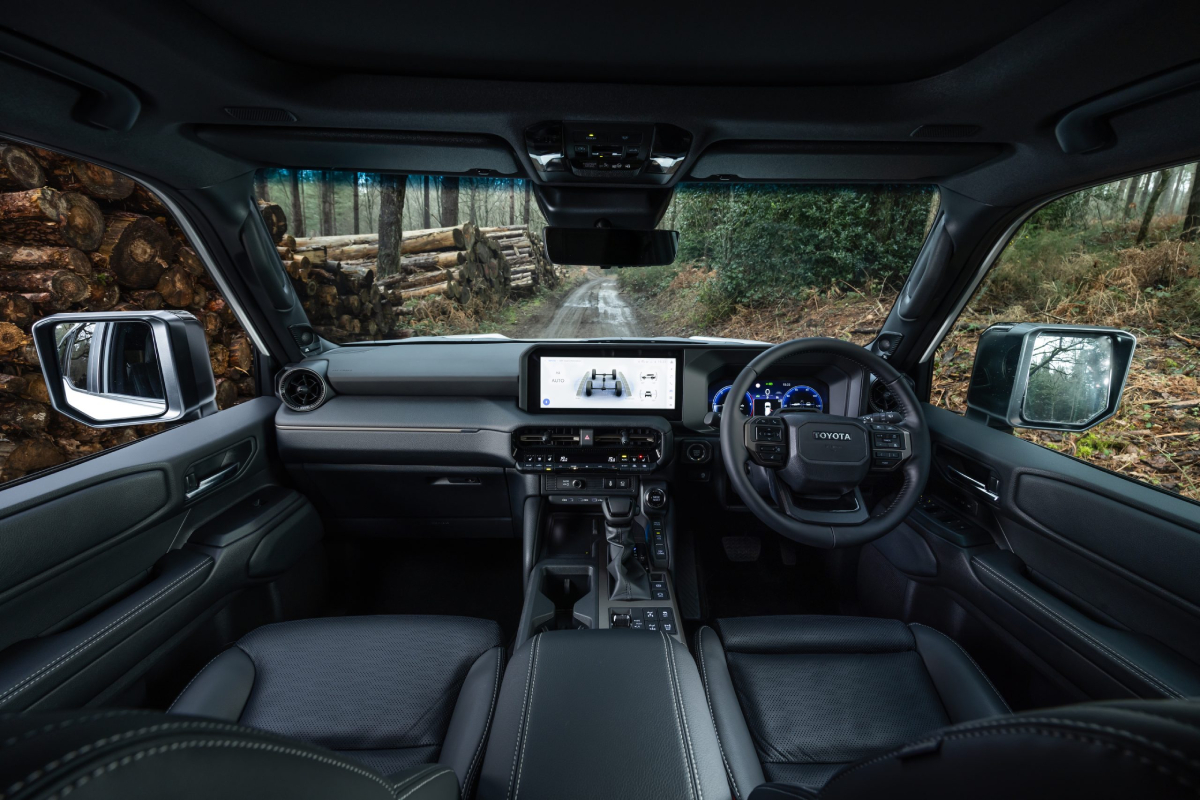
Once installed, the interior is roomy and offers an imperious view out (a luxury that never loses its appeal… you sit as high as a Range Rover driver and as lofty as many vans). Toyota has cleverly updated the cabin, so it feels fresh and modern, yet still easy to operate. It’s simple to adjust the front electric chairs to find a comfortable driving position, but you might take a while to adapt to the digital camera rear-view mirror; this comes into its own if you fill the boot to the rooftop on a family outing, as your view out the back window will be unobscured.
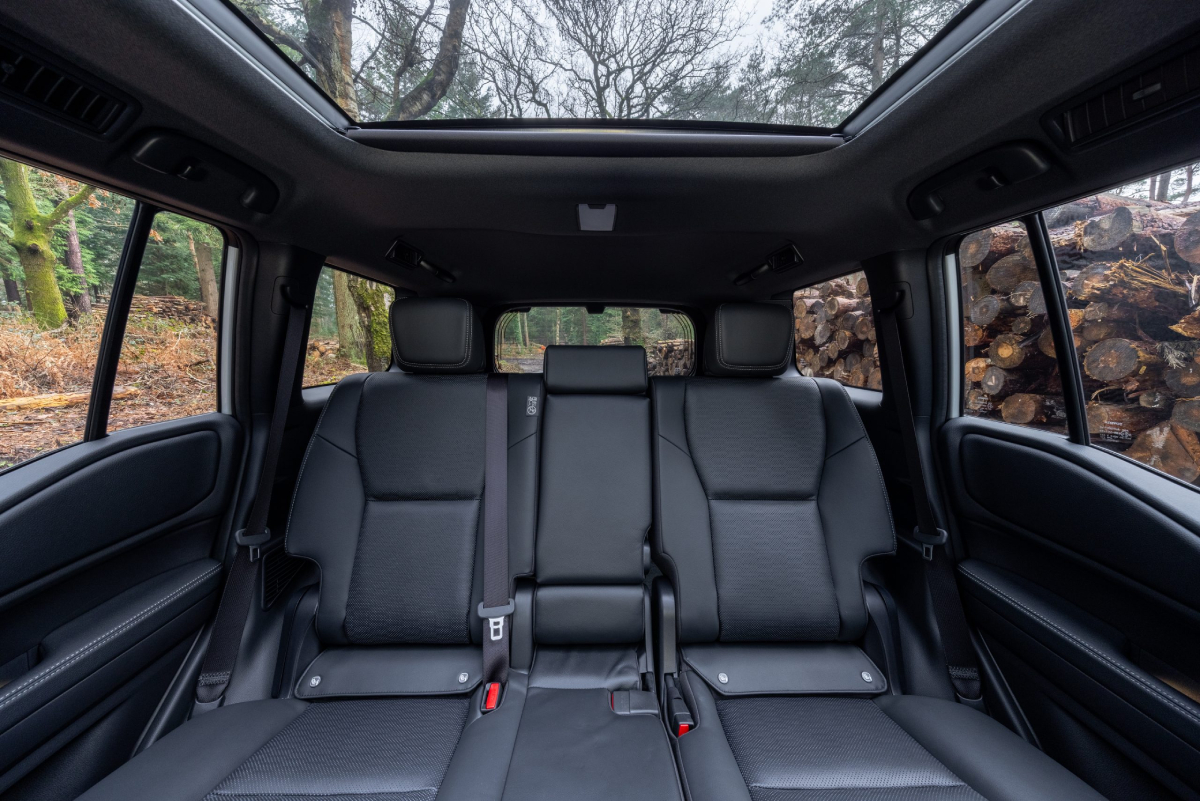
We lived with a Land Cruiser for half a year and there’s no getting away from the fact that the rear seats are not quite as capacious as the front row. You’ll easily accommodate children back there, but adults in the second row may berate the relative lack of legroom if they’re sitting behind tall people in the front. It’s a mite disappointing in such a big car, but rear passengers do benefit from individually heated and ventilated seats plus their own air-conditioning controls. The 60:40 split rear seatbacks can be reclined individually, too.
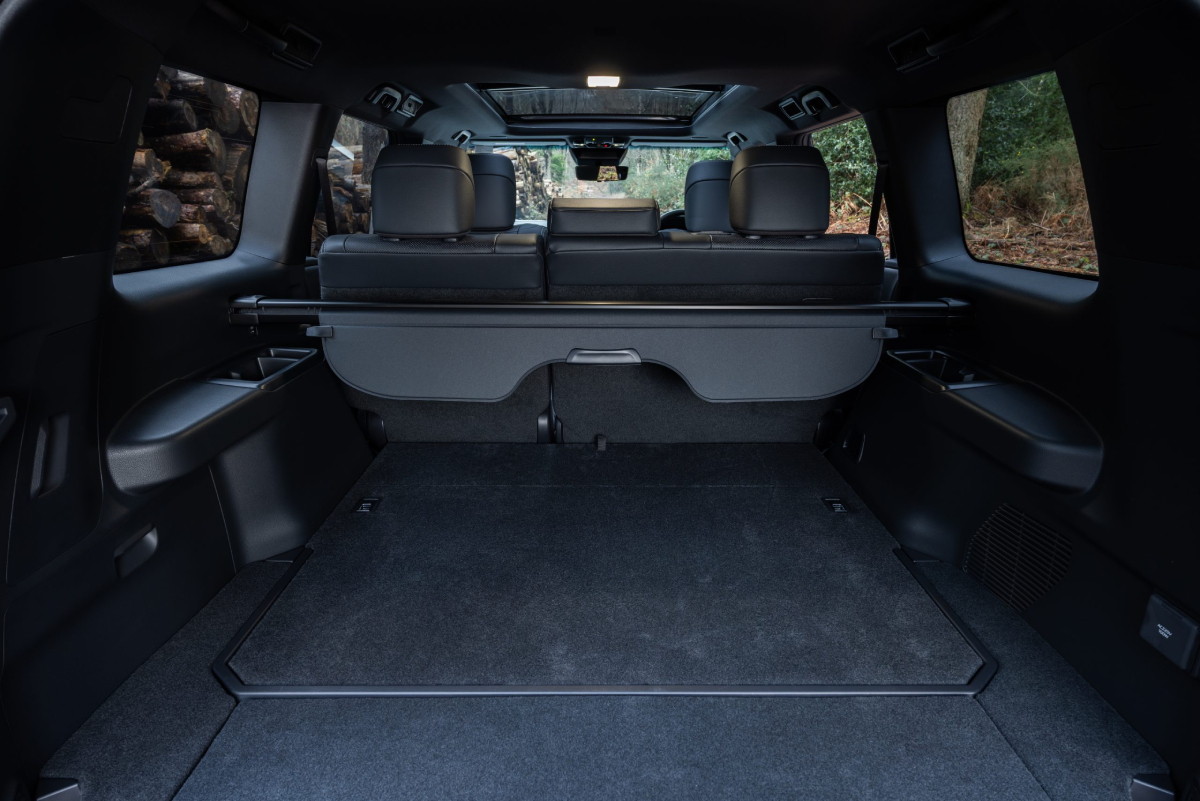
At launch Toyota offered a seven-seat option and the third row of seats provided pretty capacious seating for a sixth and seventh passenger. They’re not just for kids, either; adults can get comfy enough in the third row for shorter journeys. However, when Toyota added the 48-volt mild hybrid tech for the 2026 model year, it dropped the option of seven seats. When you first open the boot of the latest five-seater, you might be surprised to see a 9cm lip which raises the loadbay floor quite noticeably; it’s caused by the hardware for the 48-volt mild hybrid system and means you have to lug your bags and clobber over it to get into the boot.
Once you’ve navigated that, this is a colossal loadbay, as evidenced by 742-litre boot volume quoted by Toyota with the second-row seats in place. Fold them away in the floor and the loadbay expands to an enormous 2,000 litres. If you find an earlier seven-seater, boot space stands at 566 litres with the rearmost pews stowed away, or 130 litres with every chair in use.
We love the fact that the rear window opens separately from the tailgate, like on a BMW 3 Series Touring, so you can drop in small items without having to open the boot fully (pet owners will especially appreciate the flexibility this brings).
Driving
What’s it like to drive?
There is only one derivative of Toyota Land Cruiser sold in the UK: a 2.8-litre four-cylinder turbodiesel with an eight-speed automatic gearbox driving all four wheels. We suspect the majority of UK Land Cruisers will be driven mostly on road, so we should start with driving impressions on the blacktop. Keyless entry and ignition mean you simply clamber up into the cabin, dab the brake pedal and press the start button to get underway. You won’t miss the diesel waking from its slumber, for this big-capacity four-cylinder engine is noisy and clattery by the standards of this class, where most rivals prefer six cylinders for a more sophisticated soundtrack.
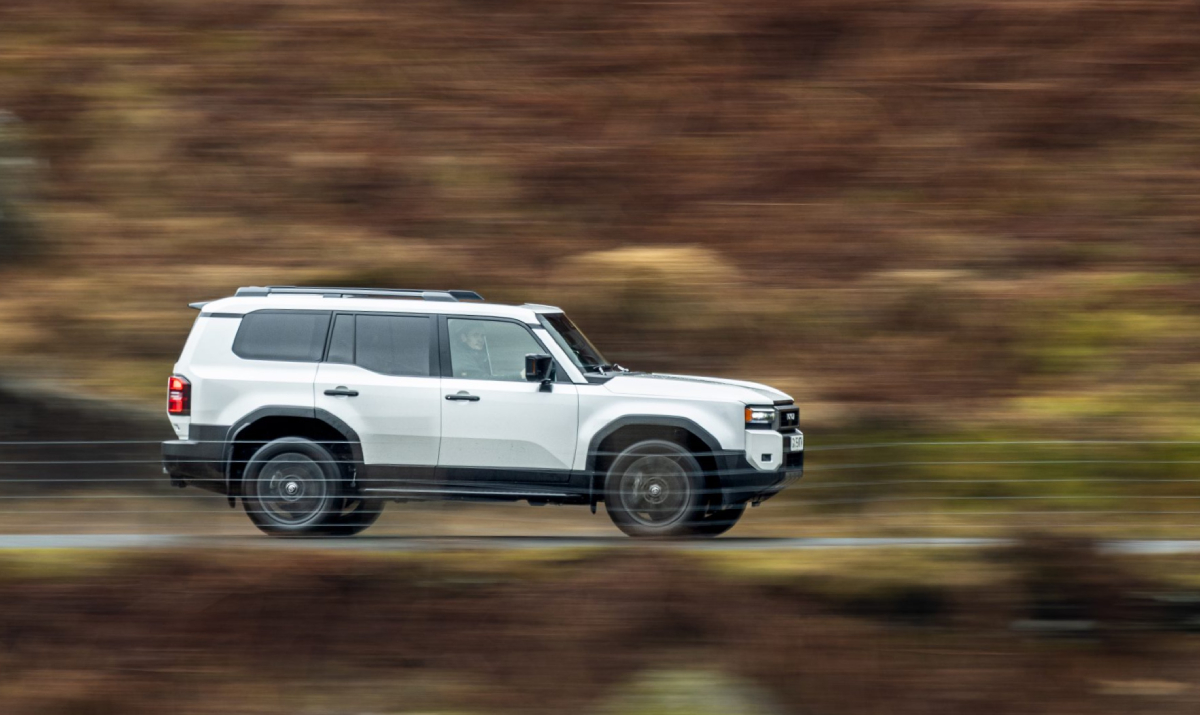
This rough ’n’ ready vibe speaks volumes about the Land Cruiser’s intent. That separate ladderframe chassis means the 4x4 bounces down the road a little when you first set off, hopping and skipping over road blemishes that most cars with more modern monocoque construction would ease over. Do not despair: if you’re coming into the Land Cruiser from another tough 4x4 or an older car, it is perfectly acceptable on road and, once you’re out of town, the suspension settles down noticeably. We drove the diesel 2,500 miles to the Alps and back on a family holiday, and it proved remarkably hushed and refined on a long autoroute jaunt. Special mention to the stability at speed and its resistance to crosswinds or being buffeted by passing lorries.
Performance is adequate, but this 202bhp 2.8 diesel is never going to win awards for acceleration; Toyota claims 0-62mph in 10.9 seconds and it runs out of puff at 105mph flat-out. Rival Land Rover products offer more sophisticated powertrains with more zip. Much better to drive the Land Cruiser gently and let the eight-speed auto ’box slur the cogs as it settles down to a gentler, relaxed gait. Driven thus, it’s enjoyable to drive the Land Cruiser and the bluff, upright styling means you can always see out and place the car easily on the road.
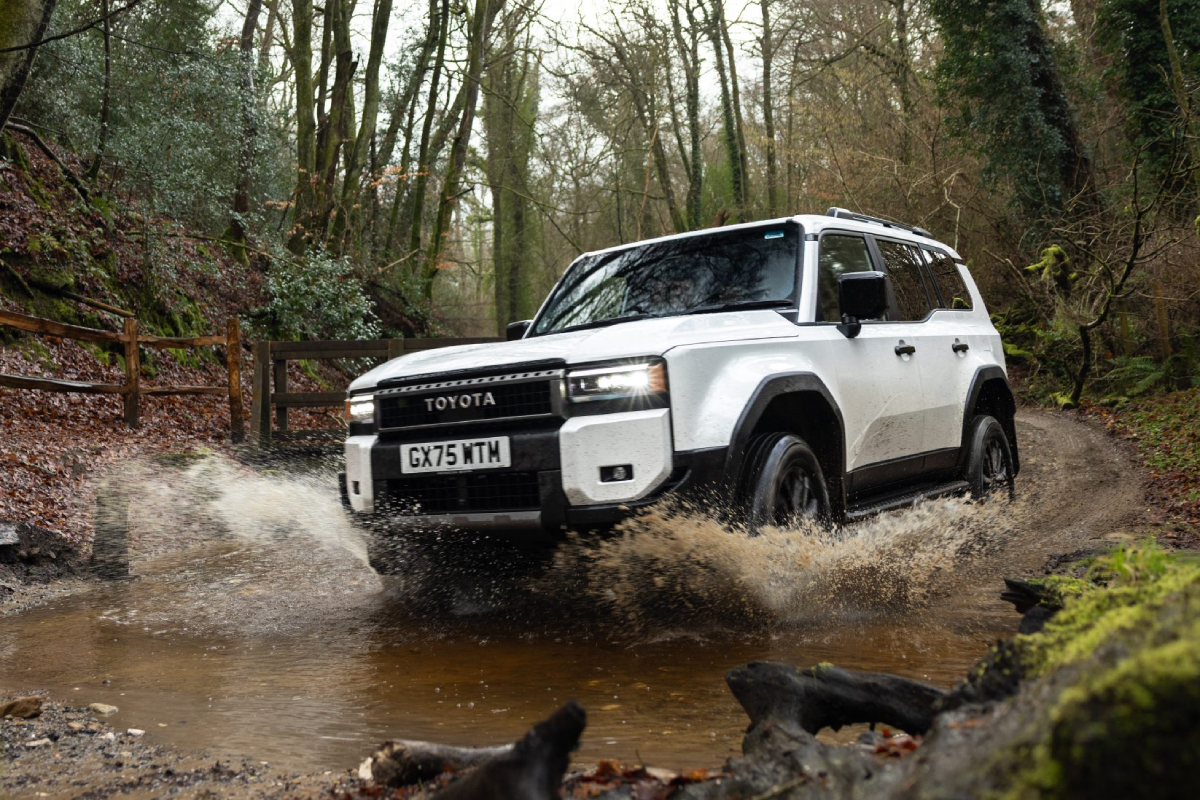
There’s no escaping that this car’s raison d’être is to excel off road and it’s fair to say it delivers on that promise. You can forgive some of the on-road coarseness when you pull off the Tarmac, and let the all-wheel drive technology do its thing. The 4WD system is permanently engaged and traction is boosted by electronic centre and rear differential locks to prevent spinning wheels, while a low-range transfer ’box provides the grunt to drive up improbably steep inclines.
It’s not just mechanical systems: electronics let you set the car up for different terrains, while crawl control will manage your speed up and down hills and – a rare feature – you can even electronically detach the anti-roll bar on the front axle to allow for even more wheel articulation when crossing rocky terrain.
The Land Cruiser is one of the most capable off-roaders we’ve ever tested and it’s no wonder that you see so many older models on safari camps in Africa.
Tech and equipment
Technology, equipment & infotainment
Toyota has struck a happy medium in the Land Cruiser's interior between physical controls and digital inputs. There is a large 12.3-inch touchscreen, which controls the entertainment, satnav, phone and many of the car’s minor systems – but they’ve thankfully stuck with physical buttons for the majority of controls, including the ventilation system. This is in keeping with the no-nonsense vibe of the Land Cruiser and to be applauded (though the flipside is that we counted 39 switches on the dashboard alone).
Your mobile’s Apple CarPlay or Android Auto connections sync wirelessly with the car and the touchscreen is a good size and resolution if you prefer to use your phone’s connectivity instead of the ancient-looking built-in Toyota mapping. One nice touch is the standard-fit head-up display, which beams your speed, gear selection, navigation controls and speed limits on to the windscreen in front of the driver’s line of sight, so you spend less time looking down at the digital dials in the dashboard.
One feature we found irritating over the course of our 10,000-mile test was the awkwardness of turning off some of the Toyota Safety Sense systems. All car manufacturers are now mandated to fit speed limit audio warnings and other features to beep and bong if you’re doing anything wrong and we found it fiddly and time-consuming to switch them off, compared with rival systems. Cancelling the speed limit warning takes an implausible 12 button presses on the steering wheel controls every single time you set off…
Gadget lovers should note there are many charging points scattered throughout the cabin to keep everything powered up: three USB-C chargers by the front seats, a wireless phone charging pad, one HDMI connector to show a film on the digital screen and, in the rear, a pair of USB-C charging points and an old-school 12-volt connector. There’s even a three-point UK domestic socket in the boot to power larger items if you’re camping or inflating a paddleboard.
Running costs
Toyota Land Cruiser running costs
This is not a cheap car to buy, or run. The recommended retail price is already high in the first place and, because this is a limited-supply vehicle, we would not anticipate many discounted models washing up in the dealer network. But the costs don’t stop in the showroom when you sign on the dotted line, as many of the day-to-day running costs will be correspondingly high throughout the ownership cycle.
The Land Cruiser sits in the penultimate 49E insurance grouping, one of the highest brackets which means that your annual renewal policy won’t be cheap. And toppy CO2 emissions from that large-capacity diesel engine of 280g/km bring high tax bills: expect to pay an eye-watering £640 in years two to five (at the time of writing), before that annual VED rate falls back to £200 a year, under the current tax system.
The 48-volt mild hybrid system kicks in to kill the engine at a standstill, but even that fuel-saving won’t push economy much above 29 miles per gallon, owing to the vehicle’s 2.5-tonne kerbweight and 4x4 hardware. We lived with a Land Cruiser for half a year and found that fuel consumption was remarkably stable at just under 30mpg, whether we were driving around town or heading on long motorway marathons. With a large 80-litre fuel tank, that means that you’ll stump up quite a bit at the pumps when you fill up – but you’ll only be doing that every 500 miles or so.
Land Cruisers need servicing annually or at 10,000 miles and we were quoted £385 for the first maintenance visit and £545 for year two. Toyota dealers offer servicing packages which can help spread the cost on a monthly basis.
Toyota Land Cruiser reliability
The Land Cruiser has developed a fearsome reputation for reliability over the years and we would predict that the latest model range will continue this durability record. The Japanese brand is generally a sound bet and it is unlikely that Toyota has cut corners while developing this hero off-roader at the pinnacle of its range.
Owing to modest sales figures, it is difficult to corroborate this with data from reliability surveys, but much of the mechanical hardware from the Land Cruiser is also deployed on the Toyota 4Runner sold in overseas markets and this tough sister 4x4 performs well in reliability reports around the world. We predict that the engineering in the Land Cruiser should prove tough, so long as it is properly cared for.
Should the worst come to the worst, the Toyota Land Cruiser comes with a three-year/60,000-mile warranty as standard in the UK. That cleverly tops up for a further year/10,000 miles every time you get the car serviced at a Toyota main dealer. It’s a savvy way to keep customers engaged with the franchised dealer network and remains active up to 10 years and 100,000 miles from new. Useful extra peace of mind for those who wish to keep their car for the longer term, we say.

What owners say
A good all round 4x4. Although it will mostly be used for dogs and horses, it is comfortable and economical enough to be a general family car. Looking forward to driving it and enjoying it!
21 February 2026Normal every day car that can take me from point a to point B. And in a good condition with very good engine and first body.
6 April 2025This car is the best car ever. Good luck to all of you are guys.
30 June 2026What owners say
A good all round 4x4. Although it will mostly be used for dogs and horses, it is comfortable and economical enough to be a general family car. Looking forward to driving it and enjoying it!
21 February 2026Normal every day car that can take me from point a to point B. And in a good condition with very good engine and first body.
6 April 2025This car is the best car ever. Good luck to all of you are guys.
30 June 2026Bought for towing purposes, at which it is great and makes the drive feel safe and comfortable. A large vehicle, but with good vision from it. As it is a towing vehicle it is just a pity that the boot door opens sideways rather than upwards as the door then hits the trailer behind the car.
5 October 2023very reliable,dependable and cost effective. it can never win races but it will definitely take you wherever you want to go. love this vehicle!!
7 March 2024The Vehicle Appearance seemed very good but the Price & Mileage were to High.
27 December 2022Three things to know
- All UK-bound Land Cruisers come with the Skyview panoramic roof, which bathes the front two rows of seats with sunlight. The front glass section then slides back like a sunroof, providing a retro breath of fresh air for those who want a taste of al fresco motoring.
- The front armrest has a deep cubby, which doubles up as a cool box. It’s so cold that you can viably use it as a fridge to keep sandwiches or drinks fresh in the middle of summer. You can easily fit a couple of pints of milk in there, too.
- Powerful LED projector headlights are standard fit on UK-bound Land Cruisers: they’re fully automatic, turn on when it gets dark and then flip between main beam and dipped as required by scanning the road ahead. Sometimes these types of system attract annoying counter-flashes by passing traffic as they can be slow to react, but not here. These are a useful feature for the majority of customers who presumably live in the countryside.
Which one to buy
- Toyota only lists a single Land Cruiser on its UK website and that is unlikely to change any time soon. This makes your purchase decision straightforward – there are no decisions over powertrains, transmissions or trim levels: the Toyota Land Cruiser 2.8 Diesel 48v Invincible is the only version on sale.
- One bodystyle choice buyers face is whether to buy the passenger or commercial version (CV) of the Land Cruiser. The CV model is a modified, stripped-back version that sacrifices the rear seats for a big, fixed loadbay, effectively turning the 4x4 into a van. Popular among farmers and the rural set, one big advantage is that prices are quoted without VAT, so qualifying businesses can save a significant chunk over the regular Land Cruiser pricelist.
- Horse owners and those with an active lifestyle may wish to delve into the options packages. A towing kit will be a no-brainer and Toyota offers three different fixed and removable bars with a choice of seven or 13-pin electrics. The Land Cruiser has a towing capacity of 3.5 tonnes, making it perfect for even the largest of horseboxes or trailers.


Pricing trends
Starting RRP
£60,769
Current avg. market price
£69,797
Trending up by 0.5% this month
May 2026 - October 2026