Volkswagen ID.5 2026 review | Style-led electric family SUV
Volkswagen ID.5 cars for sale
3.0
Expert review
Pros
Comfortable to drive
Decent interior quality
Range and charging speeds are reasonably competitive
Cons
Certainly not cheap
Trails key rivals in a wide variety of areas
Looks arguably don't hit the mark

The CarGurus verdict
The Volkswagen ID.5 is a very pleasant, likeable car that has a long range, decent practicality, easygoing dynamics and plenty of equipment. The problem is that it’s pricey even by the standards of some of its (hardly cheap) brethren, and it has no real unique selling point. The Tesla Model Y is more practical and easier to charge on long journeys, the Kia EV6 is cheaper and more fun, the Ford Mustang Mach-E is bigger, faster and has a cooler image, and the Audi Q4 E-Tron is ultimately the same car as the ID.5, yet has a more desirable badge and costs the same.
Aside from reports of patchy reliability, there’s nothing drastically wrong with the ID.5, but it doesn’t do anything exceptional. In what’s becoming one of the most hard-fought car classes of all, that leaves it lagging behind the best.
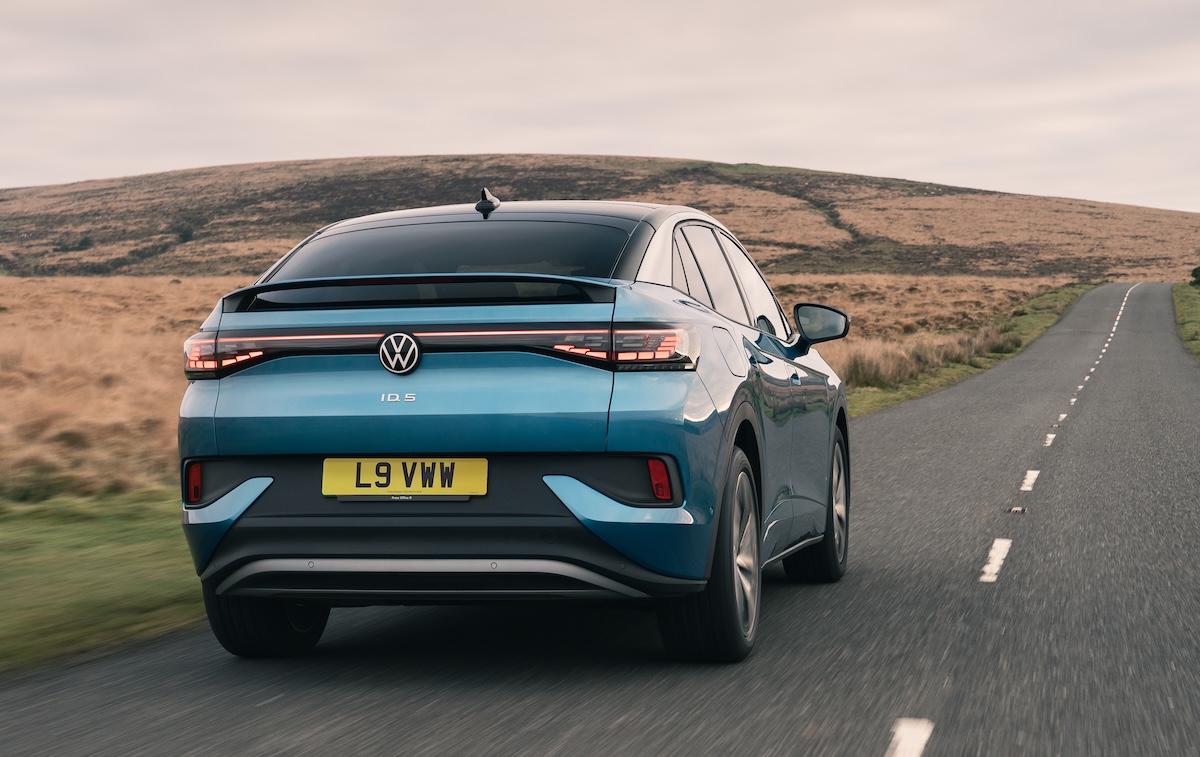
What is the Volkswagen ID.5?
The Volkswagen ID.5 is a sleeker-looking, coupe-SUV version of the Volkswagen ID.4, which is itself an all-electric, five-door SUV. Think of what one of Audi’s ‘Sportback’ models is to the more conventional car on which it’s based, and it’s essentially the same thing. Earlier versions of the ID.5 were only available with Volkswagen’s larger battery pack, but the range has since expanded to include multiple battery sizes and trim levels. Depending on specification, official WLTP driving range figures stretch to as much as 345 miles.
The raked-back roofline makes the ID.5 the sportier version of the ID.4, but its chief rivals are still much the same, including the Nissan Ariya, Ford Mustang Mach-E, Skoda Enyaq Coupe, Kia EV6, Hyundai Ioniq 5 and Tesla Model Y. Mind you, with prices for the ID.5 running from around £37,000 right up to nearly £55,000 before options, it’s fair to say that slightly pricier premium rivals from the likes of Audi and BMW are also fair game for buyers who are considering the ID.5 as a plush and sporty electric crossover.
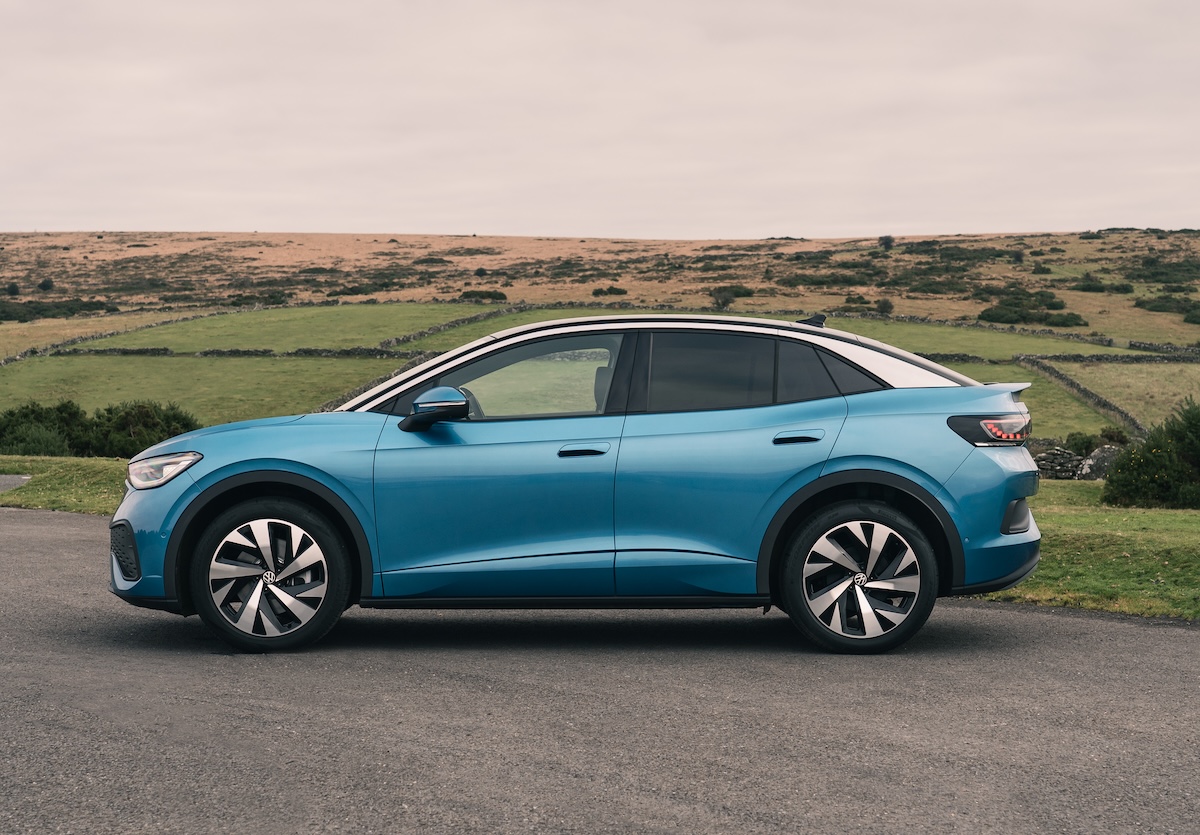
Styling-wise, the ID.5 looks very similar to the ID.4, with the same dumpy, short bonnet and fascia. It’s at the rear three quarters that the car looks quite different, as its more raked roofline tapers to a stubby, flat bootlid that looks almost saloon-like in profile, despite the ID.5 retaining a practical hatchback boot opening.
The high hipline, cheery face and stubby front and rear overhangs give the ID.5 something of a cute appearance to our eyes, which we suspect wasn’t the designer’s ambition when it came to creating the sportier electric vehicle in the VW range. It’s not an aggressive looking car, nor a terribly memorable one in truth, but it is perfectly pleasant and inoffensive.
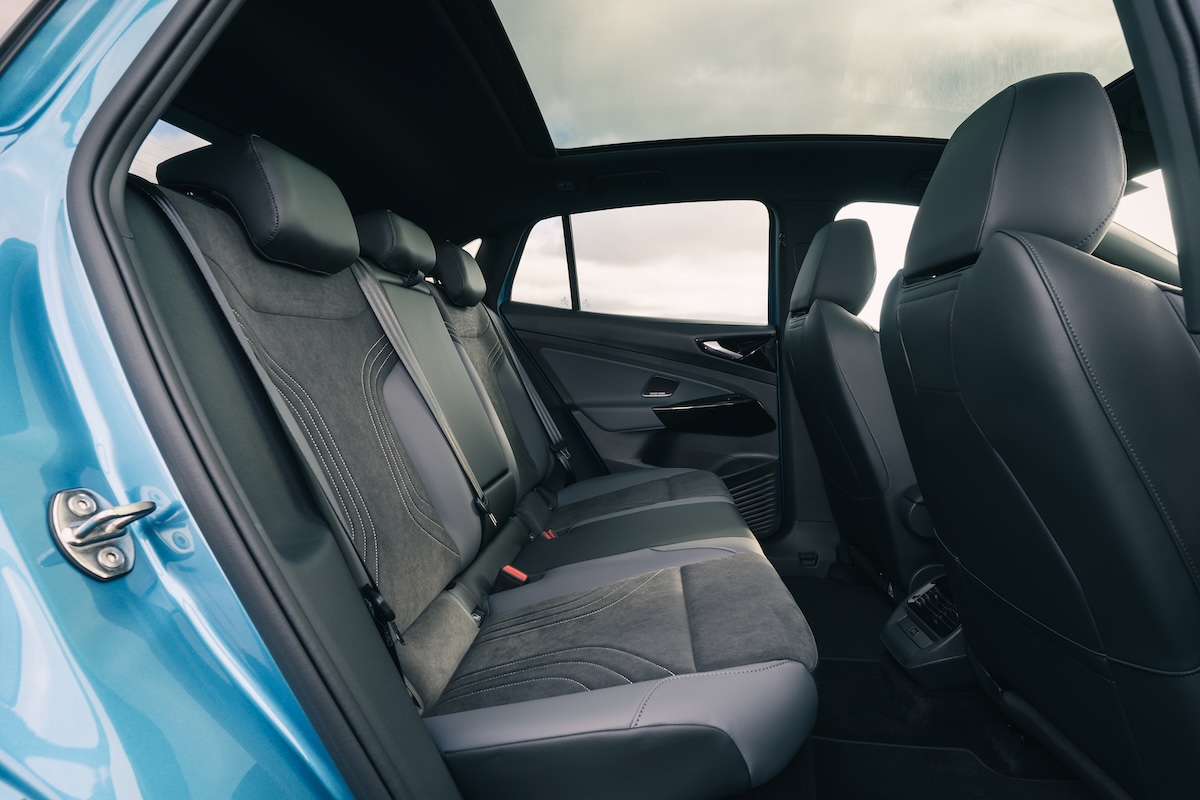
How practical is it?
Let’s start in the back seats, as that’s where many potential buyers will be concerned about the compromises necessary for that sweeping roofline. No need to fret, as there is plenty of rear headroom despite there also being a huge, standard panoramic sunroof that also helps to make the cabin of the VW ID.5 feel really bright and airy. Legroom is excellent, too, just as in the VW ID.4 and Skoda Enyaq, which share the same ‘MEB’ platform.
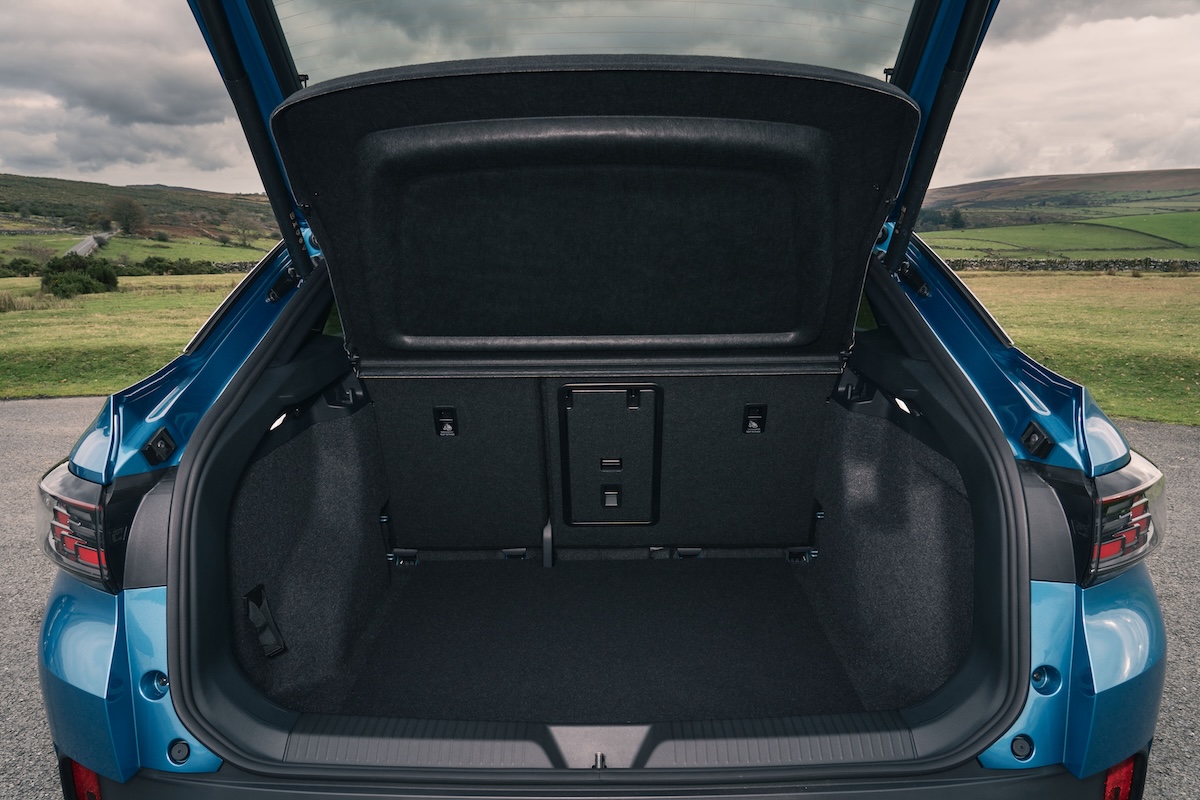
The boot is also still very usable, with a decent 549 litres of space on offer courtesy of a wide, deep and square-shaped boot floor that also hides some useful underfloor space ideal for your cables. It’s actually a usefully bigger boot than you’ll enjoy in the Kia EV6, for instance.
However, the boot is shallower than in the ID.4, of course, and cars like the Tesla Model Y – with its cable storage or load space in the nose as well as a big boot space at the back – certainly offer better load-lugging capability.
Up front, the cabin is spacious and easy to get comfortable in, but the lower-spec trim levels have manual seat controls and no lumbar adjustment, which is a shame as such a basic driver’s seat feels quite starkly low-rent compared to the general material finish and equipment levels elsewhere in the ID.5.
The dashboard usability isn’t so great, though. The climate controls are hidden in the touchscreen, while temperature and volume are controlled by annoying touch-sensitive slider controls on the bottom of the screen housing. They’re imprecise and too easy to hit accidentally.

What's it like to drive?
The Volkswagen ID.5 majors on comfort rather than excitement, and in that sense it feels in tune with the rest of the ID range. It comes into its own in towns and cities, thanks to its smooth, quiet powertrains and light steering.
Current rear-wheel-drive versions have electric motors producing 167bhp or 282bhp, while the flagship ID.5 GTX Edition adds four-wheel drive and musters a healthy 335bhp. Even the lower-powered versions feel brisk thanks to the instant torque you’d expect from an electric car, although outright acceleration isn’t especially dramatic. The GTX Edition feels noticeably faster, with the additional motor adding reassurance in poor weather, but it still prioritises comfort over excitement.
Handling is tidy and composed rather than engaging. The steering is light and accurate, which makes the car easy to place on the road, but there’s limited feedback and the ID.5 never really encourages enthusiastic driving. That said, body control is good and grip levels are high, so it feels stable and reassuring when pressing on.
Ride comfort is the ID.5’s strongest attribute, even on the 19- and 20-inch alloy wheels of the higher-spec versions. It absorbs bumps well and settles into a relaxed cruise on longer journeys, helped by excellent refinement and minimal wind or motor noise. As a result, the ID.5 works better as a comfortable long-distance family EV than the sporty coupe-SUV its styling suggests.
Regenerative braking is present but relatively unobtrusive in everyday driving, and while there’s a stronger ‘B’ mode available, it still doesn’t offer the full one-pedal driving experience of some rivals.
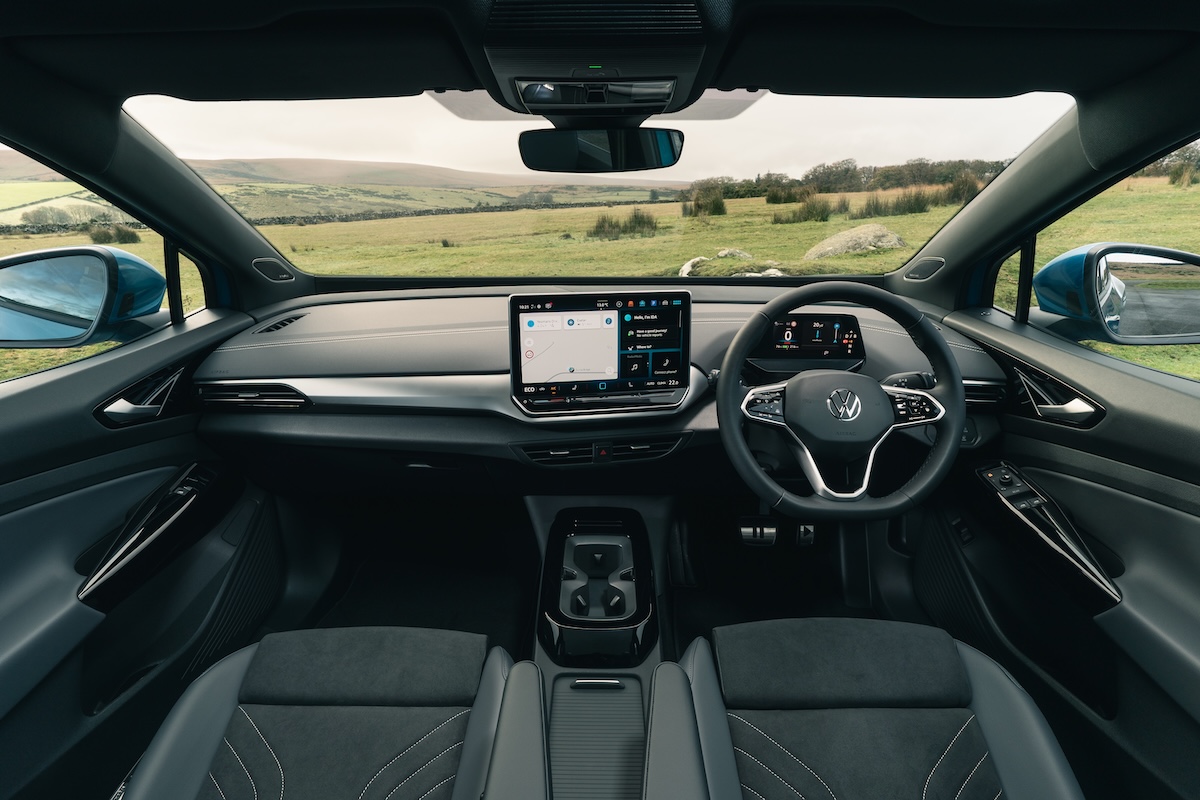
Technology, equipment & infotainment
The ID.5 line-up is well equipped as standard; better equipped, in fact, than most ID.4 models, which helps to justify the higher pricing. Even the ID.5 Pro Essential – the most affordable of the trim levels – gets 19-inch alloy wheels, LED headlights and rear lights, heated front seats, dual-zone climate control, a 12-inch touchscreen infotainment system and keyless entry and start.
The bottom of the UK range is slightly confusing, because there are essentially two entry points. The Pro Essential is the lowest-priced model with the larger 77kWh battery, while the Pure Match uses the smaller 52kWh pack but comes with more standard equipment. Choosing the Pure Match adds around £4,000 to the price, bringing items such as a heated leatherette steering wheel, rear-view camera, heated windscreen, rear tinted glass and the ability to unlock the boot from the outside.
Next up is the Pro Match, which adds the likes of matrix LED headlights and the ability to open the boot with a wave of your foot, while the Pro Black Edition boasts a black styling pack (including its alloy wheels), panoramic glass roof, electric front seat adjustment with a massage function and lumbar support, and microfleece upholstery. Finally, the GTX Edition boasts a spec list befitting a car with a premium price tag, such as dual-motor four-wheel drive, 20-inch alloy wheels, sports suspension, a panoramic glass roof, a 360-degree parking camera and a suite of driver assistance systems.
As with most Volkswagen EVs, much of the functionality is controlled through the touchscreen, which means a modern look but also fewer physical controls than some rivals. Every ID.5 gets a 12-inch touchscreen Discover Pro infotainment system, which features wireless Apple CarPlay and Android Auto connectivity, a built-in navigation system with charging-point search and online points of interest, Bluetooth, voice control and more. Over-the-air software updates are also standard on the ID.5, meaning that the car is connected to the internet and will update its infotainment – and even electronic aspects of its powertrain and safety aids – automatically when the car is parked up.
Those safety features include adaptive cruise control and lane-keep assist, which combine for a semi-adaptive driving mode that will stop, start and steer the car with the traffic in your chosen lane.
Volkswagen ID.5 running costs
The ID.5 isn’t cheap by any stretch, especially as a new car. It is comparable with most rivals, and the price you pay over the VW ID.4 isn’t as drastic as it looks when you consider the more generous standard equipment. Still, when you think that you can get a Kia EV6 for less money (which is faster, more fun to drive and offers stronger charging performance), it does start to feel a bit pricey. The Tesla Model Y is also faster, more practical and has a usefully longer range than the new Volkswagen. However you look at it, then, the ID.5 doesn’t offer as much for your money as some others.
Still, it will be cheaper to fuel than equivalent petrol or diesel cars, even with current energy prices taken into account. Based on electricity costs of around 40p/kWh and average efficiency of roughly 3.3 miles per kWh, running costs could work out at around 12p per mile, although real-world costs will vary depending on charging tariffs. There are still low-cost overnight tariffs available, too, which can cut your costs per kWh to as little as 8p-10p per kWh on some off-peak tariffs, which can make an EV remarkably cheap to ‘fuel’. The flipside is that public charging is more expensive, so if you’re going to use public charging regularly then you’ll be paying roughly the same – if not more – to keep the battery topped up, as you will to keep an efficient ICE car fuelled.
In the scheme of electric cars, the ID.5 is not the most efficient. We’d expect to see around 3.3 miles per kWh as a realistic year-round average, with range running from 220-240 miles on a motorway journey in winter, rising towards 300 miles in warmer conditions and gentler driving.
Service intervals are typically every two years with no mileage limit, which should keep maintenance costs lower than equivalent petrol or diesel models. Service plans are available at a fixed monthly or upfront price, depending on dealer offers.
Is the Volkswagen ID.5 reliable?
During the ID.5’s early years, it became widely known that the touchscreen infotainment software system fitted to Volkswagen’s electric models could be slow to respond and prone to glitches. Volkswagen has since introduced several over-the-air updates aimed at improving stability and usability, and later cars feel smoother to operate. Owner feedback still appears mixed, though.
As a brand, Volkswagen was rated a rather underwhelming 24th out of 30 manufacturers in the 2025 What Car? Reliability Survey. While the ID.5 did not feature in the electric SUV category, closely related models offer some context. The mechanically similar ID.4 finished last out of 27 electric SUVs, while the smaller ID.3 ranked 13th out of 19 electric cars.
- Electric car batteries always include a small buffer that isn’t fully charged or discharged. This helps preserve battery health over time, which is why manufacturers often quote both usable (net) and total (gross) battery capacities. In the VW ID.5, the commonly quoted figure is the 77kWh usable capacity, which is shared with closely related models such as the Skoda Enyaq. Don’t go thinking that the Skoda Enyaq has a larger battery, either. Confusingly, Skoda states the total capacity, hence badging the Enyaq as being an 82kWh car. In fact, it has exactly the same 77kWh (usable) battery as the ID.5.
- Charging speeds vary depending on the version, but most ID.5 models support rapid DC charging at up to 135kW, rising to 175kW on newer GTX versions. Plug into a 150kW charger and you’ll have an 80 percent charge in less than 30 minutes. That’s comparable with most rivals, but well off what the Kia EV6, Hyundai Ioniq 5 and Tesla Model Y can do in terms of rapid charging. Plug the ID.5 into a standard 7kW home wallbox and you’ll have a full battery in around 13 hours. You’ll have to pay extra for a cable that lets you plug into a three-pin domestic socket, which can take well over 24 hours to deliver a full charge, although we’d still advise you to get this ‘granny cable’, as the ability to trickle charge overnight can still be very useful when staying away from home.
- Towing capacity is modest on rear-wheel-drive ID.5 versions, at 1,000-1,200kg. The GTX Edition is significantly more capable, with a maximum towing capacity of up to 1,800kg: good enough for a small trailer or a very lightweight caravan. An electronically retractable tow bar will cost around £1,000.
- If you want the best value: We’ve already said that our favourite trim in the ID.5 range is the Pro Essential model, which strikes the best balance between price, range and equipment (although we wouldn’t describe any ID.5 as ‘cheap’). You get a decent amount of kit and the larger 77kWh battery.
- If you want the best company car: Company car users pay very low Benefit-in-Kind (BiK) tax for EVs like the ID.5, but the top-spec cars still aren’t worth it. If your company is generous enough to cover the purchase or lease costs, the mid-range ID.5 Pro Match is a really great spec, with the matrix LED headlights, ambient lighting and 344 miles of range.
- If you want the sportiest one: The dual-motor GTX Edition is the one to go for as it’s got masses of power and four-wheel drive. It’s not cheap, but the 79kWh battery delivers 327 miles, despite the additional weight of the four-wheel-drive system, and the spec list is generous – as it should be for the price.
- If you want the best family car: It’s tempting to go for the Pro Match, as the powered bootlid with hands-free access is useful. But it’s a big jump in price, so we’d stick with Pro Essential trim.
- If you want the best spec for the price, but spend most of your time in towns and cities: The Pure Match is tailor-made for you. The range drops to 227 miles, but the 52kWh battery will be faster to charge. And while it has less range than the larger-battery models, the equipment list is strong for the price.