A few years back, changes were made to the way a car's economy and emissions are tested. Tests are carried out on all new vehicles that come to market, and the results give us the official fuel consumption and exhaust pollutant figures, such as for CO2 emissions. There's long been a standardised laboratory test to come up with these figures, which are then used to calculate, among other things, vehicle excise duty (VED), Benefit in Kind (BiK) company car tax, and simply how much fuel you're likely to use on the move.
From 2017, a new way of doing it was rolled out, and you'll likely see reference to it in plenty of literature around the buying of new cars. The latest method is called the Worldwide Harmonised Light Vehicle Test Procedure (WLTP), and it promises more accurate results than the old system. It's been compulsory for new-to-market models since September 2017 and all new passenger cars since September 2018.
What Was Wrong with the Old Test?
The old way of testing fuel economy and pollutant emissions was called the New European Driving Cycle (NEDC), although it had long since ceased to be new: the methodology was last updated in 1997. For years before their replacement, the NEDC tests came under fire for producing results that were all-but-impossible to match in real-world driving. Critics argued the tests are too brief, too slow, and lack hard accelerations, over-estimating a car's fuel-efficiency and green credentials.
WLTP testing promised to address those flaws. The tests are still carried out under laboratory conditions to ensure the results are consistent and repeatable, but now cover a broader range of driving speeds and a greater mileage. The results are also sense-checked on the road using another test procedure called RDE (Real Driving Emissions tests). This second test is to ensure cars aren't engineered to be extremely fuel efficient in lab conditions but nowhere near as economical when driven on the road.
Ultimately, WLTP should, in theory at least, more closely replicate real-world everyday driving conditions and give you a more accurate idea of what kind of fuel consumption a new car will get. Although more accurate, however, don't expect WLTP figures to be entirely accurate. Matching the official figures in the real world should be possible in theory, but will still be extremely diffcult in practice.
What the WLTP Test Involves
The old NEDC tests covered a total of 11 kilometres (just under seven miles), with an urban cycle and an extra-urban cycle. A weighted average of the two gave the combined cycle figure: the one most commonly quoted in car reviews and brochures.
Under the WLTP test procedure, the total distance covered increases to 23.25 kilometres (just under 14.5 miles); more than double the length of the old tests. Rather than having an urban and extra-urban cycle, WLTP covers more driving styles, namely low speed (city), medium speed (town), high speed (rural) and extra-high speed (motorway) driving. The average speed across the different test phases is up from 34kph/21.1mph to 46.5kph/28.9mph, and so is top speed from 120kph/74.6mph to 131kph/81.4mph.
Other changes include taking account of the options that car manufacturers fit to a particular car, specifically extras that make a car less fuel-efficient, whether that be by increasing rolling resistance, making the car less aerodynamic, or adding weight. So different examples of the same make and model will have different economy and emissions figures depending on the equipment fitted.
The RDE On-The-Road Tests
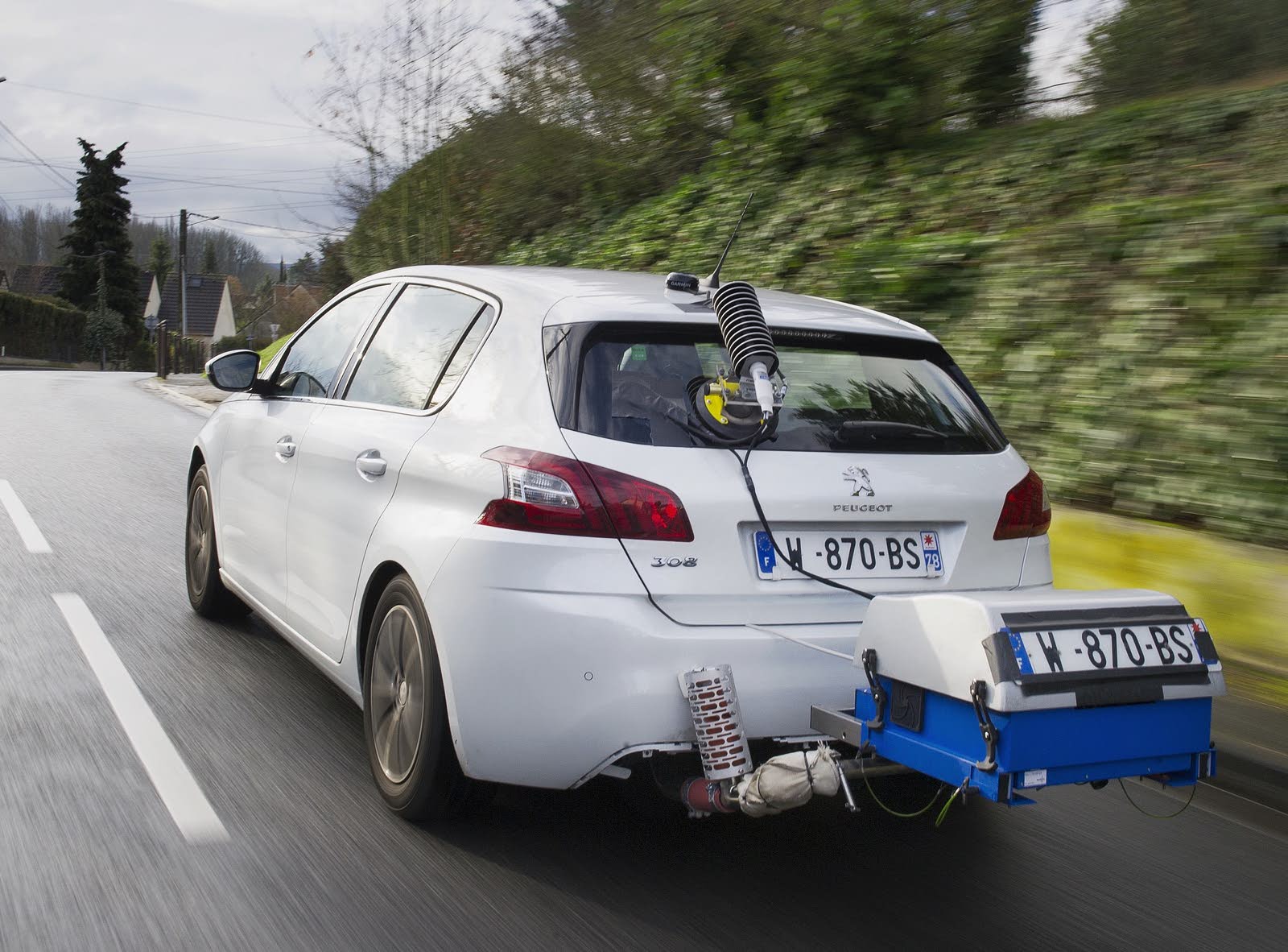
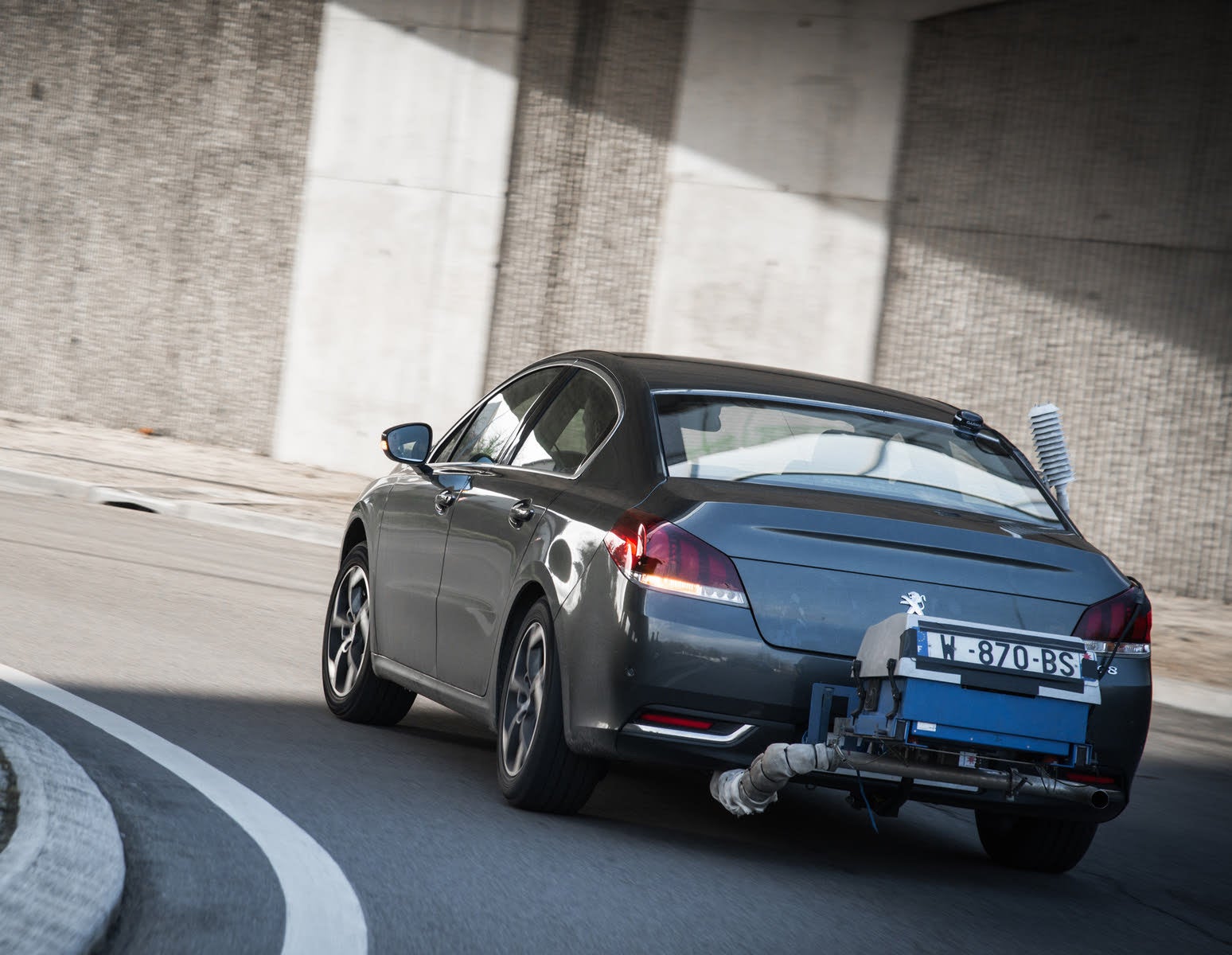
It's no good having a car which performs on the test bench, but not on the road. That's where the RDE procedure comes in. Introduced alongside WLTP, RDE is there to make sure cars meet the required standard in real-world conditions, using a Portable Emissions Measurement System (PEMS). Think of PEMS as a mobile lab that can be strapped to the back of the car while it's being driven. The RDE tests are also intended to catch out any car manufacturers who discover a way to cheat lab tests, as Volkswagen was found to have done in the US, leading to the 'Dieselgate' scandal.
Until January 2020, cars had to meet the RDE1 standard. To allow for variations in temperature, altitude and other test conditions, cars were allowed a 'conformity factor' of 2.1. In other words, cars could emit just over double the emissions allowed in the lab and still pass.
The tests became tougher in January 2020, when RDE2 came into force. This reduced the conformity factor to 1.5. Since then, conformity factors have continued to reduce over time, and have since been replaced by 'PEMS error margins', which are relatively minuscule allowances that continue to be made due to the inherent differences between portable testing equipment and laboratory equipment.
What the Tests Mean for Car Buyers
Since September 2018, some new cars had worse fuel economy figures than they used to, despite being mechanically unchanged. During the rollout of the new protocol between 2017 and January 2019, so called 'correlated NEDC' or 'NEDC equivalent' values were used for the official fuel economy and carbon dioxide (CO2) emissions figures. So new cars were going through the new tests, but the results were translated back to broadly match the NEDC test cycle. This was so that there were comparative figures for both new cars going through the new tests, and older cars that had yet to undergo the new tests.
But despite the intention for these figures to more or less tally with NEDC results, in practice, emissions went up by around 10%, according to the automotive intelligence company, JATO.
This meant higher first-year Vehicle Excise Duty bills for owners of cars registered since September 2018, compared with the first-year tax paid by the owner of an identical car registered before September 2018 with an official CO2 figure from NEDC testing. Of course, this now won't be an issue for used-car buyers.
From January 2019, the fuel economy figures published on websites and in brochures switched to the WLTP cycle, rather than the stop-gap correlated NEDC figures. The switch to WLTP CO2 figures was made in April 2020. Emissions figures under WLTP are considerably higher when compared with NEDC, so car tax and company car tax rates were revised to avoid a sudden hike in how much drivers must pay.


